
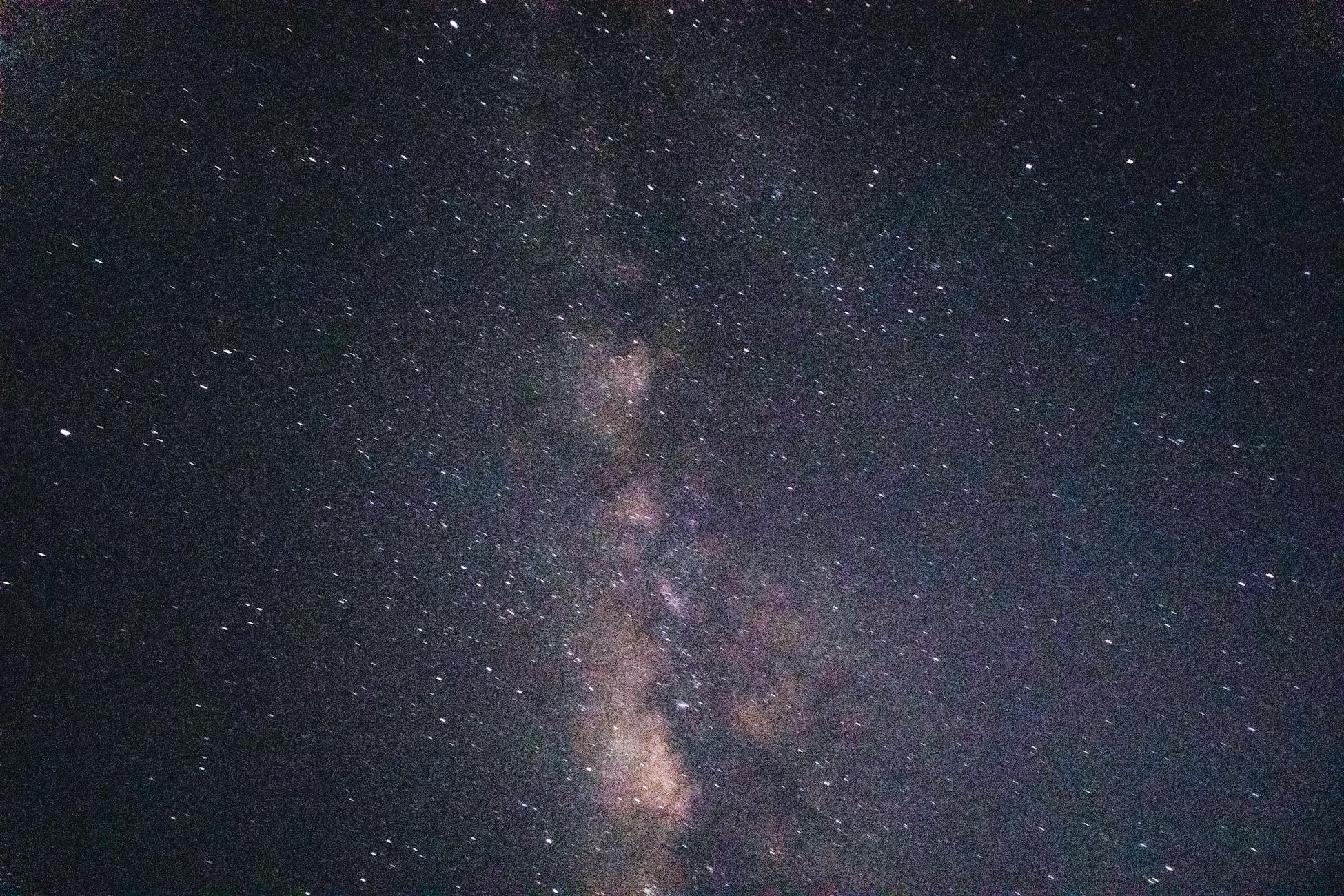
The Milky Way, by the standards of how large galaxies actually develop, is a particular kind of cosmic predator. It reached its current form not through the slow ordinary growth of a single isolated system but through a succession of mergers with smaller neighboring galaxies, each of which was absorbed into the larger body and broken up across billions of years until its component stars became indistinguishable from the ordinary stars of the Milky Way disk.
The mergers are not hypothetical. They have been documented across decades of careful astronomical observation. The most studied of them is the Gaia-Sausage-Enceladus event, a major merger between the Milky Way and a smaller galaxy that occurred between 8 and 10 billion years ago, and that left detectable traces in the orbital patterns and chemical compositions of stars in the Milky Way halo. The Gaia-Sausage-Enceladus event is widely understood, in the contemporary astronomical literature, as having reset the Milky Way from its early turbulent phase to the more stable disk configuration the galaxy has had ever since.
What is less widely registered outside the astronomical community is that Gaia-Sausage-Enceladus was not the only such event. The Milky Way has absorbed many smaller galaxies across its history, and the leftover traces of those absorbed systems are, in principle, still detectable as anomalous populations of stars whose orbital patterns and chemical compositions do not match the dominant populations of the galaxy that absorbed them. Detecting them requires considerable patience and considerable instrumentation. It has been the work of a particular branch of astronomical research that has, in the last several years, been producing some of its more interesting findings.
What the 20 stars actually are
The most recent of these findings was published in May 2026 in the Monthly Notices of the Royal Astronomical Society. Starlust’s coverage of the paper describes the research team’s identification of a group of 20 stars in the Milky Way disk whose chemical compositions and orbital patterns do not match either the dominant disk population or the previously identified merger remnants in the galaxy’s halo. The 20 stars are very metal-poor, meaning they contain almost none of the heavy elements that more recent generations of stars have been built from. They formed, on the chemical evidence, within the first two to three billion years after the Big Bang, which makes them among the oldest stellar populations known.
What made them worth attending to is not just their age. It is the combination of their age, their chemical composition, and the specific orbital patterns they share. Eleven of the stars are in prograde orbits, moving in the same direction as the galactic disk’s rotation. Nine are in retrograde orbits, moving in the opposite direction. The mixed orbital configuration is the puzzle the research team was working to solve.
The standard astronomical interpretation, when one finds stars in prograde and retrograde orbits with similar chemical compositions, is that they come from two different parent systems with similar histories. The team’s analysis, however, found that the chemical compositions of all 20 stars are nearly identical across both populations. The near-identical compositions suggest that they share a common origin rather than coming from two separate systems.
What “Loki” actually refers to
The team named the hypothetical parent system Loki, after the Norse god of mischief, in reference to the way the stars had been hiding in plain sight in the Milky Way disk despite carrying chemical signatures that should have made them detectable as foreign objects much earlier. The naming is doing slightly more work than the standard astronomical naming conventions usually involve. It reflects both the trickster quality of the stars’ previous invisibility and the chaotic nature of the ancient merger event that is hypothesized to have brought them into the galaxy.
The hypothesis is that Loki was a small dwarf galaxy that merged with the Milky Way roughly 10 billion years ago, when the Milky Way was still in what astronomers call its infant or growing phase. During this period, the Milky Way’s gravitational potential was considerably weaker than it is today. The weaker gravitational potential, according to cosmological simulations cited in the study, would have allowed a merging dwarf galaxy to deposit its stars into both prograde and retrograde orbits, which is the unusual feature of the Loki sample that the research team was trying to explain.
The lead author, Dr. Federico Sestito, a postdoctoral fellow at the University of Hertfordshire’s Centre for Astrophysics Research, has been candid about the difficulty of the interpretation. GB News’s reporting on the publication quotes him directly on the naming choice. “Similarly, our accreted stars gave us some hard time in understanding their origin,” Sestito said. “At first it was not easy to reconcile the fact that an accreted system can disperse its stars in both prograde and opposite orbits.” The 20 stars are consistent with being the remnants of a single dwarf galaxy that merged with the Milky Way under the specific conditions of the galaxy’s early formation. The finding does not, by itself, prove that this is what they are. It places the Loki hypothesis on the table as a serious candidate explanation that the wider research community will work to confirm or refute through further investigation.
Why detecting swallowed galaxies is so hard
It is worth being precise about why findings of this kind are so difficult, because the popular framing of the question has not developed particularly good intuitions for the underlying problem.
The Milky Way disk contains between 100 billion and 400 billion stars. They are moving in roughly coordinated orbital patterns shaped by the gravitational structure of the disk. The dominant populations are homogeneous in their chemical composition, having formed from gas that was already enriched with heavy elements produced by previous generations of stars.
Stars from an absorbed dwarf galaxy, by contrast, would have formed in a smaller and chemically less enriched environment, and would carry chemical signatures that distinguish them from the dominant disk population. The signatures are real. They are also small. They require considerable instrumentation to detect, and considerable patience to interpret correctly.
The recent advances in this kind of research have been driven, in significant part, by the European Space Agency’s Gaia mission, which has produced high-precision measurements of the positions, velocities, and chemical compositions of more than two billion stars in the Milky Way since 2014. The Gaia data, combined with spectroscopic follow-up observations from ground-based telescopes, has made it possible to identify anomalous stellar populations at a level of detail simply not available to previous generations of astronomers. The Loki finding was built on Gaia Data Release 3 measurements, combined with high-resolution follow-up spectroscopy from the ESPaDOnS instrument at the Canada-France-Hawaii Telescope, which allowed the team to measure 23 distinct chemical species in each of the 20 stars.
What the wider implication is
The deeper implication of findings like Loki is that the Milky Way is considerably more of a composite object than the popular framing of the galaxy has tended to imply. The framing has been, for most of its history, that the Milky Way is the home galaxy, a singular and stable cosmic entity within which the sun and the other stars are embedded. The accurate framing is that the Milky Way is the cumulative product of billions of years of mergers, accretions, and absorptions of smaller systems, the remnants of which are still detectable as anomalous populations within the disk and halo.
The galaxy is, in this sense, more like a historical record than a stable structure. The record contains evidence of the various smaller galaxies that contributed to its formation, and the patient work of reading the record is what the wider field of galactic archaeology has been built to do.
Alexander Ji, an assistant professor in astronomy and astrophysics at the University of Chicago who was not part of the research team, has put the conditional nature of the finding clearly. “If this is real, it would indicate that we are missing a major part of our Milky Way’s formation history,” Ji told GB News, “and we might need to revisit our current picture to see the impact of such an event.” Ji also expressed appropriate caution, noting that apparent new merger discoveries sometimes turn out to be extensions of previously identified systems rather than genuinely new ones.
Loki is part of a broader catalogue of dwarf galaxies that the Milky Way is now known to have absorbed across its history. The list includes Gaia-Sausage-Enceladus, Sequoia, Thamnos, and Kraken, among others. The Milky Way is currently in the process of tearing apart the Sagittarius Dwarf Spheroidal Galaxy as well, which means the cosmic appetite the previous mergers reflect is still operating.
The acknowledgment this article wants to leave
The discovery of the 20 unusual very metal-poor stars in the Milky Way disk, published in May 2026 in the Monthly Notices of the Royal Astronomical Society, may turn out to be the identification of the remnants of an ancient dwarf galaxy that the Milky Way absorbed roughly 10 billion years ago. The hypothetical parent system has been named Loki. The naming reflects both the trickster quality of the stars’ previous invisibility within the disk and the chaotic nature of the ancient merger that is hypothesized to have brought them into the galaxy.
The finding is not yet definitive. The 20 stars are consistent with being the remnants of a single absorbed dwarf galaxy. The Sestito team has been explicit that further work, including ongoing surveys such as WEAVE and 4MOST, will be required before the hypothesis can be confirmed or refuted.
What the finding does, regardless of whether the Loki hypothesis is ultimately confirmed, is contribute one more piece to the ongoing reconstruction of the Milky Way’s history as a composite object built up from the absorption of many smaller systems across billions of years. The reconstruction is incomplete. It is considerably more interesting than the popular framing of the galaxy has been allowing for. The Milky Way is not the singular and stable home it has tended to be treated as. It is the cumulative record of billions of years of cosmic appetite, with the leftovers still detectable to anyone willing to do the patient archaeological work of finding them.
