
If you sat down to eat with a 95-year-old Sardinian shepherd, an 87-year-old Ikarian widow, a 92-year-old Okinawan farmer, and a 100-year-old Costa Rican grandmother all on the same day, the meals would look completely different from one another. The Sardinian would serve you a hearty fava-bean and barley soup. The Ikarian would offer black-eyed peas cooked with wild greens and lemon. The Okinawan would set out a small bowl of miso, made from fermented soybeans, with a side of tofu. The Costa Rican would put down gallo pinto — black beans and rice cooked together over wood fire — at every meal of the day. Four meals, four cultures, four wildly different traditions of cooking and seasoning. One ingredient running through all of them. According to a 2016 peer-reviewed review of the Blue Zones research by Dan Buettner and Sam Skemp in the American Journal of Lifestyle Medicine, beans are the single most consistent dietary feature across every documented longevity-hotspot population on Earth.
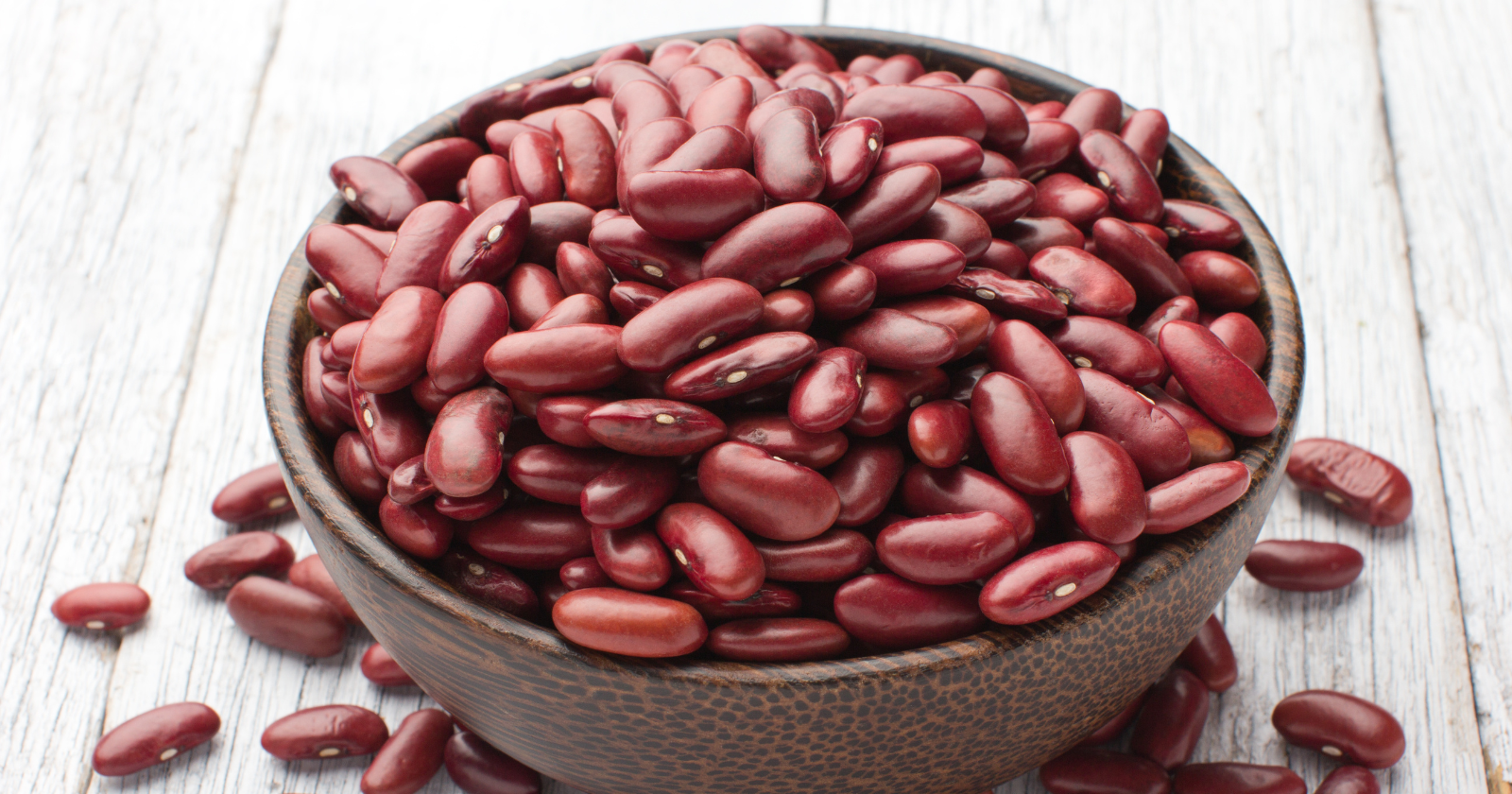
The popular Blue Zones literature, drawing on Buettner’s two decades of fieldwork with National Geographic and the National Institute on Aging, estimates that residents of the five longevity hotspots eat approximately one cup of beans per day on average — roughly four to five times the bean consumption of the typical Western adult, whose intake averages closer to a tablespoon or two per day, often hidden inside processed foods rather than featured at the centre of a meal. The specific bean varies by region: black beans dominate in Nicoya, fava beans and chickpeas anchor the Sardinian diet, black-eyed peas and lentils run through Ikarian cooking, soybeans (eaten as tofu, miso, edamame, and natto) are central in Okinawa, and the Seventh-day Adventists of Loma Linda eat substantial quantities of pinto, kidney, white, and black beans as part of their predominantly plant-based diet. The cultural traditions developed independently across thousands of years on four continents. The convergence on beans is striking precisely because it does not appear to be the result of any cross-cultural influence.
What the peer-reviewed evidence shows
The most rigorous peer-reviewed test of the bean-longevity connection was published in 2004 in the Asia Pacific Journal of Clinical Nutrition. According to the paper by Irene Darmadi-Blackberry and colleagues at Monash University in Australia, the research team followed approximately 785 adults aged 70 and older across five different ethnic populations — Greek, Swedish, Japanese, Anglo-Celtic Australian, and a Japanese-Australian sample — for seven years. The participants kept detailed dietary records throughout the study period, and the researchers tracked mortality outcomes against a wide range of dietary and lifestyle variables. The hypothesis was that the Mediterranean dietary pattern, as a whole, would predict survival across all populations. The hypothesis turned out to be partially correct, but the most striking single finding was about one specific component of the diet.
Of all the food groups studied, legume consumption was the strongest single predictor of survival across all five ethnic groups. The effect was substantial and statistically robust: for every additional 20 grams of legumes consumed daily, the risk of death over the seven-year follow-up period decreased by approximately 7 to 8 percent. Twenty grams is, by household measures, roughly two tablespoons of cooked beans — a small portion by any standard. The relationship held across ethnic groups, across baseline health status, across smoking status, and across the other dietary variables the researchers controlled for. Beans were not just associated with longevity in one culture; they were associated with longevity in every culture the team examined.
Why beans might work
The biological mechanisms underlying the legume-longevity connection are now reasonably well-characterised. Beans are unusual among foods in combining several properties that are independently associated with good health outcomes. They are high in plant protein, which provides the amino acids the body needs without the saturated fat and inflammatory compounds that come with most animal protein sources. They are extremely high in soluble fibre, which reduces LDL cholesterol, stabilises blood glucose, and feeds the gut microbiome. They are low in calories per gram, which promotes satiety and weight stability. They are rich in resistant starch, which behaves more like fibre than like sugar in the digestive system. They are high in folate, magnesium, potassium, iron, and zinc, all of which are commonly under-consumed in Western diets.
This video explains more:
The methodological caveat
Intellectual honesty requires noting that the broader Blue Zones framework within which the bean finding is most commonly discussed has been challenged in recent years. According to the University College London press release on the 2024 Ig Nobel Prize in Demography, the demographer Saul Justin Newman has argued that many of the alleged supercentenarian populations of the Blue Zones, including Sardinia, Okinawa, and Nicoya, are partly artifacts of poor birth registration and clerical errors rather than evidence of biological longevity. The implications for the broader Blue Zones research programme are still being debated.
What Newman’s critique does not undermine is the Darmadi-Blackberry 2004 finding itself. That study used directly-measured dietary intake and directly-tracked mortality outcomes over seven years, with no reliance on age claims from supercentenarian populations. The legume-mortality association in that paper does not depend on whether anyone in Sardinia really did reach 110 years of age. It depends on whether ordinary 70-year-olds in five different countries lived measurably longer if they ate more beans. The answer, according to the data, was yes — by a margin that compounds substantially over years of consistent intake. The bean finding is, in this sense, one of the most methodologically robust components of the broader Blue Zones literature, holding up even when other parts of the framework face legitimate scientific challenge.
What this means for ordinary eating
The practical translation of the legume research into modern dietary practice is straightforward in principle and surprisingly difficult in practice. A cup of cooked beans contains roughly 200 calories, 15 grams of plant protein, 15 grams of dietary fibre (more than half the daily recommended intake), and substantial amounts of folate, iron, magnesium, and potassium. The Darmadi-Blackberry study was observational: it associated higher legume intake with lower mortality across the cohort, but it did not test a bean intervention or establish that replacing meat with beans causes longer life.
The difficulty is that the modern Western food environment provides little built-in support for routine bean consumption. The cohort supports a narrower conclusion: higher legume intake was associated with lower mortality in this sample. That finding does not make beans the most reliable longevity food on Earth or turn an observational result into a prescription.
