
In the spring of 2026, a team of paleontologists led by the Natural History Museum of Los Angeles County formally described a new species of reptile from a quarry in northern New Mexico. The animal walked on two legs. It had a toothless beak. Its arms were small and held close to its body. Its overall silhouette was almost indistinguishable from a small theropod dinosaur of the kind that would become familiar in museums and pop culture across the subsequent century of paleontology.
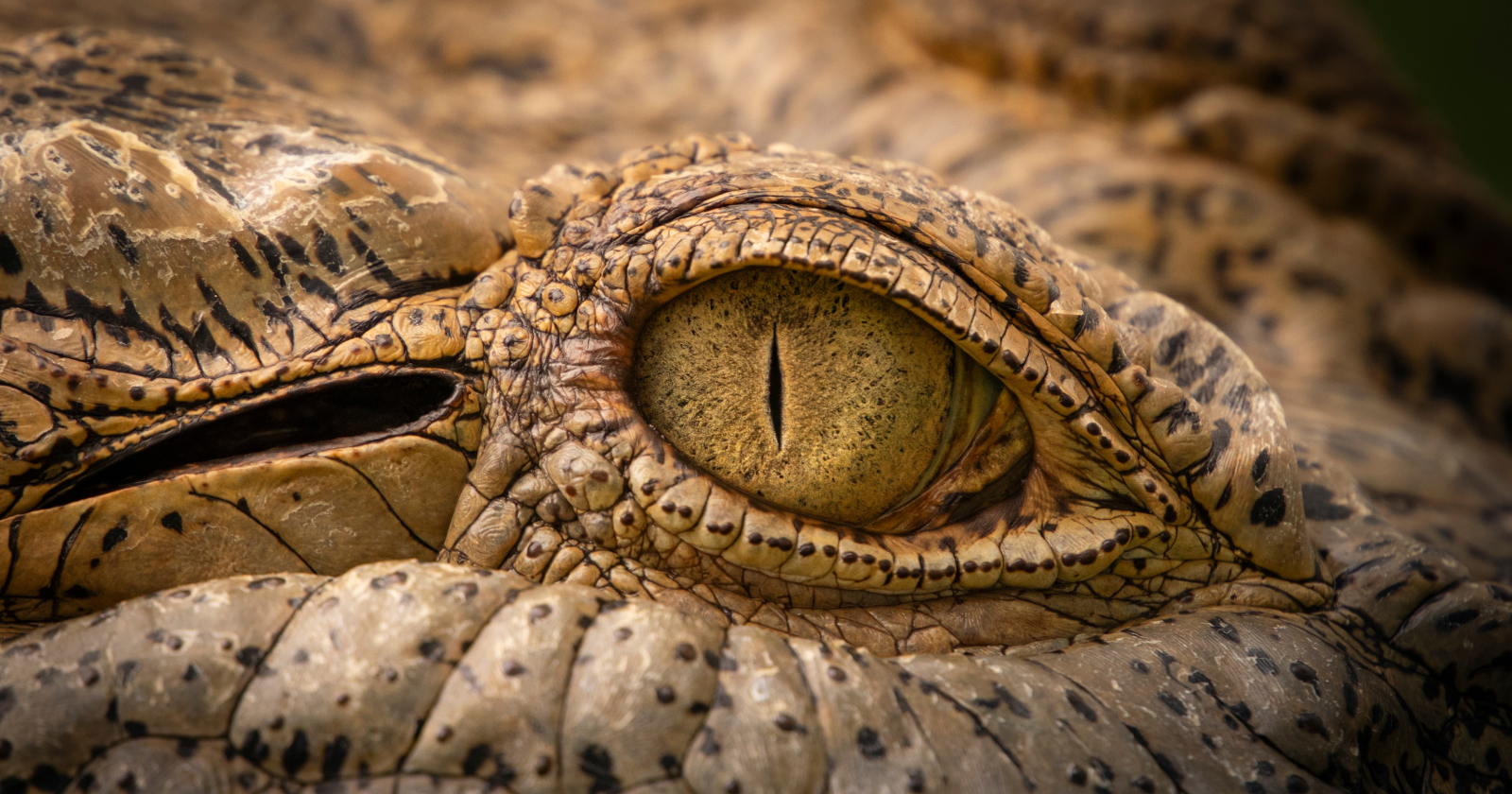
It was not a dinosaur. It was a crocodile relative. It lived 212 million years ago, well before any dinosaur evolved that particular shape, in a world where the branch of the family tree that would eventually produce modern crocodiles and alligators was experimenting with almost every form a reptile could take.
The animal has been named Labrujasuchus expectatus. The first word is a mash-up of Spanish and Greek, drawing on the old name for the site where the fossils were found, Ranchos de los Brujos, the Ranch of the Witches, combined with the Greek suchus, meaning crocodile. The witch croc, in plain English.
The animal
Labrujasuchus belongs to a small Late Triassic group called Shuvosauridae. The shuvosaurs were beaked, bipedal, small-armed archosaurs that roamed the southern United States between roughly 235 and 201 million years ago. The Natural History Museum of Los Angeles County’s announcement of the find describes them as crocodile cousins whose silhouettes closely resembled ornithomimosaurs, a group of Cretaceous dinosaurs whose modern analogue is something like an ostrich. The same long-legged, small-armed, beaked form evolved in two separate reptile lineages, divided by tens of millions of years.
This is a textbook case of convergent evolution. Two distinct branches, under similar ecological pressures, arrive at similar solutions. What makes Labrujasuchus interesting is which side of the family tree got there first. The crocodile branch produced this design in the Triassic. The dinosaur branch, which would eventually give rise to the ornithomimosaurs, did not arrive at it until the Cretaceous, over a hundred million years later.
The creature itself was modestly sized, with a toothless beak that almost served a different purpose from a crocodile’s mouth. Modern crocodiles are defined by rows of conical teeth. Labrujasuchus had none. Mirage News’s coverage of the find quotes Alan Turner, the lead author and a professor of anatomical sciences at Stony Brook University, on the meaning of the bipedal-beaked configuration. Bipedalism, he notes, is a path well-trodden by dinosaurs and later birds, but a unique route for crocodile relatives to take. It worked for these creatures, which is why the same template kept reappearing across the next two hundred million years of vertebrate history.
Where it fits in the Triassic
It helps to remember what the Triassic period contained. Dinosaurs, in the early part of it, were a minor and unimpressive clade. They had not yet diversified into the dominant terrestrial vertebrates the later Mesozoic would make them. The dominant reptiles, at the time, were on the other side of the family tree. They were the proto-crocodiles.
And those proto-crocodiles were doing things modern crocodiles would find unrecognizable. Phys.org’s reporting on the find describes some of the company Labrujasuchus kept: lagerpetids, small bipedal cousins of dinosaurs whose descendants would eventually take to the sky as pterosaurs; Drepanosaurus, a tree-dweller with a single tree-sloth-like claw on each hand and a prehensile tail; Vancleavea, an aquatic armored reptile that resembled a small underwater tank. The Late Triassic was a period of wide experimentation, with different clades trying out shapes that would later become standard for entirely separate kinds of animals.
The shuvosaurs, including Labrujasuchus, were the line trying out the bipedal-beaked-small-armed configuration. That this would eventually become a dominant template for theropod dinosaurs, and later for birds, does not change the fact that crocodile relatives got there first.
Ghost Ranch and the fossil itself
Ghost Ranch is one of the more important Triassic fossil sites in North America. It sits in northern New Mexico, on land made culturally famous by Georgia O’Keeffe’s paintings of its red-and-yellow badlands. Paleontologically, it has been producing exceptionally preserved Late Triassic fossils for nearly a century. The Hayden Quarry at Ghost Ranch, where Labrujasuchus was excavated, has been the site of an ongoing collaboration between the Natural History Museum of Los Angeles County and Ghost Ranch since 2006.
The remains were originally collected during that fieldwork. Discover Wildlife’s account of the find notes that the team has been working through the material for two decades, and the new species was identified as filling a specific evolutionary gap between two previously known shuvosaurs from the region: one older, one younger. The team had reasonable confidence, given the temporal gap and the morphological pattern, that an intermediate form was probably waiting to be described. The species name expectatus reflects exactly that: the expected unexpected.
Nate Smith, co-author and director of the Dinosaur Institute at NHMLAC, has been candid about what the find represents. It is partly about the animal, and partly about the way the fossil record accumulates. Paleontologists work through their material slowly. The dramatic discovery, when it eventually arrives, is usually the visible endpoint of years of careful preparation, comparison, and analysis.
Why the find matters beyond the animal itself
The deeper interest in Labrujasuchus has less to do with the creature in isolation and more to do with what it suggests about how evolution proceeds. Standard summaries tend to assume that clades develop their characteristic shapes once, and that variations spread out from there. The Triassic record keeps revealing the opposite. The same forms get tried, abandoned, and re-tried by completely separate branches of the tree. The bipedal beaked silhouette has been arrived at by Triassic crocodile cousins, by Cretaceous theropod dinosaurs, and by modern birds. Three independent solutions to roughly the same ecological problem, separated by hundreds of millions of years.
That kind of convergence suggests something specific about the underlying logic. There are, apparently, only so many viable ways to be a medium-sized, fast-moving, beaked terrestrial vertebrate. The number is small enough that distant lineages keep stumbling onto the same answers. Labrujasuchus is one more piece of evidence for that pattern.
The creature is also worth knowing about on its own terms. A toothless, beaked, bipedal crocodile cousin walked around what is now New Mexico 212 million years ago, looking almost exactly like a dinosaur that would not evolve for another hundred million years, on a branch of the family tree that would eventually produce alligators. The world has always been stranger than the textbook summaries make it sound. Ghost Ranch keeps confirming that, one fossil at a time.
