
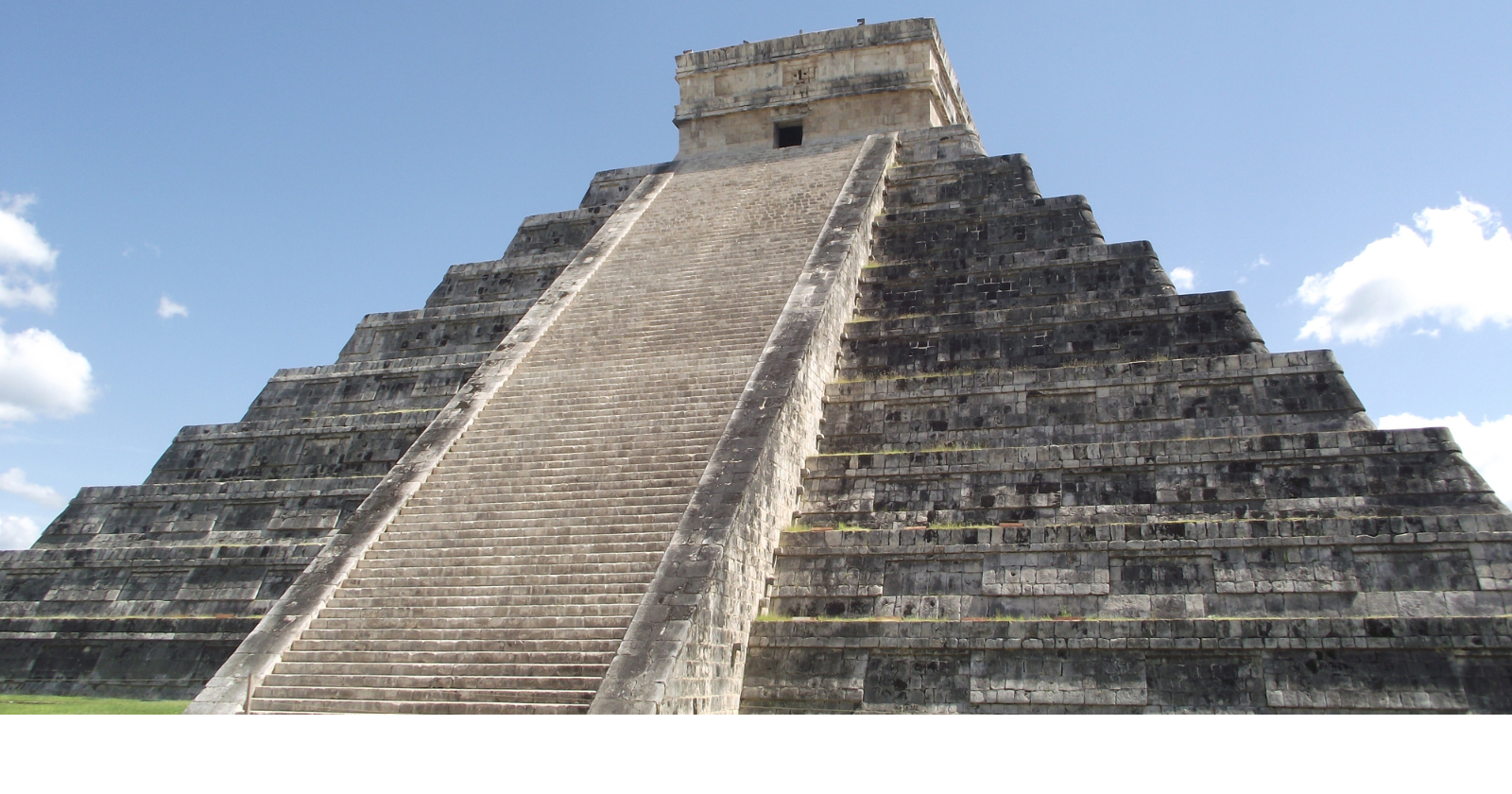
In 1096, scholars were already teaching in the streets of Oxford, in the kingdom of William II, the son of William the Conqueror. England had been under Norman rule for thirty years, the Domesday Book had been compiled ten years earlier, and the First Crusade had just been declared by Pope Urban II at Clermont. Across the Atlantic, in the central highlands of what is now Mexico, the Aztec people would not arrive in the Valley of Mexico for another two hundred years. They would not see the omen of the eagle, the cactus and the snake that, according to tradition, told them where to build their capital, until 1325. By the time the first stones of Tenochtitlán were laid on a small island in Lake Texcoco, Oxford had been a centre of teaching for 229 years.
The comparison is one of those facts that everyone half-remembers as plausibly true and few people stop to verify. A 2024 Smithsonian Magazine piece by Meilan Solly documented the contrast in some detail. The dates check out. The cultural intuition about which institution feels older does not.
Oxford does not actually have a founding date
The 1096 date for Oxford is the earliest documented evidence of teaching activity in the town, not the formal foundation of the university. According to Oxford’s own history page, “there is no clear date of foundation but teaching existed at Oxford in some form in 1096.” The university grew rapidly from 1167, when Henry II banned English students from attending the University of Paris during his ongoing feud with Thomas Becket, sending a generation of English scholars home to study in Oxford instead. By 1188, the historian and royal clerk Gerald of Wales was giving public readings to assembled Oxford dons. By around 1190, the first known overseas student, Emo of Friesland, had arrived. By 1248, Henry III had issued the university a royal charter. By 1264, three original colleges — University, Balliol and Merton — were operating as residential institutions for students. The institution emerged over the course of a century and a half, not in any single founding moment.
The other claimants for “oldest university” are older still. The University of Bologna, generally regarded as the oldest in continuous operation, dates to 1088. The University of Paris emerged around 1150. These three institutions, together with a small handful of others, laid the foundations for the European university system that the rest of the world eventually adopted. Oxford is the second-oldest university in continuous operation in the world, and the oldest in the English-speaking world.
Tenochtitlán: the city founded on an omen
The Aztec people, who called themselves the Mexica, arrived in the Valley of Mexico in the early 14th century after a long migration from a homeland in the northwest of Mexico called Aztlán. According to Britannica’s account of the city, the founding of Tenochtitlán in 1325 followed a long pilgrimage during which the Mexica’s patron god Huitzilopochtli instructed them to settle wherever they saw an eagle perched on a prickly pear cactus, eating a snake. They saw the omen on a small island in Lake Texcoco, in the Valley of Mexico. The image is preserved on the modern Mexican flag.
The city the Mexica built on that island grew rapidly. Originally confined to two small islands, Tenochtitlán was extended through the construction of artificial islands, called chinampas, until the city covered more than five square miles of the lake. It was connected to the mainland by causeways, supplied with fresh water by aqueducts, and traversed by a network of canals. Estimates of its peak population vary considerably. The Britannica entry gives a figure of about 400,000 people in 1519, “the largest residential concentration in Mesoamerican history” and larger than any contemporary European city, including Paris, London, or Rome. Other scholarly sources give more conservative figures in the range of 200,000 to 300,000. By any measure, it was among the most populous cities in the world at the time of Spanish contact.
The Aztec Empire as a political entity dates not from the founding of the city but from the formation of the Triple Alliance in 1428, when Tenochtitlán joined with the neighbouring cities of Texcoco and Tlacopán to dominate central Mexico. By that point, Oxford had been operating as a university for over three centuries, had survived multiple plague outbreaks, had produced Roger Bacon and John Wycliffe, and had been teaching the Latin classics to clerics, lawyers and merchants’ sons for so long that the institution was already considered ancient by its own English contemporaries.
What the comparison actually changes
The intuition that gets disrupted is not about Oxford. Most people are aware that the university is old. The intuition that gets disrupted is about the Aztecs. Aztec civilization tends to feel anchored in the distant past, in the same general mental category as Egyptian pharaohs, Mesopotamian temples, or ancient Greece. The actual historical position of Tenochtitlán is much closer to the modern present. The city was founded 229 years after Oxford began teaching, conquered by Cortés in 1521, and razed within the lifetime of people who were born in the same year as William Shakespeare’s grandparents. Aztec civilization, in the sense of Tenochtitlán-centered Mexica society, existed for less than two hundred years before its destruction. The empire proper, dating from the Triple Alliance, existed for less than a century.
Oxford has, by contrast, existed continuously through every European event from the Crusades through the Reformation, the Industrial Revolution, two world wars, and the digital age. The same town, the same general institution, the same broad teaching tradition has been operating without interruption for over 900 years. The Aztecs were latecomers to history. Oxford was already producing graduates when the first Mexica arrived in the Valley of Mexico, and was already a chartered university when the first stones of the Templo Mayor were laid. The mental image of which civilization belongs to the deeper past, in this comparison, is almost exactly reversed.
