

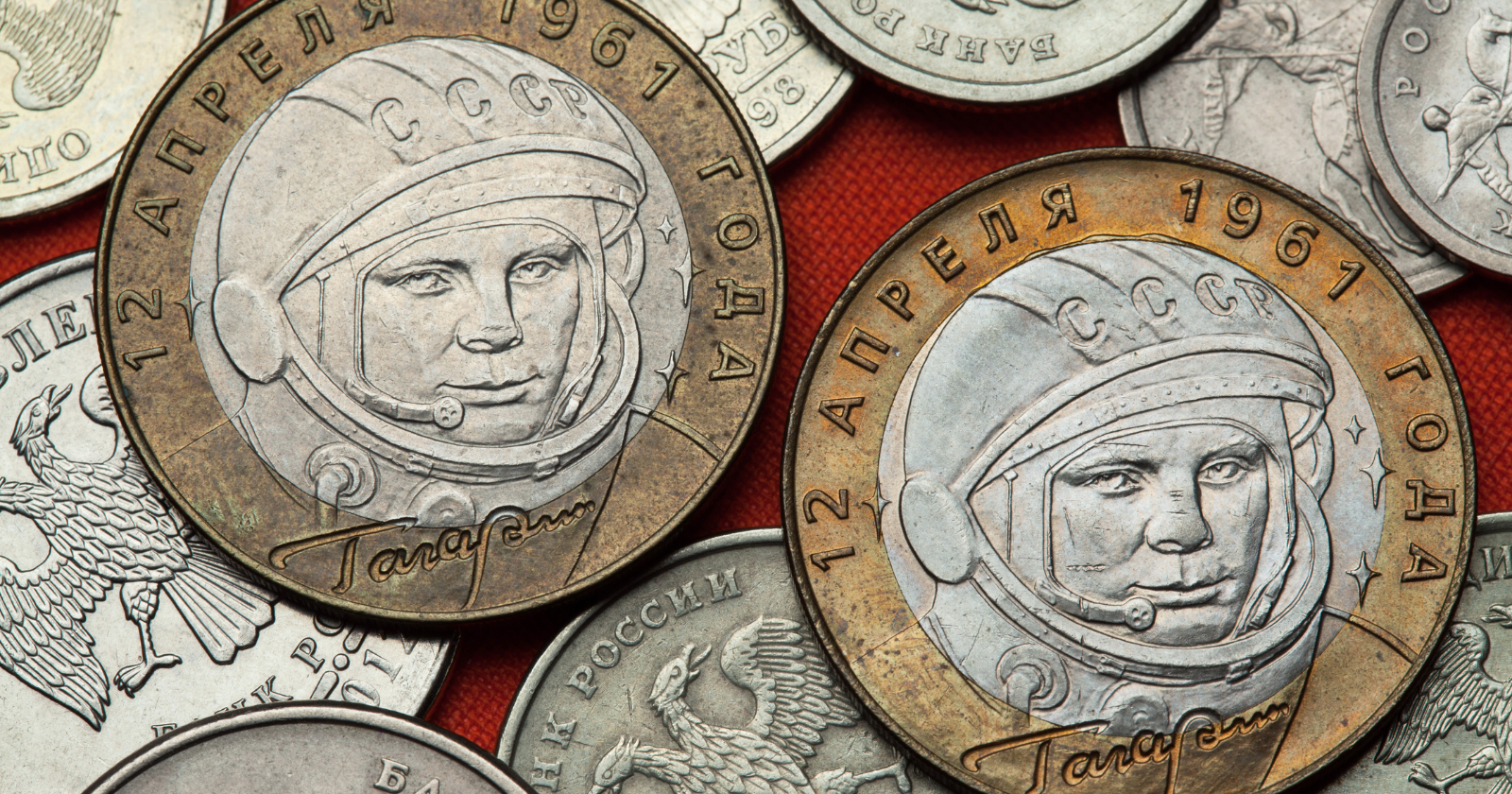
The space race that produced Vostok 1 had begun in earnest approximately three and a half years earlier, on 4 October 1957, when the Soviet Union launched the world’s first artificial satellite, Sputnik 1, into low Earth orbit and demonstrated to a startled American government that the technological gap the Cold War had assumed was opening in the United States’ favour was, in at least one critical dimension, opening in the opposite direction. The subsequent Soviet space programme was directed by the chief designer Sergei Korolev, whose existence was kept secret by the Soviet state throughout his lifetime — he was referred to in official Soviet documentation only as “the Chief Designer,” with no name attached, to prevent the CIA from identifying or targeting him. By 1960, Korolev’s design bureau had developed a workable crewed spacecraft, the Vostok 3KA, capable of carrying a single cosmonaut into low Earth orbit. The remaining open question was whether a human being could actually survive the experience of weightlessness, atmospheric re-entry, and prolonged isolation in a spherical metal pressure vessel two and a third metres wide — and, if so, who specifically would be the human being assigned to find out.
According to the Planetary Society’s reconstruction of the Vostok 1 mission and its place in the early Space Race, Gagarin was selected for the mission on the basis of a combination of factors that the Soviet selection committee considered relevant. He had been ranked first among the elite “Vanguard Six” group of finalist cosmonaut candidates after a two-day series of examinations conducted in January 1961. He was physically small — 1.57 metres tall, approximately 5 feet 2 inches — which mattered substantially in the cramped Vostok capsule. He had a charismatic public manner and an easy smile that the Soviet political leadership considered useful for the propaganda value the successful mission would generate. He was a competent fighter pilot with a clean service record, a working-class family background that fit the Soviet ideological narrative, and an even temperament that the medical staff had concluded would be relatively unlikely to break under the unprecedented psychological pressures of the planned mission. The formal nomination occurred on 8 April 1961, four days before the launch. Gherman Titov, the second-ranked candidate, was named backup.
The locked controls and the sealed envelope
The decision to lock the manual flight controls was, by every available account, the most fraught single design choice in the mission planning. As described in NASA’s National Space Science Data Center entry on the Vostok 1 spacecraft and its operational systems, the rationale was that Soviet medical and engineering staff had no empirical basis for predicting how a human brain would behave under sustained weightlessness. Animal experiments — including the orbital flights of the dogs Chernushka in March 1961 and Zvezdochka later the same month — had demonstrated that mammals could physically survive the experience and return alive. They had not demonstrated whether the higher cognitive functions of a human pilot would remain operational. The possibility of what Soviet medical literature of the period referred to as “space madness” — some form of acute psychotic break triggered by weightlessness or the visual experience of viewing Earth from above — was considered sufficiently plausible that the engineering team disabled all manual flight controls on Vostok 1. The entire mission, from launch through orbital insertion through re-entry through landing, would be controlled either by onboard automated systems or by ground command. Gagarin would, in essential respects, be a passenger on his own flight.
The compromise that addressed the obvious problem with this arrangement — what if the automated systems failed and the manual controls were the only way to bring the spacecraft home? — was an envelope. A small sealed envelope, placed inside the cabin within Gagarin’s reach, containing a slip of paper on which was written a three-digit code, 1-2-5, which would unlock the manual flight controls if entered into the appropriate keypad. The arrangement assumed that if Gagarin needed manual control, he would have the cognitive capacity to retrieve the envelope, open it, read the code, and enter it. It also assumed, somewhat optimistically, that he would not be in such a state of psychological distress that the very fact of being trusted with the code would be premature. In practice, the assumption was undermined before launch: per an EBSCO Research Starters account of the Vostok 1 mission and the pre-flight preparations, at least two members of the ground team — an instructor and a senior engineer — independently and quietly told Gagarin the code before launch, on the reasonable grounds that if he actually needed it in an emergency, fumbling with a sealed envelope in zero gravity would not be the optimal use of his attention. Gagarin therefore boarded Vostok 1 with the unlock code already memorised. He never needed to use it. The automated systems flew the entire mission.
What happened in the 108 minutes
The flight itself proceeded with a combination of operational success and individual moments of near-disaster that the Soviet authorities concealed from the international press for years afterward. As detailed in NASA’s official record of the first human spaceflight, Vostok 1 reached an orbital apogee of 327 kilometres and a perigee of approximately 181 kilometres, travelling at approximately 27,400 kilometres per hour, completing a single orbit of the Earth that carried it eastward across the Soviet Union, the Pacific Ocean, South America, the South Atlantic, Africa, and back toward the Soviet landmass. Gagarin reported the sensation of weightlessness as pleasant rather than disorienting. He described the view of Earth from orbit in language that — for a 27-year-old fighter pilot with no prior poetic training — has held up remarkably well across the subsequent 65 years: “The Earth is blue. How wonderful. It is amazing.” His call sign during the mission was Kedr, the Russian word for the Siberian cedar.
The re-entry phase was nearly fatal. The service module containing the retro-rocket and the spherical descent capsule did not separate cleanly after the deorbit burn — the umbilical cables between the two modules failed to disconnect properly, leaving the combined assembly tumbling violently for approximately ten minutes as it descended through the upper atmosphere. Gagarin, watching plasma flames pass his porthole at temperatures sufficient to burn through the umbilical, transmitted to ground control the phrase that would, in retrospect, become one of the more haunting moments in the early space programme: “I’m burning. Goodbye, comrades.” The umbilical eventually burned through. The service module separated. Normal re-entry resumed. Gagarin ejected from the descending capsule at approximately 7 kilometres altitude, descended by personal parachute, and landed in a farmer’s field near the village of Smelovka in the Saratov region, approximately 26 kilometres southwest of the city of Engels — to be greeted by a farmer’s wife and her granddaughter, who were terrified by the appearance of a man in an orange pressure suit landing in their field. His first words to them, according to subsequent reports, were “Don’t be afraid, I am a Soviet like you.” The mission had lasted, from launch to landing, 108 minutes. He was 27 years old. He had become, in the space of one circuit of the planet, the most internationally recognised human being alive — and would remain so for the seven years until his death in a MiG-15 training crash in March 1968, age 34, at which point the launch pad from which he had departed Earth was renamed Gagarinsky Start in his memory, and the date 12 April was eventually designated by the United Nations as the International Day of Human Spaceflight, to be commemorated annually for as long as the species continues to leave its home planet.