
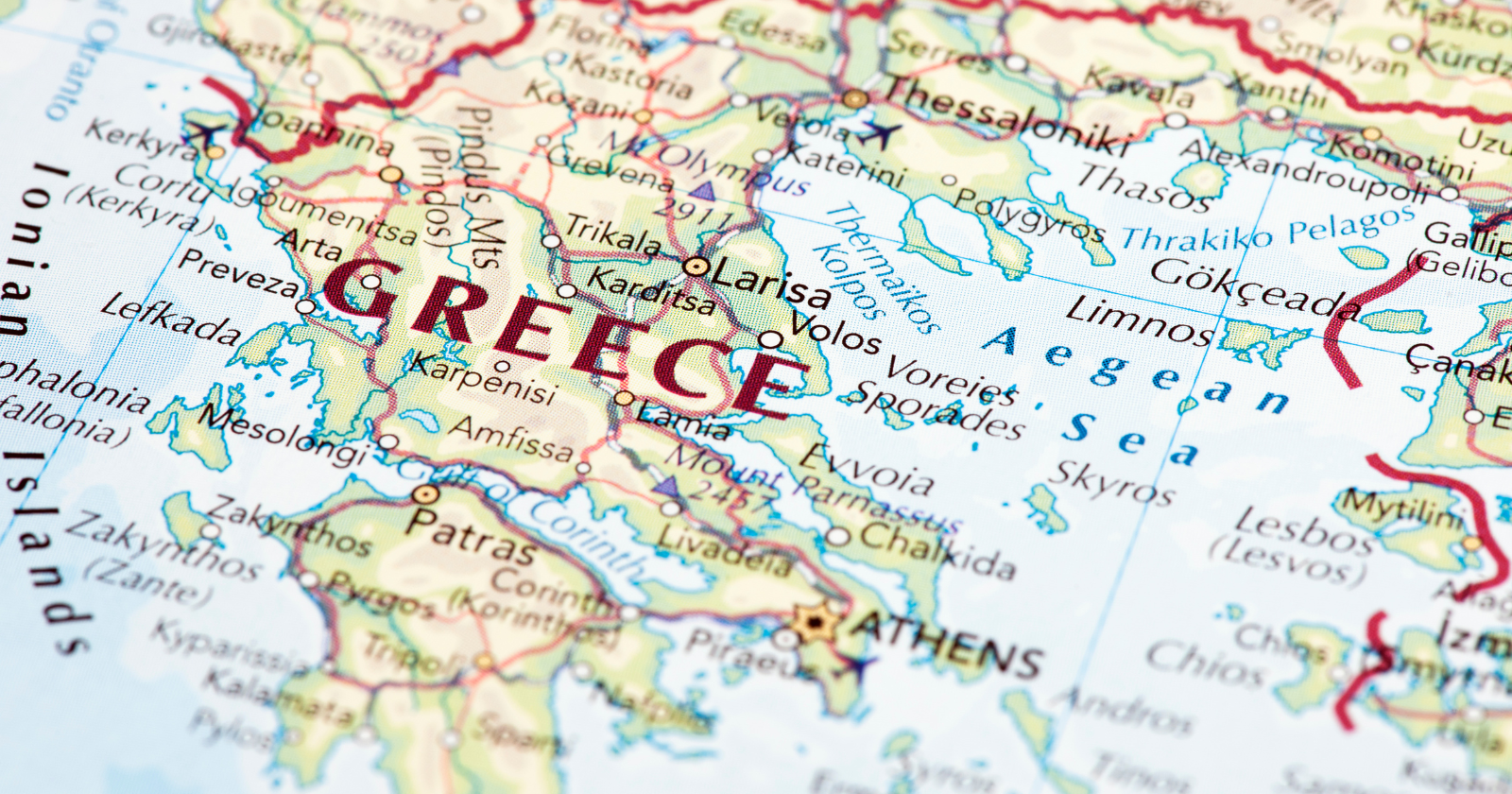
The Greek merchant ship that sank off the coast of Chios in approximately the fourth century BC was carrying, by the most likely reconstruction of the events of its final voyage, the standard mixed cargo of a moderately wealthy commercial vessel of the late Classical period. Its hold contained more than 350 ceramic amphoras — the two-handled clay storage jars that served as the standardised shipping containers of the ancient Mediterranean — of which approximately two-thirds were of a distinctive style produced on Chios itself. The ship was probably outbound from the island when it went down, possibly caught by one of the strong fluke winds that the waters around Chios remain known for. Whatever the precise cause, the ship sank with its cargo essentially intact, settled on the seabed at a depth of approximately 70 metres, and remained there for roughly the next 2,400 years, while the seawater gradually dissolved away every trace of its organic contents and left only the empty ceramic shells of the jars to mark the location.
According to the Woods Hole Oceanographic Institution’s account of the Hansson and Foley DNA analysis, this is the standard situation that confronts marine archaeologists when they investigate ancient Mediterranean shipwrecks. The jars themselves survive remarkably well — ceramic is essentially inert against seawater over archaeological timescales — but the contents they were carrying do not. Wine, olive oil, fish sauce, grain, honey, herbs, resins, and the entire commercial inventory of the ancient world ordinarily leave no physical trace inside the amphoras that once contained them. Foley’s preferred framing of the resulting interpretive problem is direct: “Imagine if you were asked to analyse the American economy just by looking at the empty shells of 40-foot shipping containers. You could say something, but not much.” For most of the modern history of marine archaeology, the contents of ancient amphoras have been inferred from indirect evidence — the shape of the jar, the place it was made, the trade patterns associated with that region, the occasional fortunate find of olive pits or visible resin residues — rather than directly determined.
What changed in 2007
The transformation began with the recognition that even after 2,400 years of immersion in seawater, the porous ceramic walls of the amphoras might still contain microscopic traces of the DNA of whatever had been stored in them. As reported by MIT News’s coverage of the Hansson and Foley paper published in October 2007 in the Journal of Archaeological Science, the team used standard molecular-biology techniques — chloroplast DNA markers and polymerase chain reaction (PCR) amplification — to test whether ancient plant DNA could be extracted from scrapings taken from the interior walls of two of the recovered Chios amphoras. The results were unambiguous. One amphora returned DNA fragments approximately 114 base pairs long, matching the maturase K gene of the olive tree (Olea europaea), and additional fragments approximately 111 base pairs long, matching the same gene in oregano (Origanum vulgare). The other amphora returned fragments matching mastic (Pistacia lentiscus), a Mediterranean shrub whose resin was used to preserve wine throughout the ancient Greek world.
The interpretation that followed was immediate. The olive-and-oregano amphora had almost certainly contained olive oil flavoured with oregano. The mastic amphora had almost certainly contained wine. Neither of these contents had survived in any visible physical form — the jars were, by every observable measure, empty — but the DNA fragments embedded in the porous ceramic walls of the jars had survived the 2,400-year immersion in cold deep seawater intact enough to be amplified, sequenced, and matched against modern reference genomes for the relevant species. The technique represented a substantial methodological breakthrough for marine archaeology, and it overturned a significant assumption about the specific cargo composition of Chian shipping. Chios was famous in antiquity primarily as a producer of wine; its coins depicted grapes hanging over amphoras of the exact style now found at the bottom of the Aegean; archaeologists and historians had long assumed that Chian amphoras carried Chian wine. The DNA evidence indicated that at least some Chian amphoras carried something else.
Why oregano in the olive oil
The presence of oregano with the olive oil is not, in retrospect, a culinary mystery. Per NBC News’s coverage of the broader implications of the Hansson and Foley findings, Foley noted that the practical use of oregano with olive oil has a longstanding empirical basis in Mediterranean food preservation. “If you go up into the hills of Greece today, the older generation of women know that adding oregano, thyme or sage not just flavours the oil, but helps preserve it longer,” Foley said. Modern chemistry has confirmed the practical observation: oregano contains substantial concentrations of carvacrol and thymol, two phenolic compounds with strong antioxidant and antimicrobial properties. Adding oregano to olive oil substantially slows the oxidative rancidification that would otherwise spoil the oil within months at Mediterranean ambient temperatures. The ancient Greek practice of flavouring olive oil with oregano was, simultaneously, a culinary choice and an empirical food-preservation technology — and possibly, in this specific case, the reason any DNA survived inside the amphora at all, since the antioxidants that preserved the oil may also have inadvertently protected the DNA fragments embedded in the ceramic.
As detailed in the 2008 ScienceDirect publication of the original Hansson and Foley paper, the broader implication of the Chios findings extends beyond the specific question of what was in that specific ship. Subsequent applications of the same DNA-recovery technique to amphoras from other shipwrecks, undertaken by Foley and collaborators in the years following the 2007 publication, have identified a wide range of contents — olive, grape, mint, rosemary, thyme, oregano, sage, juniper, mastic, terebinth, pine resin, legumes, ginger-family plants, and walnut-family plants — across the holds of multiple Mediterranean wrecks. The diversity is substantially greater than the wine-and-olive-oil simplification that previously dominated reconstructions of ancient Mediterranean trade. The amphoras were carrying everything.
The salad dressing in the room
The persistence of the specific olive-oil-with-oregano combination from the 4th century BC through the present day is, on one level, an unremarkable observation about Mediterranean cuisine. The combination is so basic, so cheap, so widely available, and so well-suited to the climate and agricultural production of the region that no other historical trajectory would have been particularly likely. Olive trees produce olive oil. Oregano grows wild across the hillsides of Greece, Italy, Turkey, and the Levant. The combination of the two as a salad dressing, a bread dip, a meat marinade, or a base for cooking has been continuous across approximately a hundred generations of Greek and Italian and broader Mediterranean cooks — long enough that the recipe predates the philosophical tradition that defined Western thought, predates the establishment of Rome, predates the construction of the Parthenon, predates essentially every cultural institution that the modern Mediterranean still recognises as its own. The salad dressing sitting on a table at your nearest Mediterranean restaurant is, in the most literal possible sense, the same condiment that was being shipped across the Aegean in clay jars during the lifetime of Socrates — bottled by ancient Greek farmers who knew, even without molecular chemistry, that adding the right herb to the right oil produced a result that would last longer, taste better, and travel well across the sea.