
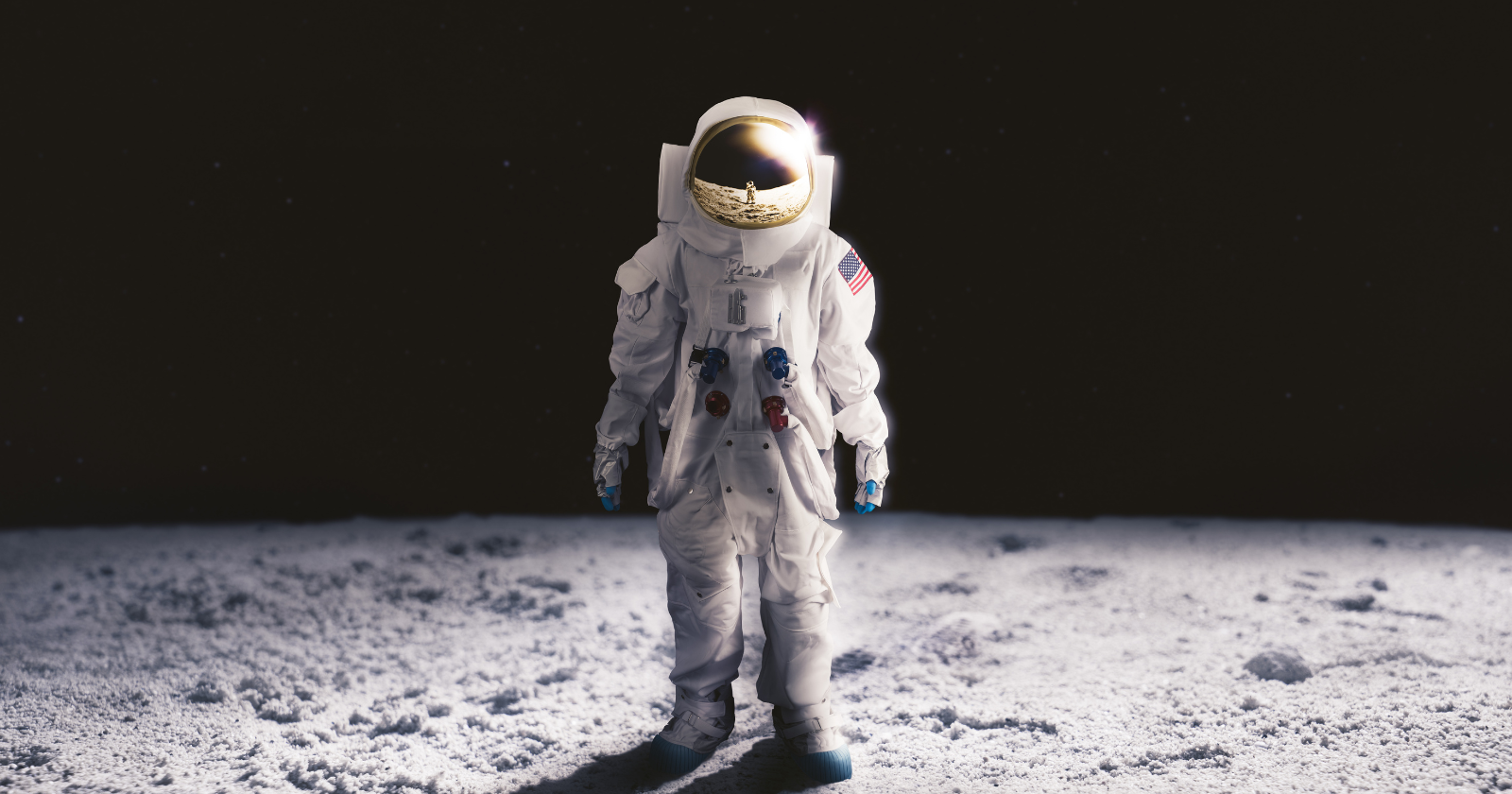
The last human being to walk on the Moon stepped off the lunar surface at 5:40 AM Coordinated Universal Time on 14 December 1972. His name was Eugene Cernan. He was the commander of Apollo 17. As he climbed the ladder back into the lunar module, he said, “We leave as we came and, God willing, as we shall return, with peace and hope for all mankind.” In the 53 years since that moment, no human being has set foot on the Moon. The Apollo programme produced six successful crewed landings between 1969 and 1972, deposited 12 American astronauts on the lunar surface, and accumulated a cumulative total of approximately 80 hours of human presence on the Moon before being terminated for budgetary and political reasons. The return that Cernan invoked turned out to take substantially longer than anyone in 1972 expected.
According to Aerospace Global News’s coverage of NASA’s revised Artemis programme in early 2026, the agency has restructured its lunar return strategy substantially over the past several years. The Artemis programme, originally announced in 2017 and formally launched in 2019, set out to return humans to the Moon by the mid-2020s. The schedule has slipped repeatedly. Artemis I, an uncrewed test flight around the Moon, succeeded in November 2022. Artemis II, the first crewed mission of the programme, successfully sent four astronauts on a 10-day flyby of the Moon in April 2026 — the first crewed lunar mission since Apollo 17 in 1972, with NASA astronauts Reid Wiseman, Victor Glover, and Christina Koch and Canadian Space Agency astronaut Jeremy Hansen launching from Kennedy Space Center on 1 April and splashing down in the Pacific Ocean off the coast of California on 10 April after travelling approximately 695,000 miles and breaking the human distance-from-Earth record set by Apollo 13 in 1970. Artemis III, which was originally planned to be the first crewed lunar landing since Apollo, has been restructured into a 2027 rendezvous and docking test in low-Earth orbit. The first actual crewed lunar landing of the Artemis era will now be Artemis IV, scheduled for 2028 — subject to further delays that have been a recurring feature of the programme since its inception.
Why Artemis is not just Apollo redux
The structural difference between Apollo and Artemis is that Apollo was designed to win a race. Artemis is designed to stay. Apollo’s six successful lunar landings deposited 12 American astronauts on the lunar surface, who collectively logged approximately 80 hours of moonwalks across roughly 300 hours of total surface presence, spread across six missions over three and a half years, with individual missions lasting between 21 hours and 75 hours on the surface. The Apollo astronauts collected rocks, deployed scientific instruments, drove a lunar rover on the later missions, and returned home. Once the Cold War political imperative had been satisfied and the immediate scientific goals had been met, the programme was cancelled, the Saturn V rockets stopped being built, and the institutional capacity to send humans to the Moon was allowed to atrophy.
The Artemis programme is structured around a different objective. NASA’s stated long-term goal is what the agency calls “sustained human presence” at the lunar south pole — meaning multiple missions per year, progressively longer surface stays, a lunar habitat module, infrastructure for refuelling and resupply, and eventually a permanent base from which scientific and exploration activities can be conducted on a continuous basis. The Artemis landing site is specifically the south polar region of the Moon, which is scientifically and strategically valuable because permanently shadowed craters in the area contain substantial deposits of water ice. Water ice can be split into hydrogen and oxygen, which can be used as breathable air, drinking water, and rocket propellant. A lunar base with access to water ice can, in principle, sustain itself far more cheaply than a base that must have all its supplies launched from Earth.
The new mission architecture
Per BBC Sky at Night Magazine’s analysis of the Artemis III restructuring, the central technical challenge that has driven the schedule changes is the development of the commercial lunar landers. NASA has contracted with SpaceX (which is developing a lunar variant of Starship) and Blue Origin (which is developing the Blue Moon lander) to provide the actual surface-landing capability. Both vehicles are still under active development. SpaceX’s Starship must demonstrate several critical technologies before it can be used for a crewed lunar landing — including cryogenic fuel transfer in orbit, autonomous docking with the Orion crew capsule, and at least one successful uncrewed landing on the lunar surface. The cumulative technical demands have pushed the realistic timeline for the first crewed Artemis landing well beyond the original 2024 target, and the restructured Artemis III rendezvous-and-docking test in 2027 is intended to demonstrate the orbital procedures that the eventual landing mission will require.
The geopolitical context has also shifted substantially since the Artemis programme began. China’s space programme has announced a target of landing its own astronauts on the Moon by 2030 — the first crewed lunar landing in Chinese history, and a milestone that would substantially close the gap with the United States in space capability. China is also developing the International Lunar Research Station (ILRS) in partnership with Russia and several other countries, with completion targeted for the 2030s. The lunar south pole, with its water ice and its strategic value as a base for further exploration, is the destination for both programmes. The competing timelines mean that the next decade of lunar activity will involve at least two distinct national efforts converging on the same small region of the Moon.
What “sustained presence” actually means
As reported by World Today News’s coverage of the Artemis timeline and goals, the path from a single Artemis IV landing in 2028 to genuine sustained human presence on the Moon involves a long sequence of additional missions, infrastructure deployments, and technological developments that NASA’s current programme has scheduled into the 2030s. The agency’s planning documents anticipate progressively longer crewed surface stays, the deployment of habitat modules that can support multi-month occupancy, lunar surface mobility systems for exploring beyond the immediate landing area, in-situ resource utilisation systems that can extract and process water ice into usable resources, and eventually a permanent lunar outpost from which continuous human occupation becomes possible.
Whether the species will actually achieve sustained lunar presence in the 2030s remains genuinely uncertain. The Artemis programme has slipped repeatedly. The development of the commercial landers continues to be technically demanding. The political and budgetary support for the programme has fluctuated across administrations. China’s competing programme adds geopolitical pressure that may accelerate or complicate the US timeline depending on how the relationship between the two space programmes develops. What is no longer uncertain is the basic strategic direction: the leading human space programmes are now committed, at least in principle, to making the Moon a place where humans live rather than a place where they briefly visit. If that commitment holds, the next decade will produce the first sustained off-world human presence in the history of the species — a transition that would be, in civilisational terms, at least as significant as the first lunar landing itself was in 1969. The first Moon landing required getting there. This one requires staying.
