
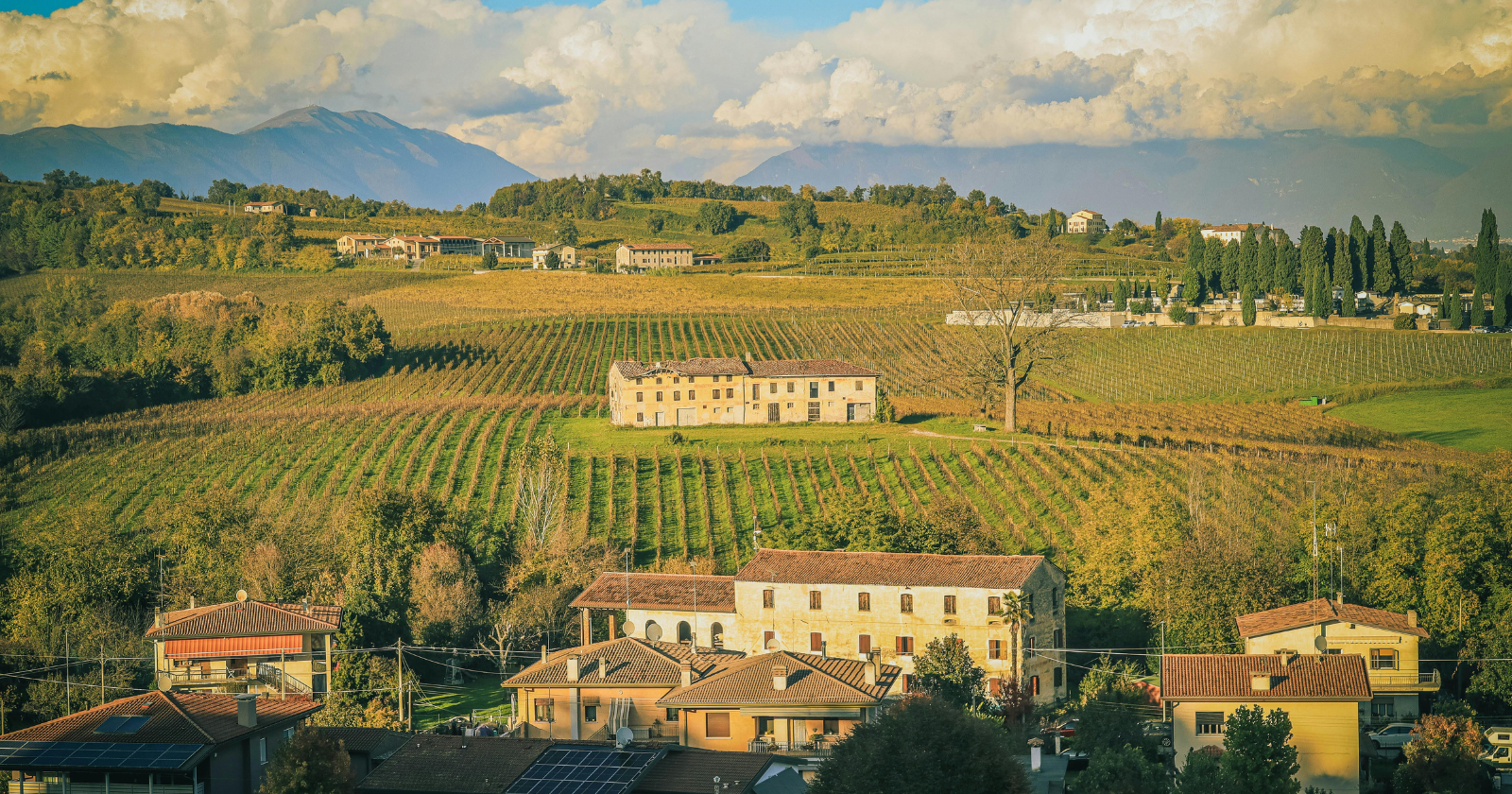
If you walk through the centre of Mussomeli, a hilltop town in central Sicily with a population of about 10,000, you can stop in the local tourist office and pick up a list of houses that the municipality is selling for €1 each. The list runs to several dozen properties. Most are two or three storeys, built of local stone, with views down the valley and across the surrounding hills. The catch — and there is a catch — is that the buyer must commit to renovating the property within a fixed time period (typically three years), spend at least €15,000 to €20,000 on the renovation, and pay a refundable deposit of around €5,000 to ensure the work actually gets done. Mussomeli is one of dozens of small Italian towns that have launched €1 house programmes since around 2017, in a coordinated attempt by local mayors to reverse decades of population loss by attracting outsiders to repopulate emptying villages.
The reason these programmes exist is a national demographic crisis that has been building for two decades and is now arriving in concentrated form across the country’s southern and rural regions. According to ISTAT, the Italian national statistics agency, in its most recent demographic report covering 2025, Italy’s resident population at the start of 2026 stands at 58.94 million, having fallen from a peak of 60.8 million in 2014. The country recorded 355,000 births in 2025 against 652,000 deaths — a natural decline of 297,000 in a single year. Only positive net migration of roughly the same magnitude has kept the total population from falling further. The fertility rate dropped to 1.14 children per woman in 2025, down from 1.18 in 2024, in both cases far below the 2.1 replacement rate required to maintain population. The absolute number of births in 2025 is the lowest figure since Italian unification in 1861.
The trajectory
The projections that ISTAT publishes for the coming decades are the kind of figures that policymakers find difficult to absorb. According to an ISTAT projection released in July 2025, Italy’s population will decline from approximately 59 million in 2025 to 54.7 million by 2050 — a loss of just over 4 million people in 25 years, equivalent to losing the entire population of Norway. By 2080, the projection extends to 45.8 million — a 22 percent reduction from the current level. The decline accelerates over time because each successive generation of women is smaller than the previous one, meaning fewer potential mothers even if the fertility rate stabilises.
The age structure of the remaining population is projected to shift dramatically. Italians aged 65 or older currently make up approximately 24 percent of the population. By 2050, that figure is projected to reach 34 percent. The median age is currently 48 — already the highest of any large European country — and is projected to rise above 50 by mid-century. The working-age population (people aged 15 to 64) is projected to shrink by approximately 7.8 million by 2050, a 21 percent decline, with proportionally fewer workers supporting proportionally more retirees. The implications for the Italian pension system, healthcare expenditure, and overall economic productivity are the subject of substantial policy concern at both the national and EU levels.
Why the south is being hit hardest
The demographic decline is not geographically uniform. According to a 2026 analysis of Italian regional demographic trends, the southern regions of Italy — what Italians call the Mezzogiorno — are projected to lose 3.4 million residents by 2050 and up to 7.9 million by 2080. The northern regions, supported by inflows of immigrants and internal migration of younger southern Italians toward northern employment opportunities, may see modest population growth through 2030 before beginning their own decline. Specific southern regions are projected to be particularly hard hit. Molise, Basilicata, Calabria, and Sardinia are all forecast to lose substantial fractions of their populations over the coming decades, continuing what some demographers have called an “apparent spiral of no return” produced by decades of youth out-migration and economic stagnation.
The decline in these regions has produced an unusual visible consequence: half-empty towns. Across Sicily, Calabria, Basilicata, Sardinia, and other parts of the south, villages that once had populations of 5,000 or 10,000 now have one or two thousand residents. Houses sit empty because their owners have died and their children have moved north or abroad and have no interest in maintaining a rural property. Local economies have collapsed because the customer base has disappeared. Local schools have closed because there are no children to attend them. The €1 house programmes are an attempt by mayors of such towns to reverse the process by making the empty houses essentially free to anyone willing to commit to bringing them back into use.
The €1 house experiment
The first €1 house programme in Italy was launched in 2008 by the mayor of Salemi, in Sicily, a programme that proved difficult to manage and was eventually shut down. The model was revived around 2017 by the mayor of Mussomeli, who structured the programme more carefully — requiring committed renovation timelines, refundable deposits, and a working partnership with the local cultural and tourism authorities. The Mussomeli programme proved successful enough that other Sicilian and Calabrian towns adopted similar approaches. By 2026, dozens of Italian municipalities have active or recent €1 house programmes, including Sambuca di Sicilia, Cinquefrondi, Patrica, Locana, Bivona, and others. A 2019 auction in Sambuca di Sicilia, advertised internationally by CNN and other media outlets, received approximately 16,000 applications for 16 houses.
The programmes have produced varied results. Some towns have successfully attracted several dozen new residents, often foreign retirees or remote workers who wanted to own property in a Mediterranean climate and were willing to spend the renovation budget. Others have seen high initial interest followed by relatively few completed transactions, as buyers discovered that the €15,000-€50,000 renovation budgets were realistic only for properties in reasonable structural condition, and that obtaining building permits and contractors in rural Sicily was more complicated than the marketing brochures suggested. Locana in northern Italy has supplemented its €1 house programme with cash grants of approximately €9,000 to families with children who move in. The combined effect across all programmes is small relative to the demographic problem — perhaps a few thousand renovated houses across hundreds of declining municipalities — but the programmes have substantial symbolic value and have brought international attention to the underlying issue.
Why the standard policy levers haven’t worked
Italian governments of various political compositions have, over the past two decades, attempted multiple policy responses to the falling fertility rate. These have included baby bonuses (one-time payments to new parents), child tax credits, expanded paid parental leave, subsidised childcare, and various forms of family allowance. None of these has produced a meaningful sustained increase in the fertility rate. The current government under Prime Minister Giorgia Meloni has framed the demographic decline as a national emergency and has expanded family-support policies under a “Decreto Famiglia” framework, but the 2024-2025 fertility figures suggest that these measures have not reversed the underlying trend.
The reasons Italian fertility has fallen so far below replacement appear to be a combination of structural and cultural factors that are difficult to address through individual policy interventions. Young Italians face high unemployment rates, particularly in the south, and tend to remain in their parents’ households well into their thirties because of housing costs. Career stability arrives late in life relative to other European countries.
The expectation that women will take primary responsibility for child-rearing, combined with insufficient subsidised childcare in many regions, makes combining children with careers difficult. The average age at first birth has risen to 32.7 years, leaving a relatively short window for additional children. Italy is not unique in facing these pressures — Spain, Greece, Portugal, Japan, South Korea, and several Eastern European countries are facing similar or worse trajectories — but Italy has reached the upper edge of European demographic decline, and the €1 houses that line the streets of half-empty Sicilian villages are the most visible symptom of where the trajectory leads.
