

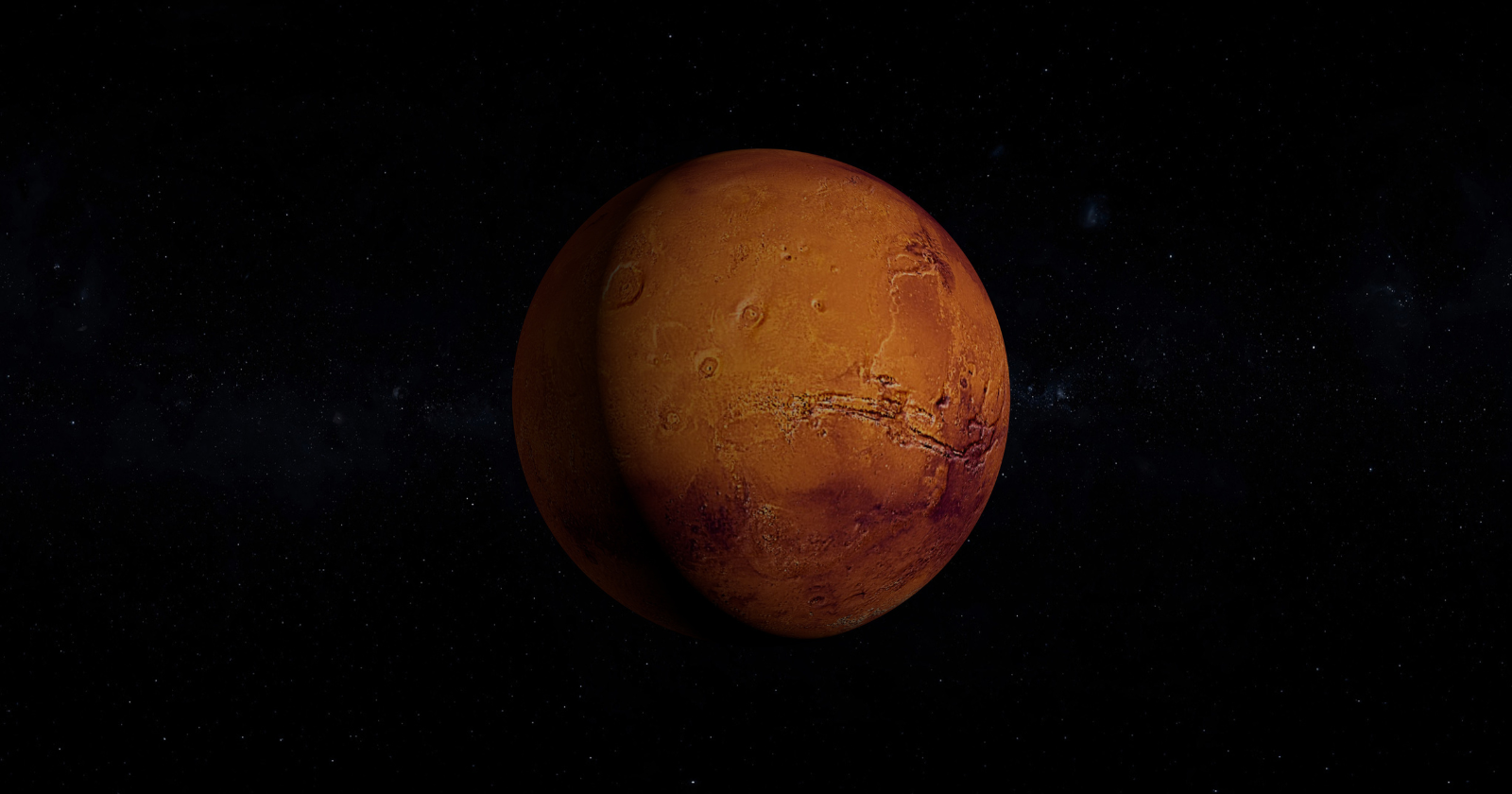
In approximately five years, if everything goes to plan, a small sealed canister containing roughly two pounds of Martian dirt and rock will arrive on Earth — and for the first time in the history of the species, humans will be able to hold a piece of another planet in their hands. The dirt and rock will not have come back via the NASA-led Mars Sample Return programme that has been in development for over a decade, despite the Perseverance rover having spent the past five years systematically collecting and caching samples on the Martian surface in preparation for exactly that mission. The samples will have come back, instead, via a Chinese mission called Tianwen-3, which has accelerated its schedule by two years, has now been formally unveiled with international cooperation invited, and is on track to beat the American-European effort to the historic distinction of returning the first material ever brought back from the surface of another planet. Humans have already brought back lunar material in substantial quantities — approximately 382 kilograms during the Apollo programme between 1969 and 1972, another 326 grams via the Soviet Luna 16, 20, and 24 robotic missions in the early 1970s, and most recently the 1.731 kilograms delivered by China’s own Chang’e-5 mission in December 2020 and the 1.935 kilograms from Chang’e-6’s far-side mission in June 2024. Humans have brought back samples from a comet (Stardust, 2006), from solar wind (Genesis, 2004), and from three near-Earth asteroids (Japan’s Hayabusa in 2010, Hayabusa2 in 2020, and NASA’s OSIRIS-REx in 2023). What humans have not yet brought back, despite multiple proposed mission architectures across multiple decades, is material from the surface of any planet other than Earth. Tianwen-3, if it succeeds, would close that specific gap.
According to a comprehensive reference summary of the Tianwen-3 mission architecture and scientific objectives, the mission’s two-launch design distributes the technical challenge across complementary spacecraft. One Long March 5 rocket will carry the lander and ascent vehicle, which together will descend to the Martian surface, conduct the surface operations, and launch the collected samples back into Mars orbit. The other Long March 5 will carry the orbiter and Earth-return module, which will rendezvous with the ascent vehicle in Mars orbit, capture the sample container, and carry it back to Earth across the subsequent return trip. The total mission duration is approximately three years from first launch to sample arrival. The Mars operations themselves are scheduled to last approximately one year, during which the lander will collect samples by three distinct methods: surface scoop sampling, drill-based subsurface sampling to two metres depth, and drone-assisted grabbing of material from locations within several hundred metres of the landing site. The drone, which replaces the rover that was originally considered for the mission, allows the team to sample a broader area without the engineering complexity of a long-duration mobile vehicle.
Why two metres of drilling matters
The two-metre drilling depth is, in technical terms, the most scientifically distinctive element of the Tianwen-3 mission. As reported by the Planetary Society’s analysis of the mission’s scientific design and the engineering trade-offs involved, NASA’s Perseverance rover, which has been operating on Mars since February 2021 and has been collecting samples for the proposed NASA-ESA Mars Sample Return programme, drills to a depth of approximately five millimetres. The five-millimetre depth is sufficient to extract intact rock cores from surface formations, but it does not penetrate below the layer of Martian surface material that has been continuously exposed to cosmic radiation across the past several billion years. The Martian surface, lacking the protective magnetic field and substantial atmosphere that shield Earth’s surface from high-energy particles, receives approximately a hundred times the radiation dose of equivalent terrestrial environments. Any biosignatures — fragments of ancient microbial activity, organic molecules, isotopic patterns suggesting past biological processes — that may have once existed in surface materials have, over geological timescales, been substantially degraded by this radiation. Material protected by even one or two metres of overlying regolith experiences dramatically less radiation exposure and is correspondingly more likely to preserve any biological evidence that may exist.
The Tianwen-3 mission’s chief scientist, Hou Zengqian, an academician of the Chinese Academy of Sciences, has emphasised that the two-metre drilling capability is a world first for Mars exploration. The choice of landing site, currently being narrowed from an initial pool of 86 candidates to 19 and eventually to three by the end of 2026, is being driven by the combined requirements of engineering feasibility and biosignature preservation potential. The current pre-selected landing zones — Amazonis Planitia, Utopia Planitia (where the Tianwen-1 mission’s Zhurong rover landed in 2021), and Chryse Planitia — were chosen specifically because they show evidence of ancient water activity, with sedimentary features suggesting that the relevant terrain was once submerged beneath standing water and would therefore have been a more plausible environment for the kind of microbial life that might have left detectable biosignatures behind.
What happened to the NASA programme
The comparison between Tianwen-3 and the NASA-ESA Mars Sample Return programme has, over the past year, shifted from a question of competitive timelines to a question of whether the American-European effort will happen at all. Per SpaceNews’s coverage of the international-cooperation announcement around Tianwen-3 and the broader context of competing Mars sample return programmes, NASA’s Mars Sample Return architecture had been under development for over a decade and was originally scheduled to return samples to Earth around 2033. The Perseverance rover has already collected approximately thirty surface samples on Mars and cached them for retrieval by a subsequent mission. Independent reviews flagged cost overruns potentially exceeding eleven billion dollars. The Trump administration’s FY2026 budget proposal in May 2025 called for cancelling the MSR programme entirely, and in January 2026 the US Congress confirmed that the programme would not be funded — effectively cancelling the mission in its current form. Whether NASA will revive Mars Sample Return in some redesigned, lower-cost configuration remains uncertain. The thirty samples Perseverance has already collected are, for the moment, sitting in cache tubes on the Martian surface with no formally funded mission to retrieve them. The most likely outcome, on current evidence, is that Tianwen-3 will be the only Mars sample return mission to bring back material in the foreseeable future, with the cached Perseverance samples either remaining on Mars indefinitely or being retrieved by some future mission that has not yet been planned or funded.
The broader context for the Chinese mission is, in some respects, a continuation of the same demonstration of capability that Chang’e-5 and Chang’e-6 have already established. As described by a Chinese government summary of Hou Zengqian’s published mission overview in Nature Astronomy, the Chinese space programme has now successfully completed two lunar sample return missions, the first soft landing on the far side of the Moon, the first crewed orbital station built and operated entirely without American or Russian participation, and a successful Mars orbiter, lander, and rover combination on the first attempt. The Tianwen-3 mission extends this trajectory into the planetary-sample-return domain. China has made the mission unusually open to international participation — allocating twenty kilograms of payload mass for international scientific instruments, selecting five international and Hong Kong/Macao cooperation projects in April 2026, and committing to provide international scientists access to the returned samples once safety verification is complete. The first Mars samples ever returned to Earth, if Tianwen-3 succeeds on schedule, will be analysed in a high-security laboratory currently under construction in China, with the resulting data and material made available, by the mission’s own stated policy, to scientists worldwide.