

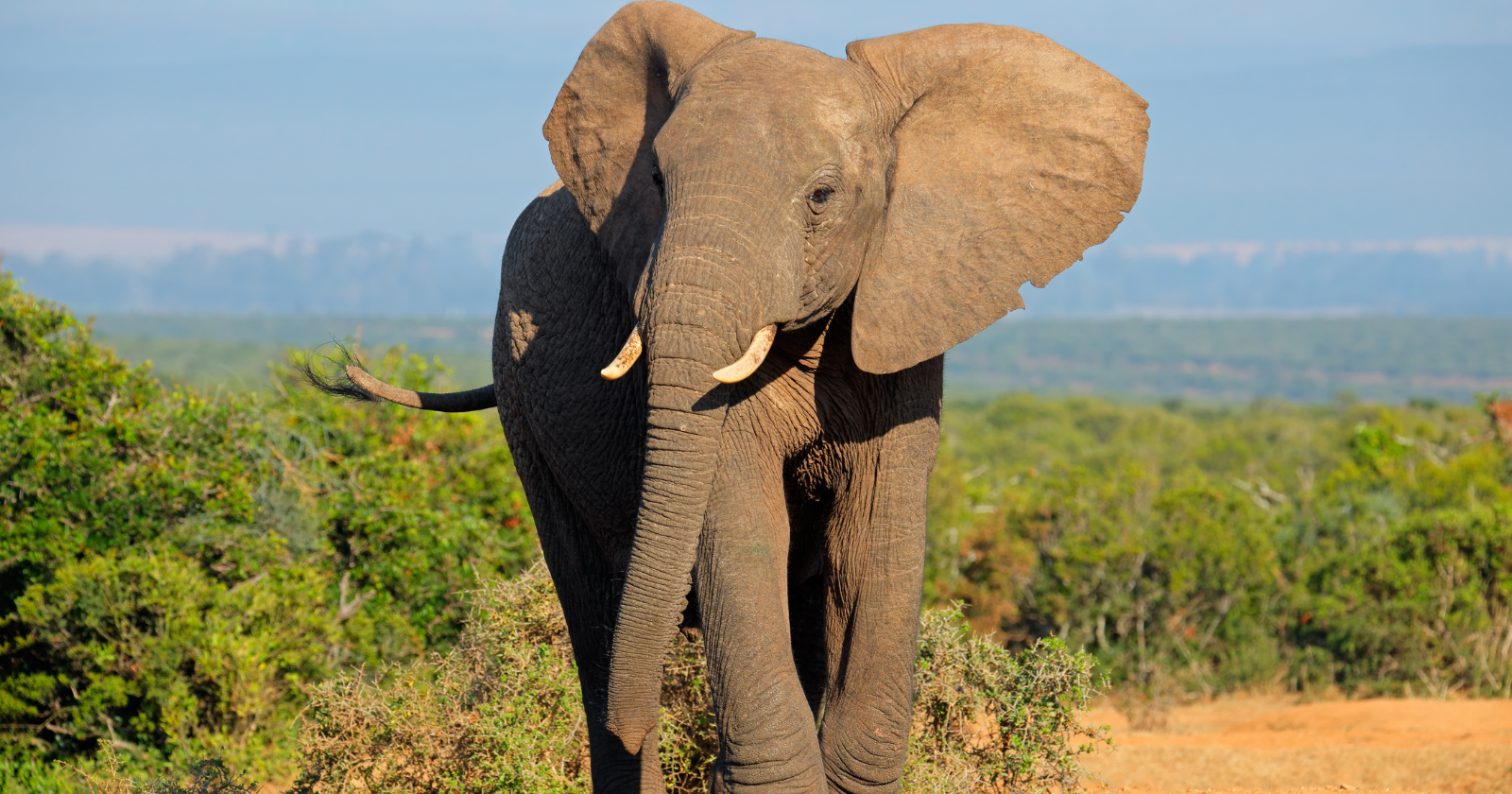
A young bull elephant in southern Africa has spent the past two years walking. Fitted with a GPS collar north of Sioma Ngwezi National Park in Zambia in June 2023, the animal, known to researchers as Z16, has since covered close to 12,000 kilometres on foot. That is roughly three times the distance from New York to Los Angeles. Along the way he crossed into four countries and moved through six national parks. The figures come from Elephant Connection, the conservation NGO that fitted the collar, and were reported in December by Mongabay in a wider piece on how elephants use the region’s fragmented ranges. The distance is the least interesting part. What stands out is the shape of the route, and the fact that most of the population does not follow it.
What the collar recorded
Z16 did not wander at random. In early 2024 he used the Sobbe Corridor and neighbouring Mudumu National Park in Namibia to leave Zambia and cross back into northern Botswana, then headed south to Makgadikgadi National Park via the Okavango Delta. He appears to treat Makgadikgadi as home ground. He also recently walked east to Hwange National Park in north-western Zimbabwe, hundreds of kilometres away. Kerryn Carter, a wildlife biologist and the founder of Elephant Connection, told Mongabay that bull elephants seem to take the onset of the summer rains around November as their cue to move, and that the paths they follow read like established ones rather than improvised ones. She frames the rest as a guess: her sense is that these are “old routes that have been known for a very long time.” The collar cannot confirm what an elephant remembers. It can only show that the movements are consistent and directional.
Why bulls wander and cows mostly stay
Z16’s habits are unusual for the population as a whole. Data from 291 elephants collared across all five countries of the Kavango Zambezi Transfrontier Conservation Area show that nearly half visited more than one country. Only 36 per cent of those border-crossers were female. That imbalance matters because female-headed family groups make up more than 85 per cent of the region’s elephant population of close to a quarter of a million animals. Bulls like Z16 make the map look well connected. The herds that drive the numbers largely do not travel like that. Carter’s reading is that rivers and border fences present little obstacle to bulls but are seldom crossed by cows travelling with calves. Robin Naidoo, a lead scientist with WWF-US, offers a complementary explanation: females may treat large rivers as the natural edge of their home ranges, and their reluctance to cross fences could reflect either a memory of when those fences were electrified and patrolled, or the simple fact that the remnants still block a calf.
What the fences do
The clearest evidence sits in a 2022 paper by Naidoo and colleagues in Frontiers in Conservation Science. Tracking data from collared females produced a map in which neither the animals on the Namibian side nor those on the Botswanan side ever crossed the border fence between them. The barrier held even where it had fallen into disrepair. There is a counter-example, and it needs handling precisely. Three years ago, Namibia’s Ministry of Environment and Tourism collared a female in the fenced Mahango Game Reserve. In April this year she left the reserve and walked about 150 kilometres west to Khaudum National Park, crossing several fences with no designated corridor to help her. In the reporting, it was described as the first such female movement recorded in more than fifteen years of satellite tracking in that part of Namibia. One animal in fifteen years is not a pattern. It shows the movement is possible, not that it is common, and Naidoo’s own framing is careful: in some areas the useful thing is less a defined micro-corridor than a general permeability across the whole landscape.
The corridor as infrastructure
The Sobbe Corridor that Z16 used is small. It runs roughly six kilometres long and four wide, tucked into the north-western corner of a wildlife conservancy in Namibia’s Zambezi region, and it links protected areas across Botswana, Zambia and Angola. It sits inside KAZA, a transfrontier conservation area of about 520,000 square kilometres that holds an estimated 228,000 elephants and around three million people. Naidoo describes corridors like Sobbe as pressure release valves, and as ecological infrastructure that needs maintaining in the same way roads and pipes do. That framing is useful, but it can flatten the harder half of the problem. A corridor is not just a strip of habitat. It runs through land where people farm. Environmental anthropologist Emilie Köhler, who has done fieldwork at Sobbe since January 2023 and published on the landscape with Michael Bollig in the Review of Regional Research, documents the cost. Crop-raiding elephants are a serious problem for nearby farmers, who receive no compensation if their fields are not adequately protected and often cannot afford strong defences. Some camp near their crops for weeks, using fires and drums to drive elephants off at night. What Köhler also records is a striking tolerance despite this. Farmers benefit from partial compensation, from conservancy jobs as game guards, and from a system in which the regulated trophy hunting of a small number of elephants, four in 2023, funds things like home electrification. One village headman told her the presence of elephants on their land was proof the country was “still alive.”
The herds are the harder problem
The case for corridors rests on easing overpopulation by letting elephants spread out. That logic depends on the animals that make up the bulk of the population, and those animals mostly stay put. Z16 makes a good story because he is an outlier. His route is long, legible and easy to follow. The female herds that would relieve pressure on crowded ranges cross borders only rarely, and the fences that hold them are as much social and political structures as physical ones. What to watch is not the next wandering bull, but whether the Mahango female proves a one-off or the leading edge of something the tracking will record again. If corridors are to work as their advocates hope, they will have to work for the herds, not only for the animals that trace the cleaner line.