
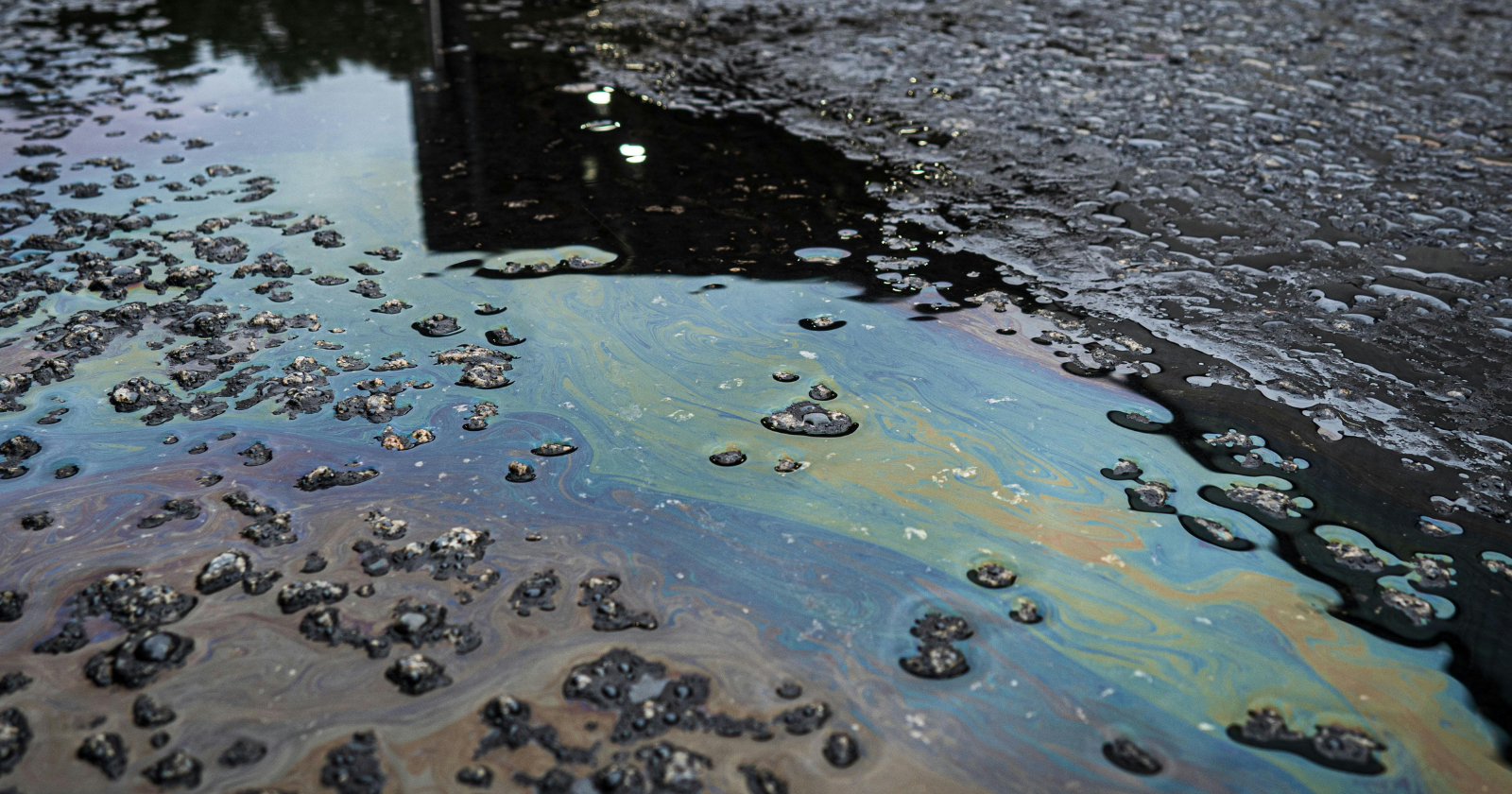
The waste oil worked beautifully. That was the problem.
Spray it across a dirt road in a Missouri summer and the dust simply stopped, for months at a stretch. Russell Bliss, a waste hauler with a tanker truck and a good line in salesmanship, had tried the trick on his own property first. Then he sold it to horse arenas, car parks and eventually to Times Beach, a riverside community with unpaved streets and no budget to seal them. Cheap, effective, no obvious downside. The Environmental Protection Agency’s own reconstruction of the disaster explains what else was in the drum.
Where the oil came from
A chemical plant in Verona, in the state’s south-west. Hoffman-Taff manufactured 2,4,5-T there for the US Army, one of the two ingredients in the defoliant known as Agent Orange. In 1969 it leased part of the site to the Northeastern Pharmaceutical and Chemical Company, which made hexachlorophene for antibacterial soap. Both processes generated the same unwanted by-product, 2,3,7,8-tetrachlorodibenzo-p-dioxin, and it sat in tanks because nobody had a better plan for it.
Bliss was hired to empty those tanks. He stirred the contents into his waste oil and drove off to fulfil his dust suppression contracts.
The horses died first
Times Beach knew none of this for more than a decade, because the first warning went off somewhere else entirely. In May 1971, the owners of Shenandoah Stables near Moscow Mills paid Bliss to treat the floor of their arena. Birds began falling from the rafters. Cats and dogs died, then dozens of horses. The stable owner’s six-year-old daughter was admitted to hospital.
Her mother, Judy Piatt, suspected the spraying immediately.
Bliss assured her it was nothing but crankcase oil.
So she began tailing Bliss and his drivers herself, borrowing cars and disguises to do it, as St. Louis Magazine recounted three decades later. Federal scientists tied dioxin to the illnesses by 1974, and investigators went on to trace the stuff to dozens of Missouri sites. Times Beach was one of them. Nobody told the residents until late 1982.
The flood that settled the argument
Timing did the rest. The EPA sampled the town’s roads and verges through November and early December of 1982, and before the laboratory results came back the Meramec River rose and put Times Beach under water. Whatever had been sitting in the road surface was now in people’s gardens and living rooms. Results showed dioxin at up to 127 parts per billion in a state where one part per billion was considered the line, per the Missouri Department of Natural Resources, and the agency went public two days before Christmas.
A locked room in Eureka
On 22 February 1983, EPA administrator Anne Burford stood in a hotel conference room in the neighbouring town of Eureka and told the people of Times Beach that their community was finished. Residents who could not fit inside listened on loudspeakers in the car park. A joint statement from the EPA, FEMA and the state of Missouri cited CDC advice that the contamination posed “a continuing threat to the health of citizens”. It committed $33.1 million in Superfund money to buy 800 homes and 30 businesses outright. More than 2,000 people were permanently relocated. Missouri’s governor dissolved the town by executive order in 1985.
Burning what was left
Buying a town is one thing. Disposing of one is another. After a 1990 consent decree between the federal government, Missouri and the Syntex companies, the answer turned out to be fire: a temporary incinerator built on the site itself, running from 1996 to 1997.
Into it went 265,354 tons of contaminated material hauled in from 27 dioxin sites across eastern Missouri. Houses, shopfronts, soil, the municipal water tower. The ash and rubble were buried on site in what the EPA calls the town mound.
Whether it was worth it
Federal officials have argued about that ever since. In 1991, Vernon Houk, the CDC official who had recommended the evacuation, told the New York Times, “Times Beach was an overreaction“, based on the best scientific information available at the time. The toxicology has not followed him. The World Health Organization’s cancer agency classifies TCDD as a known human carcinogen, a judgement first reached in 1997 and reaffirmed since. The same body notes that everyone alive carries a background level of dioxins, and that ordinary exposure is not expected to cause harm. Dose was always the question. Nobody in 1983 had a confident answer, and a town already underwater was a poor place to work one out.
The site came off the Superfund National Priorities List in 2001, and soil testing in 2012 found no significant risk to visitors or staff.
What stands there now
Roughly 270,000 people a year visit Route 66 State Park, which covers the ground where the streets once ran. There are hiking trails, a boat ramp onto the Meramec, picnic tables and horses, which is a detail with some nerve to it. The visitor centre is the old Bridgehead Inn, a 1935 roadhouse and the only Times Beach building still standing, now full of neon signs and postcards from the Mother Road’s good years.
Walk the trail on the far side and you will cross a low grassy rise that does not look like much. That is the town.
