

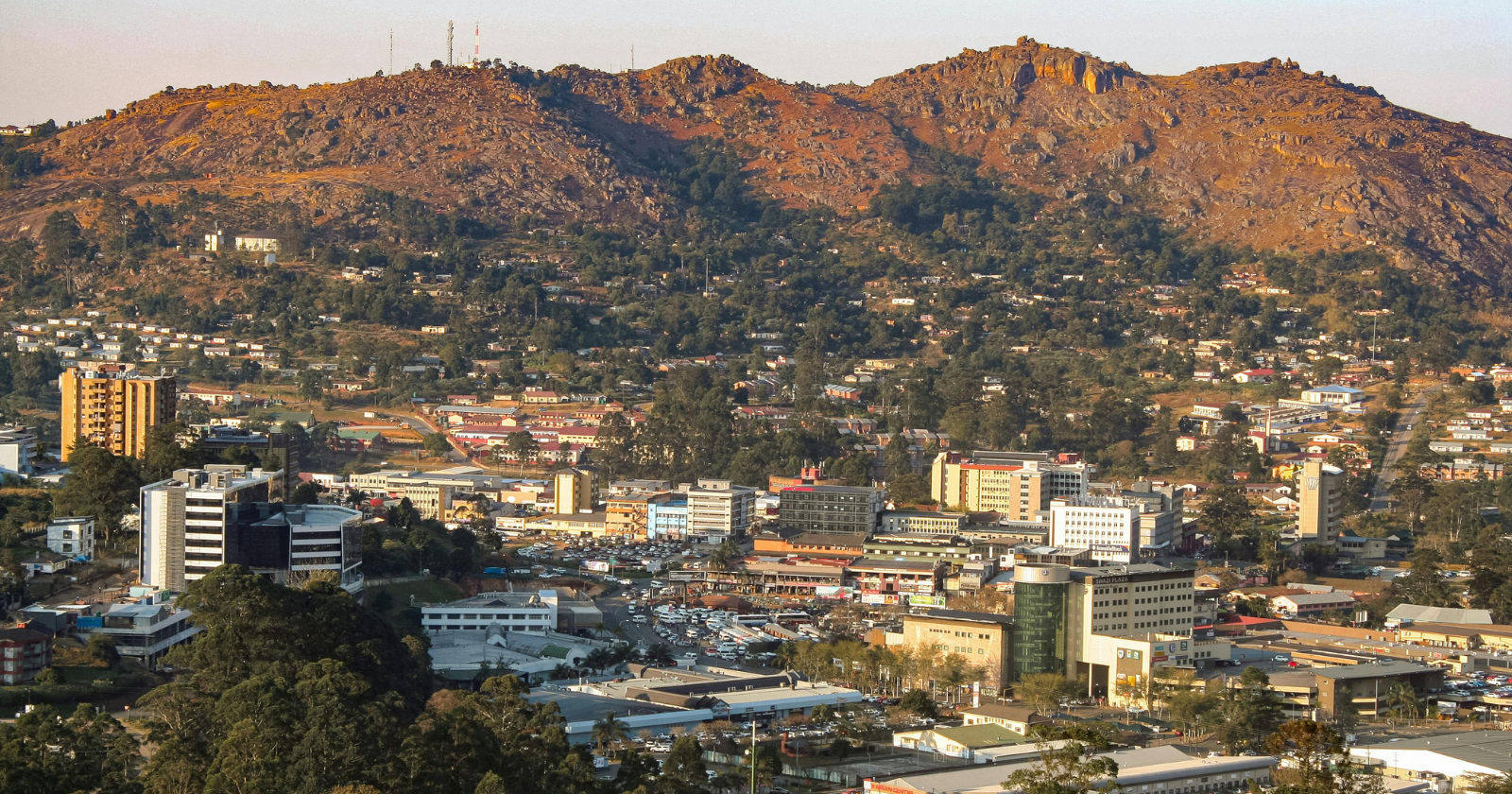
King Mswati III of Eswatini spent three days in late April 2026 marking 40 years on the throne. There was a scarlet military tunic, a choir arranged into the colours of the national flag, and a Nigerian pop star flown in to perform. He turned 58 during the celebration. He is also, on the plainest reading of the term, Africa’s last absolute monarch, and one of only a handful left anywhere on Earth.
The distinction is not rhetorical. In Eswatini, a landlocked country of roughly 1.2 million people bordered by South Africa and Mozambique, the king appoints the prime minister and the cabinet, and can dismiss them. He appoints a portion of parliament and senior judges. He holds veto power over the legislature and, under the 2005 constitution, the power to dissolve parliament. He is immune from prosecution. His mother, the Queen Mother Ntombi, reigns alongside him in a traditional dual monarchy, though the operative power sits with the king, who functions in effect above the constitution rather than under it.
What the power actually covers
Eswatini has a written constitution, adopted in 2005, and a bicameral parliament. Neither constrains the monarch in the way those words usually imply. Freedom House’s 2024 assessment describes the king as the chief executive authority, empowered to appoint and dismiss the prime minister and cabinet, with the prime minister holding little real power in practice.
Ministries, a civil service, courts, elections on a five-year cycle: the machinery of a modern state is all there. What is missing is any mechanism by which that machinery can override the person at the top of it.
Elections without parties
The most unusual feature of the system is how Eswatini runs elections while keeping organised politics out of them.
Political parties were banned in 1973, when the current king’s father, Sobhuza II, suspended the independence constitution by decree and gave absolute power to the crown. That ban has never been formally lifted. Roughly ten parties exist in the country, but none may register candidates or contest a seat. Some are further restricted under a 2008 anti-terrorism law.
In their place sits the Tinkhundla system, a network of local constituencies built around traditional meeting places. As Britannica sets out, candidates are nominated at the constituency level and stand as individuals on what the constitution calls individual merit, with no party label, no manifesto, and no campaign rally in the conventional sense. The top nominees proceed to a general election, and the winners take seats in the House of Assembly. The king then appoints further members directly, along with a share of the Senate.
The 2023 general election was the ninth since the system was introduced in 1978. The African Union sent observers, who called the vote peaceful but recommended that Eswatini review the law barring parties from taking part. The government rejects that reading. It calls the arrangement a homegrown reflection of Swazi tradition, a direct link between voters and their representatives that needs no parties to function. Opposition figures call it an appointment system dressed as a ballot.
Both claims hold: people turn out, the votes are counted, and the result never changes who governs.
Forty years, and the cost question
The April jubilee sharpened a long-running argument about royal spending. Reuters, in coverage carried by CNBC Africa, reported the celebrations against a backdrop of criticism over the luxury the monarch enjoys in a country where a large share of the population lives in poverty.
Supporters counter that his reign has expanded social provision. Free primary education is the achievement most often cited, though it dates to the Free Primary Education Act of 2010, which began implementing a right written into the 2005 constitution, rather than to any recent policy. Writing in The Nation magazine and quoted by The Africa Report, the Eswatini editor Bheki Makhubu argued that Mswati has used four decades in power to expand infrastructure and revive cultural institutions, and that he turned the aftermath of unrest to his advantage rather than being weakened by it.
What is contested, and what to watch
The unrest is the other half of the record. In 2021, pro-democracy protests spread across the country and were dispersed by security forces, with dozens of people reported killed. In January 2023, the prominent human rights lawyer Thulani Maseko, who chaired a pro-democracy forum, was shot dead at his home. No one has been held to account.
Since 2021, the Southern African Development Community has repeatedly urged the king to open a national dialogue. He convened a Sibaya, a traditional advisory gathering, after the 2023 elections, but the substantive talks that regional envoys called for have not materialised in any form that changes the structure of power.
One quieter constraint is worth noting. The king does not choose his own successor. Under Swazi custom, the heir is selected after the reigning monarch’s death by the royal council and the Queen Mother’s lineage, which places one genuine limit on an otherwise unchecked office.
The next general election is due by 2028, again without parties unless the law changes. Whether that dialogue happens before then, and whether the African Union’s recommendation is ever acted on, are the two things to watch. Neither has advanced in the months since the fortieth anniversary, and the talks urged after the 2021 unrest have now gone unrealised for close to five years.