
At 11:08 p.m. local time on Sunday, May 24, 2026, the Long March-2F Y23 carrier rocket is scheduled to lift off from the Jiuquan Satellite Launch Center in northwest China, carrying the Shenzhou-23 vessel and three astronauts to China’s Tiangong space station. The launch is, on every external measure, one of approximately a dozen crewed missions China has sent to its space station since 2021. The launch is also, on close examination, doing several pieces of distinct work that the wider cultural register has not, on the available evidence, fully absorbed as a single set of developments.
The most immediate piece of work is the duration. One of the three astronauts on board, to be selected later depending on mission progress, is scheduled to remain on the Tiangong station for a full year. The year-long stay would be a national record for China, whose Shenzhou missions have, since 2021, been sending astronauts to the station for six-month rotations. The year-long stay would also be one of the longest space missions ever conducted by any country, although still short of the 14-and-a-half-month record set by a Russian cosmonaut in 1995. The duration is, on close examination, calibrated to a specific scientific purpose. The purpose is the study of long-duration human physiology in space, which is the precondition for the longer missions that any serious crewed lunar program is going to require.
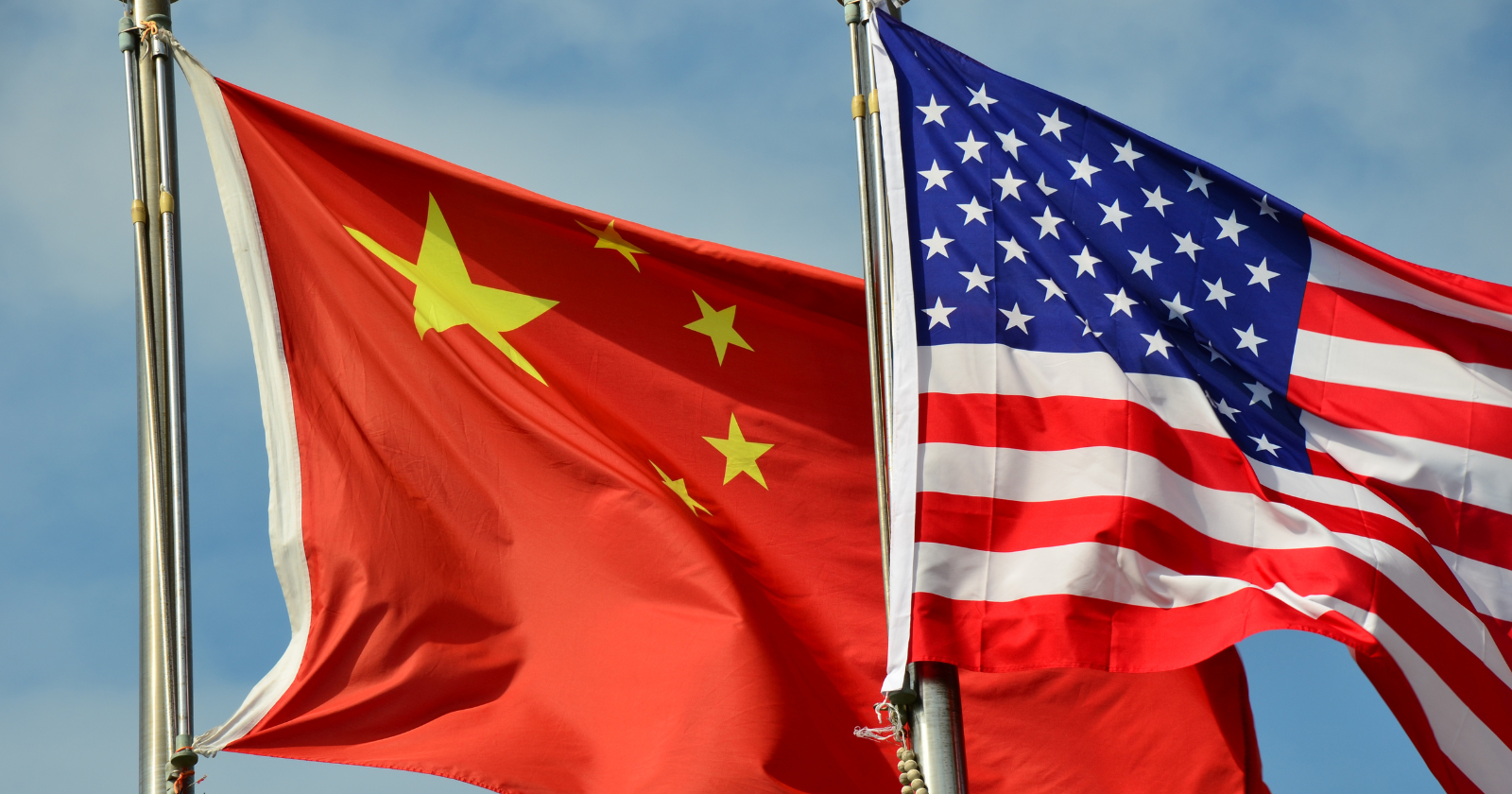
The longer-term piece of work is what the duration is preparing for. Beijing has, on the available public record, set 2030 as the target year for its first crewed lunar landing. The target is two years behind NASA’s stated target of 2028 for the return of American astronauts to the lunar surface under the Artemis program. The gap between the two timelines is the feature that has, in the last year, become the focus of considerable wider attention from defense analysts, space policy researchers, and the various journalists covering the developing situation.
What the crew actually consists of
It is worth being precise about who is going up on Sunday, because the composition of the crew is, on close examination, doing additional work beyond the scientific objectives of the mission itself.
The three astronauts on the Shenzhou-23 mission are commander Zhu Yangzhu, pilot Zhang Yuanzhi, and payload specialist Li Jiaying. The commander and pilot are both from the People’s Liberation Army’s astronaut division, which is the standard configuration for Chinese crewed missions to Tiangong. Li Jiaying, the payload specialist, is a former Hong Kong police inspector and will be the first astronaut from Hong Kong to take part in a Chinese space mission.
The Hong Kong inclusion is, on close examination, doing work that the wider register has tended to absorb without examining. The inclusion is, more specifically, a piece of political signaling about Beijing’s positioning of Hong Kong within the broader Chinese national project. The signaling has been operating across multiple domains over the previous several years. The space program, by including the first Hong Kong astronaut, is now contributing to the same broader project. The wider implication is that participation in the high-prestige national accomplishments of the space program is being deliberately extended to demonstrate the integration of Hong Kong into the Chinese national identity.
The Chinese space agency has, on the available public record, also been training two Pakistani astronauts, one of whom could join an expected mission to Tiangong later in 2026 on a short-duration basis. The Pakistani inclusion is, on the available evidence, similarly calibrated to demonstrating the diplomatic and reach of the Chinese space program beyond its national borders. The wider international coalition Beijing is constructing through the space program is, in some real way, a deliberate contrast to the American-led coalition that has historically dominated the wider international space community.
What happened with Shenzhou-20, and why it matters
The context of the current mission is worth attending to, because the previous Chinese crewed mission to Tiangong did not, on the available public record, proceed entirely according to plan. The Shenzhou-20 vessel was damaged by space debris in orbit, which required the launch of Shenzhou-22 ahead of its originally scheduled date in November 2025 to return the three Chinese astronauts onboard back to Earth.
The incident is, on close examination, more significant than the standard cultural framing has registered. The damage to Shenzhou-20 represented a genuine operational problem of the kind that crewed spaceflight programs occasionally encounter. The response, which was to accelerate the launch of the next mission to retrieve the affected crew, demonstrated that the Chinese space program has, by every available measure of its operational maturity, developed the capacity to respond to unexpected events without losing astronauts.
The capacity is what the wider international space community has been watching closely over the previous decade. The capacity is the feature that distinguishes a serious crewed spaceflight program from a national prestige project that produces occasional crewed launches without the underlying operational infrastructure to sustain them safely. The Chinese response to the Shenzhou-20 incident demonstrated, on the available evidence, that the underlying infrastructure is in place. The wider implication is that the Chinese program has, in some real way, crossed the threshold from being a developing space power to being an established one.
What the 2030 moon timeline actually involves
The target that everything else in the current Chinese space program is calibrated to, on the available public record, is the 2030 crewed lunar landing. The target is two years behind NASA’s stated 2028 target for the return of American astronauts to the lunar surface. The gap is, on close examination, significant.
The Chinese lunar program’s chief scientist, Wu Weiren, has stated that Beijing’s public timeline is intentionally conservative. The framing suggests that the actual internal target may be earlier than 2030, and that the public 2030 date is calibrated to allow for the various contingencies that lunar programs of this kind encounter. The framing is consistent with the broader pattern of Chinese space program announcements, which have tended to set public targets that the program has, in most cases, met or exceeded.
The 2030 timeline depends on several conditions being met. The conditions include the development of a heavy-lift launch vehicle capable of sending crewed vehicles to lunar orbit, the development of a lunar landing vehicle, the establishment of the relevant communications and tracking infrastructure, and the demonstration of long-duration human spaceflight capability. The current Shenzhou-23 mission is, on close examination, contributing to the last of these conditions. The year-long stay is, in some real way, the structural test of whether Chinese astronauts can sustain the duration of the missions that the lunar program is going to require.
What the wider race actually looks like, on close examination
The picture of the wider race to the moon is, on close examination, more nuanced than the standard cultural framing of “China is two years behind” tends to allow for.
NASA’s 2028 target for the Artemis crewed landing is, on the available reporting, subject to considerable internal uncertainty. The Artemis program has faced multiple delays, budget overruns, and various technical challenges that have, across the previous several years, repeatedly pushed back the target dates. The 2028 figure is the current stated target. The actual achievement of the target is, on the available evidence, not guaranteed.
The Chinese 2030 target is also, on the chief scientist’s own description, intentionally conservative. The actual achievement could be earlier than the stated date. The gap between the two programs, accordingly, is not as wide in practice as the stated dates would suggest. The wider implication is that the two programs are, on the available evidence, in considerably closer competition than the standard cultural framing has registered.
The competition is, on close examination, also not primarily about who reaches the moon first in the narrow sense. The competition is, more accurately, about who establishes the presence on the moon that the longer-term plans of both programs are calibrated to support. China has announced plans to establish a permanent base on the moon by 2035 in collaboration with Russia. The United States has, through the Artemis program, indicated similar long-term ambitions for sustained lunar presence. The competition is about which country establishes the long-term lunar infrastructure first, which has considerably more strategic significance than the narrower question of which country lands first.
The acknowledgment this article wants to leave
The launch of Shenzhou-23 on Sunday is, on the available evidence, one piece of a considerably larger development that the wider cultural register has been absorbing in fragments without quite assembling into a coherent picture. The fragments include the year-long mission duration, the inclusion of the first Hong Kong astronaut, the recovery from the Shenzhou-20 incident, the 2030 lunar landing target, the planned 2035 permanent lunar base, and the wider international coalition Beijing is constructing through the space program.
The coherent picture, on close examination, is that the Chinese space program has, across the previous decade, developed the maturity to compete with the American program on roughly comparable terms. The competition is not narrowly about whether China reaches the moon before the United States. The competition is, more accurately, about which country establishes the long-term lunar infrastructure that will define the wider strategic landscape of the coming several decades.
The Shenzhou-23 mission is, in some real way, a small but significant piece of that competition. The year-long stay is the test of whether Chinese astronauts can sustain the duration of the missions that the lunar program is going to require. The successful completion of the test would, on close examination, place China in a structurally stronger position to meet its 2030 lunar landing target than the standard cultural framing of “two years behind NASA” has been allowing for. Whether the test succeeds is, on the available evidence, what the next year of the Tiangong program is going to determine. The launch on Sunday is the beginning of that determination.
