
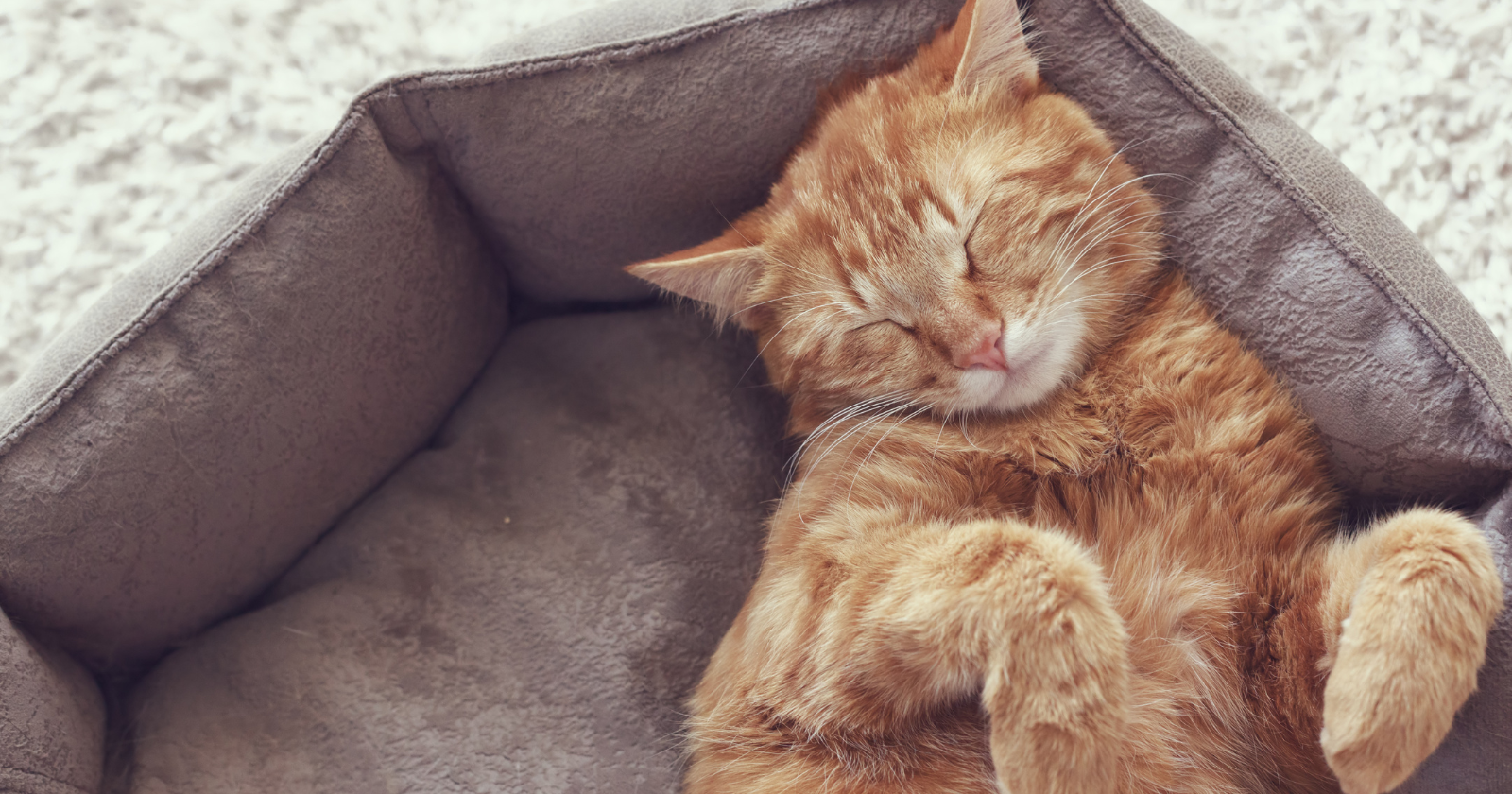
A cat asleep in the middle of the afternoon looks like an animal that has decided the day is not worth the effort. Curled on a chair, one paw folded over its face, it can hold that position for hours, twitch an ear at a sound, and go back under.
Most adult domestic cats sleep somewhere between twelve and sixteen hours a day. The explanation that now travels with that fact is a flattering one: the cat is no sluggard but a hunting animal, built for short explosive bursts, banking energy the rest of the time for a few seconds of speed.
The first half of that is fair. The second half overreaches. It is not a new finding or a single study but a piece of folk biology, and like most folk biology it is right in spirit and loose in the mechanics.
The two numbers in the claim
The sleep total is solid. Vets and pet-health sources broadly agree on twelve to sixteen hours for healthy adults, and more for kittens and elderly cats. Cats are polyphasic sleepers, taking that total in a run of separate bouts rather than one long stretch. The Sleep Foundation, drawing on published sleep research, puts a typical nap at around 78 minutes, with bouts commonly ranging from under an hour to nearly two.
The speed claim needs more care. A domestic cat is often said to reach close to fifty kilometres an hour, but that maximum, about forty-eight kilometres an hour, is a top figure rather than a cruising pace, and it comes from popular reference material rather than careful measurement. Ordinary sprinting sits nearer thirty-two to forty. The precise value matters less than the shape of it: a cat is engineered for a brief dash, not for distance.
What the popular version gets right
The stereotype the explanation pushes back on deserves to go. A cat is an ambush hunter.
It stalks, waits, commits to a sprint, and stops. Everything about it is arranged for that pattern: hind legs that push off together like a spring, a spine flexible enough to lengthen the stride, a deep tolerance for stillness broken by sudden speed.
Cats are crepuscular too, most active around dawn and dusk, which leaves long flat stretches through the middle of the day and the night. So the reassuring reading holds where it counts: the hours on the chair are the low, recuperative half of a boom-and-bust rhythm.
Where the explanation overreaches
The trouble is the mechanism. The flattering version says the cat sleeps most of the day because a body that can hit fifty kilometres an hour needs the rest of the day to recover from and prepare for those seconds of effort. That sounds physiological, and it mostly is not.
A few seconds of sprinting, even repeated through the day, does not run up an energy debt that takes fourteen hours to clear. The idea that sleep exists chiefly to conserve or restore energy is a real hypothesis, usually traced to Harold Zepelin and Allan Rechtschaffen’s 1974 comparative study in Brain, Behavior and Evolution, which found that across fifty-three mammal species daily sleep rose with metabolic rate. That reading has been argued over ever since. Later reviews find the energy actually saved in deep sleep small enough that many researchers doubt energy saving is its main purpose. If the saving is that slight, recharging for the hunt cannot be doing most of the work.
The comparative research points somewhere less neat. Sleep length across mammals moves with several things at once: metabolic rate, body size, and how exposed a species is to being eaten. Animals at high risk of predation sleep less, and more shallowly. A small predator that is rarely itself prey can afford long, deep sleep at little cost.
An indoor cat sits at the safe end of that range. No predators, food on a schedule, and a day whose main decision is which patch of sun to take. Its long sleep may reflect safety as much as effort.
The accurate version
The generous account and the careful one are not far apart. They differ on the reason. The cat on the chair is a small, efficient predator well suited to doing very little, in a home that demands almost nothing of it.
It sleeps that long because it can, and always could.