
A sailor burst into a small wooden railway station in the north end of Halifax on the morning of 6 December 1917 and told everyone inside to run.
Vince Coleman, the dispatcher on duty, walked back to his telegraph key instead. As the Maritime Museum of the Atlantic recounts, he was thinking about the overnight passenger train from Saint John, roughly 300 people aboard, due in at 8:55am on a line that ran straight past a burning munitions ship. He tapped out a warning to hold the train, then signed off: “Guess this will be my last message. Good-bye, boys.”
Minutes later the French cargo ship Mont-Blanc, packed with explosives bound for the war in Europe, detonated in Halifax Harbour.
A city with 2,000 dead and no spare hospital beds
Almost every building within half a mile of the water came down, and records held by the Massachusetts State Library put the immediate toll at 1,800 killed, 3,000 seriously wounded and another 10,000 needing medical attention. Later counts settle at close to 2,000 dead.
Halifax was in no position to absorb that. It was a wartime port, and as the medical journal Proto has documented, local hospitals were already carrying soldiers sent home to recover. Doctors worked through the first night and kept going.
Then it started to snow.
Boston did not wait to be invited
News crossed the wires and landed on the desk of Massachusetts governor Samuel McCall around 11am. What he had was fragmentary at best, a few lines about some sort of catastrophe up the coast. Writing in its account of that day, the Massachusetts Historical Society notes that McCall wired back a promise that his state would go the limit, and called an emergency meeting of the Committee of Public Safety.
By 10pm, twelve hours after the blast, a relief train loaded with doctors, nurses and supplies pulled out of Boston. Nobody in Halifax had yet told them what was needed.
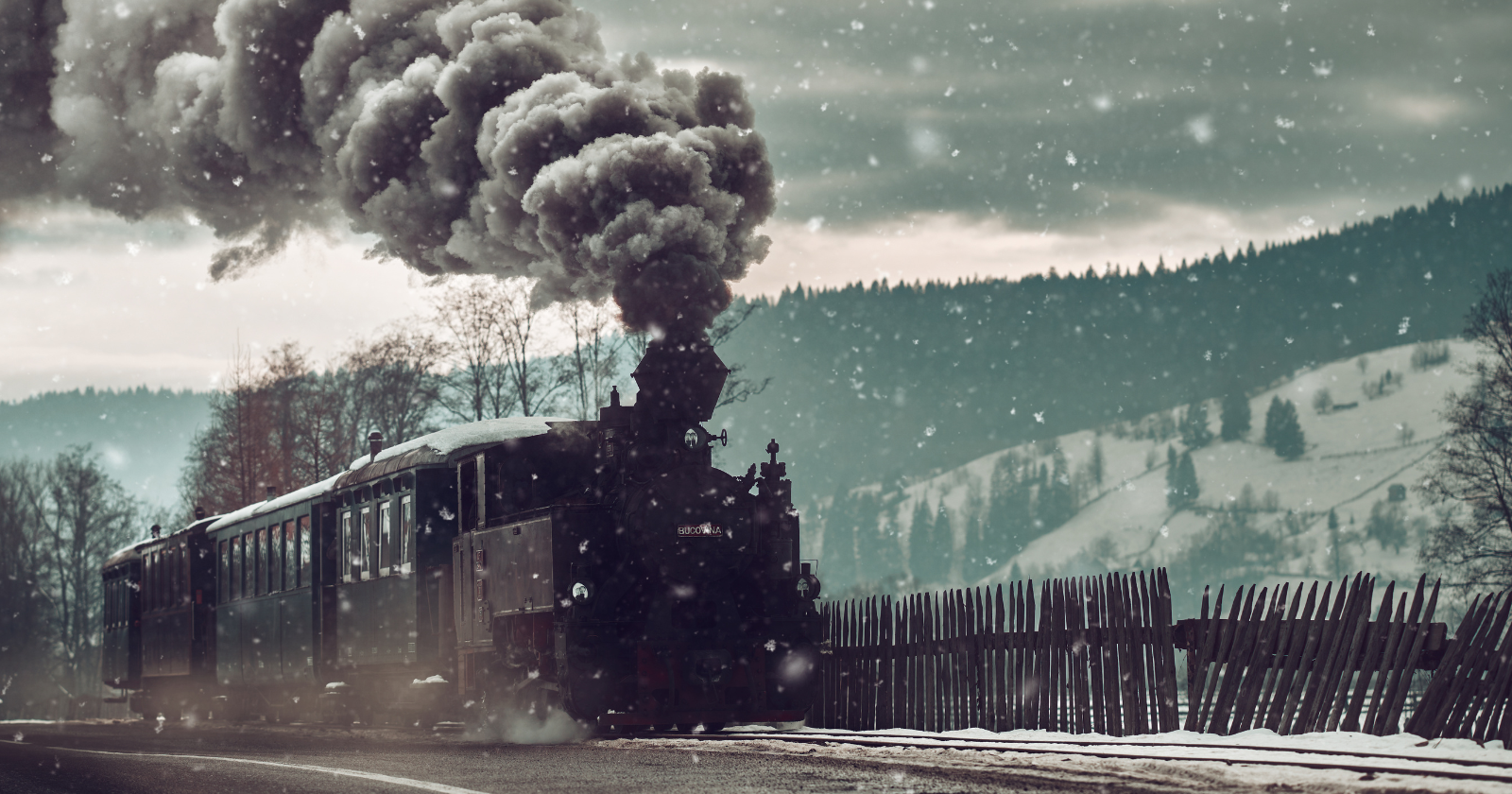
A blizzard caught the train en route, hardly a surprise for Maine and New Brunswick in December. It did not turn back. Staff wired ahead for extra supplies while they were still stuck in the drifts, and the Halifax Municipal Archives documents the first American medical train arriving on 8 December, having pushed through snow for most of the trip.
The help kept arriving for years
That first train turned out to be the opening instalment. Author John U. Bacon, speaking to WBUR about his book on the disaster, counted two trains, two ships, 100 doctors, 300 nurses and about a million dollars in supplies, enough to stand up several temporary hospitals.
The medical unit went home on 14 December and formed the Massachusetts-Halifax Relief Committee on the journey back. The same archive shows it raised half a million dollars, refurnished more than 1,800 homes and set aside $25,000 for the care and education of people blinded by flying glass. Halifax named a block of temporary housing the Governor McCall Apartments, on a newly laid-out Massachusetts Avenue.
One tree in 1918, then a gap of fifty-odd years
Nova Scotia sent Boston a Christmas tree the following December as a thank you, and the tradition quietly lapsed.
It came back in 1971, and not purely out of sentiment. As reported by The Signal, the Lunenburg County Christmas Tree Producers Association revived the gift with one eye on the export market for Nova Scotian spruce. The provincial government took the job over a few years later and has handled it ever since, which is how a one-off act of gratitude became a line item.
What it takes to qualify as the tree
Anyone can nominate one. Criteria published by the Government of Nova Scotia ask for a white spruce, red spruce or balsam fir standing 12 to 15 metres, healthy, good colour, medium to heavy density, uniform and symmetrical, and easy to get a truck near. Officials narrow the field before checking their shortlist with Boston.
Boston’s 2025 tree was a 45-foot white spruce nominated by Ronald and Claire Feener of Lunenburg County. It reached the Common by flatbed truck under police escort, the City of Boston confirmed. Mayor Michelle Wu flew up for the cutting and, as CBC News reported, took a turn with the chainsaw herself on a 42-year-old spruce while a certified tree-felling instructor supervised.
That was a year of tariff threats and cross-border sniping, and the tree went south anyway.
Most international goodwill exists as paperwork nobody reads. This one gets scouted for months, felled in front of a crowd, driven hundreds of kilometres and switched on in a public park every December, all because a train once left Boston into a blizzard for a city that had barely had time to explain what was wrong.
