
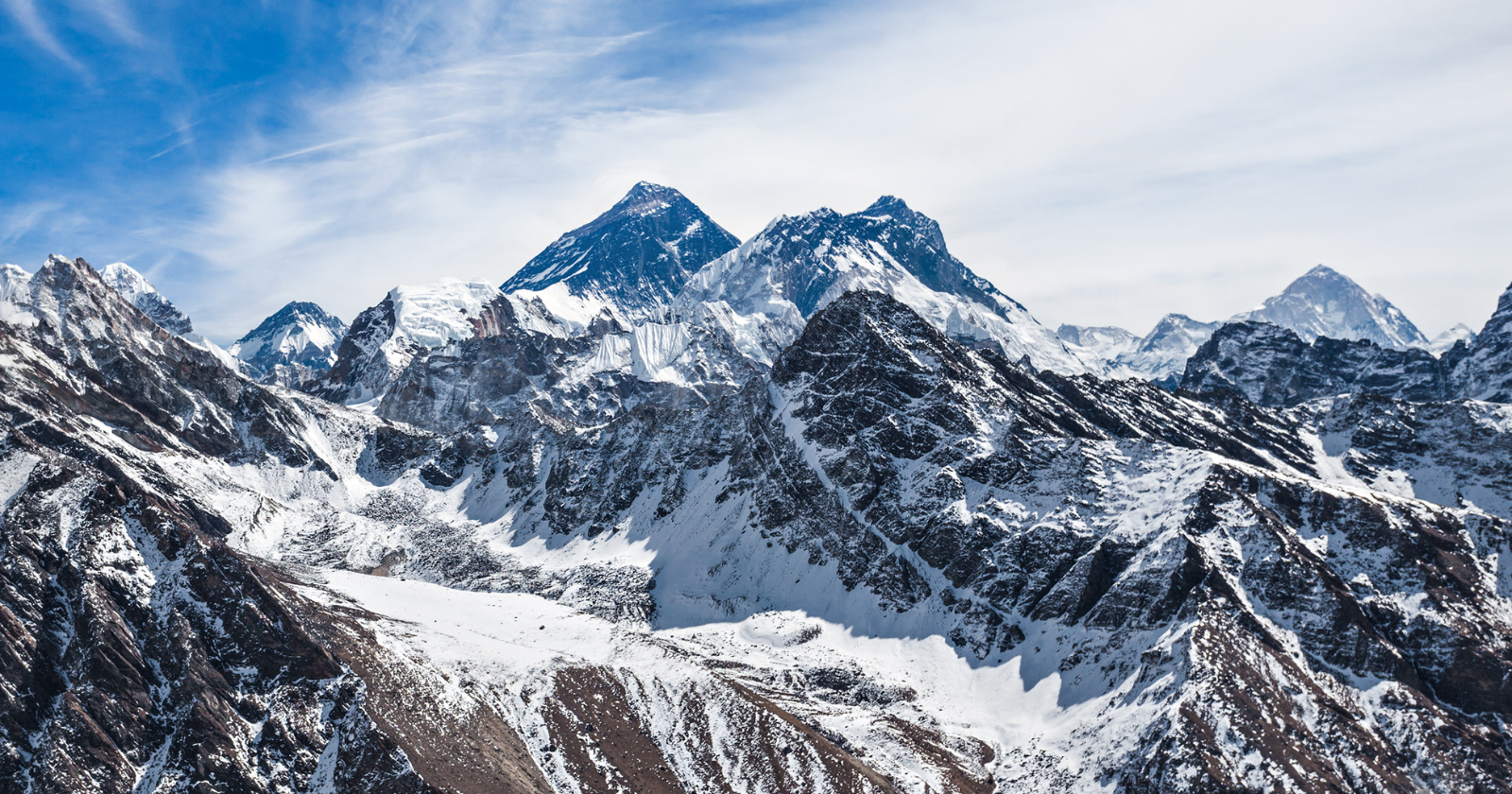
For one or two days each spring, the wind pattern at the top of Mount Everest shifts just enough to allow human beings, for a brief and dangerous window, to reach the summit. They climb in convoy, in oxygen masks, along ropes anchored years ago by previous expeditions. They pass landmarks that have become unofficially named over the decades — the Hillary Step, the South Summit, Rainbow Valley, Green Boots Cave. Some of these landmarks are geological features. Others are dead human beings. “Green Boots” is the name climbers have given to a body believed to be that of the Indian climber Tsewang Paljor, who died in the 1996 Everest disaster and whose corpse — still wearing the green plastic mountaineering boots that gave him the nickname — lies in a small limestone alcove near the standard route to the summit. For nearly thirty years, climbers passing by Green Boots have used him as a navigation marker. He is one of approximately 200 corpses still on the mountain. Some of them have been there for decades. Until recently, most of them were buried in ice. They are not, in 2026, buried as deeply as they used to be.
According to CBS News’s coverage of the 2024 Nepali army clean-up operation, climate change has been thinning the snow and ice on Everest’s upper slopes at a rate that is now beginning to reveal bodies and equipment that had been entombed for years or decades. Aditya Karki, the major in Nepal’s army who led the 2024 clean-up team, described the phenomenon directly: “Because of the effects of global warming, (the bodies and trash) are becoming more visible as the snow cover thins.” His team of 12 military personnel and 18 supporting climbers spent 45 days at altitudes above Everest base camp, working their way through the higher camps and into the death zone itself, chipping at the ice with axes and occasionally using boiling water to free objects from the grip of decades of accumulated freeze. They recovered five bodies — four full corpses and one skeleton — and brought back approximately 11 tonnes of refuse, in what was the largest single clean-up operation in the history of high-altitude mountaineering.
What the death zone actually does to a body
The reason there are still 200 corpses on Mount Everest, and the reason it took a 45-day operation by Nepali army professionals to recover only five of them, is the brutal physics of the altitudes at which the bodies sit. The death zone — the formal mountaineering term for the region above 8,000 metres (approximately 26,247 feet) — was named in 1953 by the Swiss physician Édouard Wyss-Dunant, who recognised that this altitude band represented the upper limit beyond which the human body could no longer acclimatise to the available oxygen. At 8,000 metres and above, the atmospheric pressure drops to approximately one-third of sea level. Each breath delivers approximately one-third the oxygen molecules that the same breath would deliver at the coast. The body’s cells begin dying of hypoxia within minutes of unsupplemented exposure. Even with bottled oxygen, climbers in the death zone can survive only 16 to 20 hours before their bodies begin to fail systemically.
Most climbers who die on Everest die in the death zone, either on the way up or, more frequently, on the descent — when they have used up their oxygen reserves, their physical resources, and their cognitive capacity, and the remaining strength to make it back to lower altitudes simply runs out. The bodies left behind freeze almost immediately. The death zone’s temperatures hover well below freezing year-round, the air is dry enough that decomposition is essentially suspended, and the bodies are typically partially or fully covered with windblown snow within hours of death. They do not decay. They preserve. A climber who died on Everest in 1996, like Tsewang Paljor, can look in 2026 essentially the way they looked the day after they died, complete with clothing, equipment, and even facial features. The mountain has become, accidentally, an enormous cryogenic preservation facility for human remains.
The 2024 operation
As reported in CNN Travel’s coverage of the Mountain Cleanup Campaign, the Nepali army’s 2024 operation was the latest iteration of a programme that began in 2019 in partnership with the consumer-products company Unilever. Between 2019 and 2023, the campaign had collected approximately 110 tonnes of waste from Everest and the surrounding peaks. The 2024 effort added another 11 tonnes to that running total, alongside the recovery of the five bodies. The total budget for the 2024 campaign exceeded $600,000, employed 171 Nepali guides and porters in addition to the army personnel and climbers, and ran from mid-April through late May, timed to coincide with the brief annual climbing window when high-altitude work on Everest is feasible at all.
The work was, by any measure, extraordinarily dangerous. The team operated for extended periods in the same death zone where the bodies they were recovering had died. Each member of the army team had to climb above 8,000 metres carrying equipment to extract frozen corpses from ice that had encased them for years or decades. The bodies, once freed, had to be carried back down the mountain on the same rope-and-ladder system used by ordinary climbers — except that an ordinary climber descending Everest is making themselves lighter by burning oxygen and water, while the army team was descending with the additional weight of a frozen adult human body. Per the AFP report carried by Phys.org’s coverage of the operation, the recovered bodies were transported to Kathmandu, where they were examined for identification. Those that could not be identified — and most could not, because their documents had long since deteriorated — were eventually cremated according to Nepali tradition.
The garbage problem
The 11 tonnes of rubbish removed by the Nepali army in 2024 was only part of a larger waste-collection effort that season. As reported by The Himalayan Times’s coverage of the Sagarmatha Pollution Control Committee’s 2024 base camp operations, the SPCC — the local body responsible for waste management in the Everest region — collected an additional 77,191 kilograms (approximately 85 tonnes) of waste from Everest Base Camp during the same spring 2024 season. Of that total, approximately 27,533 kilograms — nearly 28 tonnes — was human waste, with the remainder consisting of burnable rubbish (27,990 kg), kitchen waste (14,150 kg), and recyclable materials (7,518 kg). The human and kitchen waste was transported to a disposal site near Gorakshep. The burnable and recyclable waste was carried down to Namche for further processing, with the recyclables eventually transported to Kathmandu for recycling. The combined SPCC and Nepali army operations in spring 2024 removed approximately 96 tonnes of accumulated waste from the Everest region — a single-season total greater than the cumulative output of every previous year of large-scale clean-up efforts combined.
The decomposition problem at high altitude is what makes the figures so striking. Per Smithsonian Magazine’s coverage of the broader Everest pollution issue, the sub-zero temperatures of the upper camps essentially halt biological breakdown. Faeces left at Camp IV in 1953 by the original Hillary expedition would still be present in essentially preserved form today if it had not been disturbed by subsequent climbers. The same applies to the food packaging, the oxygen bottles, the discarded climbing equipment, and the colourful synthetic-fibre tents that have accumulated over seven decades of mountaineering. The mountain does not recycle. It accumulates.
What the operation revealed
The 2024 Mountain Cleanup Campaign was significant not only for the 11 tonnes and five bodies it brought back, but for what it documented about the broader trajectory of the Everest ecosystem. The melting that exposed the bodies was visible. The discoloured ice that now contained microplastics from generations of climbers was measurable. The exposed equipment from expeditions decades old — gas canisters from the 1960s, oxygen apparatus from the 1970s, climbing ropes from the 1980s — provided a stratigraphic record of how long the world’s tallest mountain had been accumulating human refuse, and at what depth that refuse had been preserved before climate change began bringing it back to the surface.
The 2024 campaign also raised a question that has no clear answer: who is responsible for cleaning up the historic mess. The Nepali government has implemented progressively stricter rules requiring 2026-era climbers to bring their own waste back down with them, and these rules appear to be reducing the rate at which new waste accumulates. But the existing 30 to 50 tonnes of legacy trash, and the approximately 195 corpses still on the mountain, were left behind by climbers who in many cases are now themselves dead, by expeditions that were dissolved decades ago, by governments that have changed hands several times since. Major Karki, the leader of the 2024 operation, framed the dilemma directly: “This year’s trash might be brought back by the mountaineers. But who will bring the old ones?” The answer, for the moment, appears to be Nepali army personnel and Sherpa climbers, working at altitudes that kill people who underestimate them, removing — at a rate of approximately 11 tonnes per year — the cumulative residue of seventy years of human ambition. The melt that is making the work newly possible is also making it newly necessary. The mountain that buried these things is no longer cold enough, on its upper slopes, to keep burying them.
