
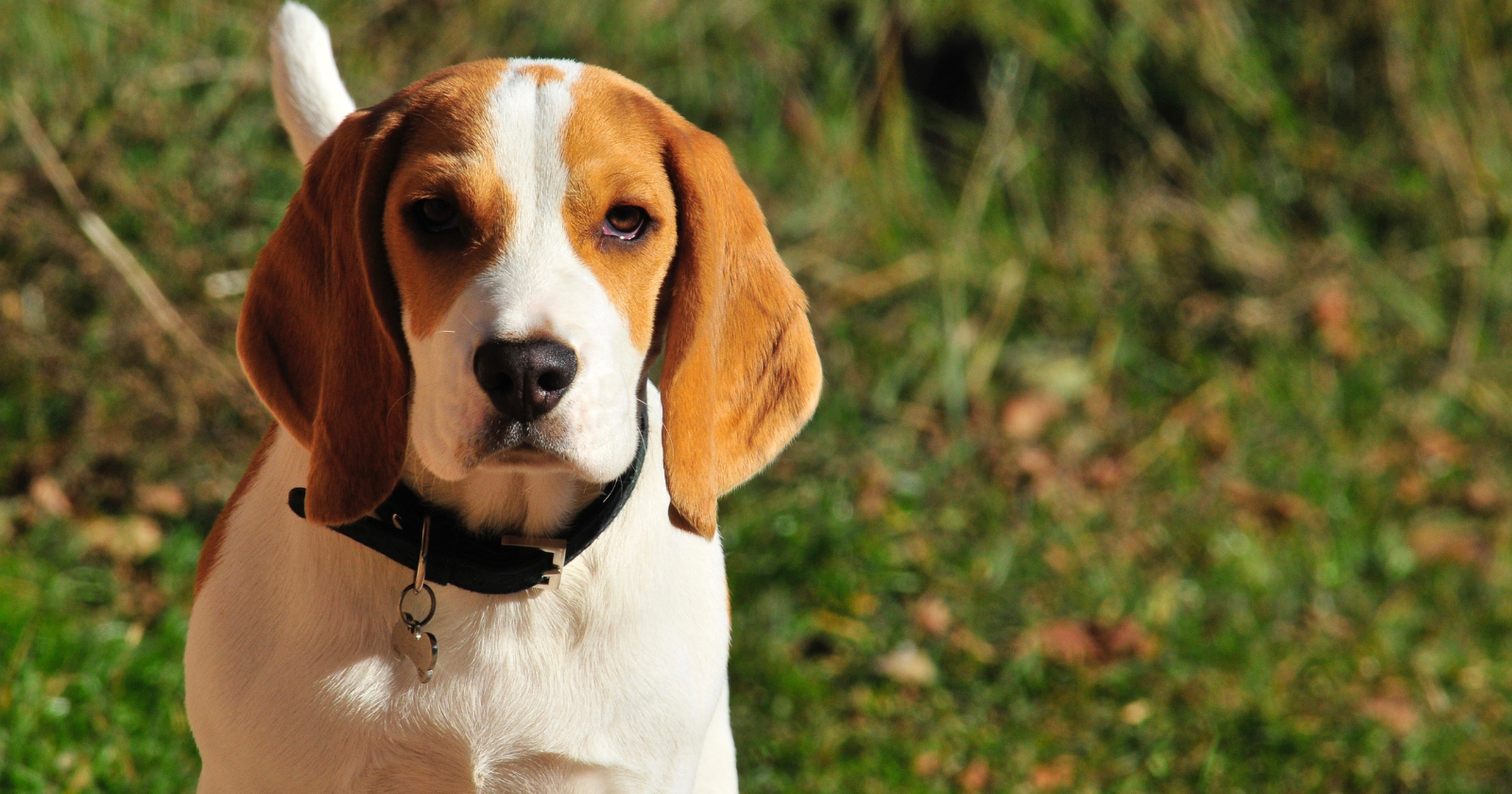
Somewhere in a quiet research facility outside Tel Aviv, a Labrador retriever named Mars is being asked to do something a $100,000 mass-spectrometry machine cannot reliably do in twenty minutes: identify whether the person who recently breathed into a surgical mask has cancer. Mars sniffs the mask, considers the result for a moment, and either sits down — his signal for cancer — or moves to the next sample. He gets it right about 94 percent of the time. He is one of three dogs in a clinical study published in Scientific Reports in November 2024, who collectively analysed breath samples from nearly 1,400 patients across four different cancer types and produced sensitivity and specificity numbers that, in many respects, exceed what conventional single-cancer screening tests deliver.
According to the 2024 paper by Elizabeth Half and colleagues at Rambam Health Care Campus in Haifa, published in Scientific Reports, the SpotitEarly screening system uses trained detection canines combined with artificial intelligence to identify malignant tumours in exhaled breath samples. The double-blind study enrolled 1,386 participants who were either undergoing routine cancer screening or biopsy for a suspected malignancy. Each participant provided a breath sample by breathing into a surgical mask, which was then sent to the SpotitEarly laboratory and presented to the trained dogs alongside other masks. Of the 338 samples that were positive for cancer based on conventional screening or biopsy, the dog-AI system correctly identified them with 93.9 percent sensitivity. Of the 1,048 samples that were negative, the system correctly cleared them with 94.3 percent specificity. Performance on early-stage cancers (stages 0-2) was, if anything, slightly better than the overall result.
How sensitive a dog’s nose really is
The biological basis for these results begins with the extraordinary structural advantages that have evolved in the canine olfactory system over the past 40 million years. According to a 2018 study in Frontiers in Veterinary Science on canine olfactory detection thresholds, dogs can reliably detect chemical compounds at concentrations ranging from approximately 40 parts per billion down to 1.5 parts per trillion for fluid mixtures — a sensitivity roughly 10,000 to 100,000 times greater than the human nose. The popular framing of this sensitivity in concrete terms — a single drop of liquid diluted in 20 Olympic-sized swimming pools, or a teaspoon of sugar dissolved in two Olympic pools — is approximately correct for the most sensitive performance range, with some inter-dog variation depending on breed, training, and individual physiology.
The structural reasons are well-characterised. Dogs have between 125 million and 300 million olfactory receptors in their nasal cavity, distributed across an olfactory epithelium roughly the size of a pocket handkerchief. Humans have approximately 5 to 6 million receptors across an area the size of a postage stamp. The proportion of the dog brain dedicated to processing olfactory information is approximately 33 percent, compared to roughly 5 percent in the human brain. The combination of more receptors, more brain area, and more sophisticated air-handling within the nasal cavity produces a sensory system that operates on chemical inputs the way the human visual system operates on light: as a primary mode of perceiving the world, not a secondary cue.
Why cancer has an odour
The reason any of this is applicable to cancer screening is that malignant tumours, like most metabolically active tissues, produce a characteristic set of volatile organic compounds (VOCs) — small molecules that evaporate into the surrounding air and, in the case of breath, are exhaled through the lungs. According to a 2024 systematic review in the American Journal of Veterinary Research, more than 1,400 distinct VOCs have been catalogued in human breath, with substantial differences in concentration and composition between healthy individuals and patients with various malignancies. Cancer cells metabolise differently from normal cells, producing distinct patterns of metabolic by-products that include alkanes, aldehydes, ketones, and various other organic compounds. The differences are small in absolute terms but are detectable by sufficiently sensitive instruments — or, as the SpotitEarly study and dozens of earlier investigations have demonstrated, by trained canine noses.
What the AI is doing
The bio-AI hybrid platform is not, despite the name, training the AI to detect cancer itself. The dogs do the detection. The AI’s role is to monitor the dogs’ behavioural responses to each sample with sufficient precision to identify the subtle alert signals the dogs have been trained to give when they encounter the cancer signature. Dogs are not perfectly consistent observers. A given dog may give a strong “sit” alert on one positive sample and a weaker, more ambiguous response on another. The AI cameras record each dog’s body posture, ear position, breathing rate, dwell time at each sample, and other physical indicators, then combine the data from multiple dogs working on the same samples to produce a more reliable consensus diagnosis than any single dog could deliver on its own. The result is a kind of olfactory democracy: three or four canine observers, each with their own variation in sensitivity and behavioural patterns, are integrated by the AI into a single output more reliable than any of the individual judgements.
What this might mean for cancer screening
Most current cancer screening programmes are organ-specific: mammography for breast cancer, PSA testing for prostate cancer, colonoscopy for colorectal cancer, low-dose CT for lung cancer. Each requires specialised equipment and trained operators, each has its own profile of false-positive and false-negative rates, and each carries some burden of patient discomfort or invasiveness. A single breath sample that could be screened simultaneously for four (and eventually more) cancers using detection dogs and AI would, if it scales reliably, represent a fundamentally different approach to early-stage cancer detection. The non-invasiveness alone — a 30-second breath into a surgical mask, with no needles, no scans, no radiation, no preparation — could substantially increase screening uptake in populations that currently avoid conventional screening for cost, fear, or logistical reasons.
None of this is yet routine clinical care. The 2024 SpotitEarly study is one large piece of evidence in a longer chain of investigation, and considerable additional work — replication in other populations, validation against gold-standard cancer-screening modalities, regulatory approval, scale-up of detection-dog training programmes — will be required before canine cancer detection enters general medical practice. What the 2024 results have established is that the basic biological premise is sound: cancer does have a detectable olfactory signature, dogs can be reliably trained to identify that signature, and the combination of canine olfaction with AI-driven behavioural analysis produces accuracy figures that are competitive with conventional cancer screening tests. The dog you live with cannot, of course, do any of this without specific training. But the noses of dogs in general — across breeds, across continents, across the 40 million years of canine evolution — are turning out to be one of the more remarkable diagnostic instruments in the natural world.
