
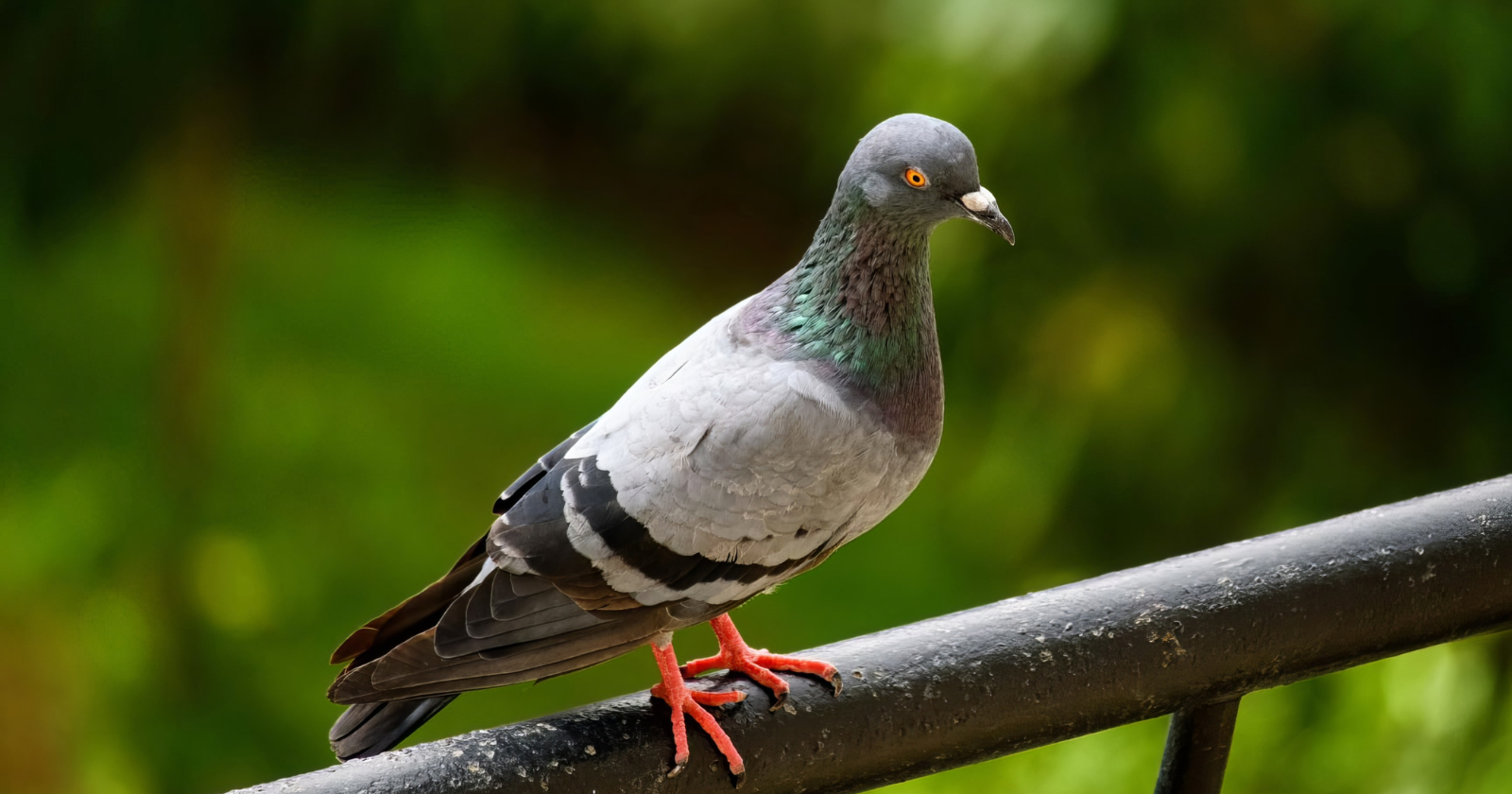
A study published today in Science proposes that homing pigeons may sense the Earth’s magnetic field using iron-loaded immune cells in their livers. The paper, by a team led by cell biologist Clivia Lisowski at the University of Bonn with senior authors Christian Kurts (Bonn) and Martin Wikelski (Max Planck Institute of Animal Behavior in Radolfzell), is the first to present a full theoretical account of how immune cells could perform magnetic sensing and pass the resulting signal to the brain. The hypothesis is genuinely surprising, the experimental evidence in the paper is direct, and outside experts agree the result is interesting. They also agree it needs further work before the mechanism can be considered established.
The finding
The team’s interest started with macrophages, the immune cells responsible for cleaning up damaged red blood cells. When a red blood cell wears out, macrophages break it down and recycle the iron. Wikelski and Kurts noticed that pigeon liver macrophages accumulated enough iron, in an organised enough form, to respond detectably to a magnetic field in laboratory tests. Lisowski then tested whether cells from pigeon beak and eye tissue, both of which had been implicated in prior magnetic-sensing research, were similarly magnetic. They were not. The strong magnetic response was specific to liver macrophages.
The experimental test that turned a correlation into a tentative mechanism was a behavioural one. According to the Science News coverage of the paper, the researchers treated pigeons with clodronate, a compound that selectively depletes macrophages, reducing the iron-containing liver cells by roughly 80 percent. The treated pigeons were then released some distance from home and tracked. Pigeons are known to use solar cues as their primary navigation system, with the magnetic compass as a backup that takes over when the sun is obscured. On clear days, the macrophage-depleted pigeons returned home normally. On overcast days, when the magnetic compass would ordinarily compensate, the treated pigeons could not find their way. The intact control birds returned home on overcast days as expected. The effect was specific, dose-related, and consistent with the proposed role of the macrophages.
Electron microscopy released with the paper shows iron-loaded macrophages sitting in direct contact with nerve fibres in the liver tissue. The proposed pathway is that the magnetic alignment of the iron within the macrophages produces a mechanical or electrochemical signal that is detected by the adjacent nerves and transmitted to the brain.
What this changes, and what it doesn’t
The question of how birds detect magnetic fields has been open since the mid-1960s, when the German researchers Wolfgang Wiltschko and Fritz Merkel first demonstrated experimentally that European robins use a magnetic compass to orient during migration. In the six decades since, three main hypotheses have dominated. The first is the magnetite hypothesis: that iron-containing particles in the upper beak respond to magnetic fields. The second is the cryptochrome hypothesis: that specialised photoreceptor proteins in the bird’s eyes detect magnetic fields via a quantum-mechanical effect on radical-pair electron spin. The third, more recent, is the inner-ear hypothesis: that hair cells or other structures in the bird’s inner ear may have magnetic sensitivity. None has been definitively confirmed, and each has accumulated supporting and contradicting evidence over the years.
The Bonn-Max Planck paper does not displace the existing hypotheses. It adds a fourth, drawn from an organ system nobody had previously considered.
The journal’s own perspective
The clearest framing of where the new finding fits in the broader picture comes from the accompanying Perspective in the same issue of Science, written by Simon Spiro, a veterinary pathologist at the Zoological Society of London, and Hal Drakesmith, a biologist at the University of Oxford. Spiro and Drakesmith note that the Lisowski paper is being published alongside other recent work, including a paper by Nordmann et al. that identifies specific regions in the pigeon brain activated by magnetic stimuli and locates the relevant sensory cells in the ear. The two papers propose different anatomical sites and different mechanisms, both independent of light. Spiro and Drakesmith argue that this need not be a contradiction. “Perhaps one process dominates for long-distance navigation, whereas another is used for more specific destination-finding,” they write, “with both operating with different degrees of precision. Indeed, it could be prudent to have more than one way of getting home in the dark.”
Albert Kao, a behavioural ecologist at the University of Massachusetts Boston who was not involved in the research, gave the Associated Press a similar reading: “I would never have guessed it, but once it was explained to me, it makes sense.” The mechanism is biologically plausible. The remaining work is to confirm that the iron-loaded macrophages are actually detecting magnetic fields in living birds rather than simply correlating with the ability to navigate, and to trace the proposed nerve pathway from liver to brain in detail.
Caveats
This is a single peer-reviewed study, and the authors are appropriately careful in their framing. The clodronate treatment depletes macrophages throughout the body, not only in the liver, so ruling out alternative explanations involving macrophages elsewhere in the body will require further targeted experiments. The link from magnetic alignment of iron within a macrophage to a coherent signal in an adjacent nerve fibre has been proposed in the paper but not yet directly observed in living tissue.
The team also suggests, cautiously, that the same mechanism may operate in other animals. Mice were mentioned as a candidate species for follow-up work, because mouse liver macrophages handle iron in a broadly similar way. Whether other migratory birds, or marine animals known to use magnetic cues over much longer distances, use a similar system is an open question. The Lisowski paper does not close the question of how birds find their way home. It opens a new line of investigation in an organ that, until this week, was not on the list.
