
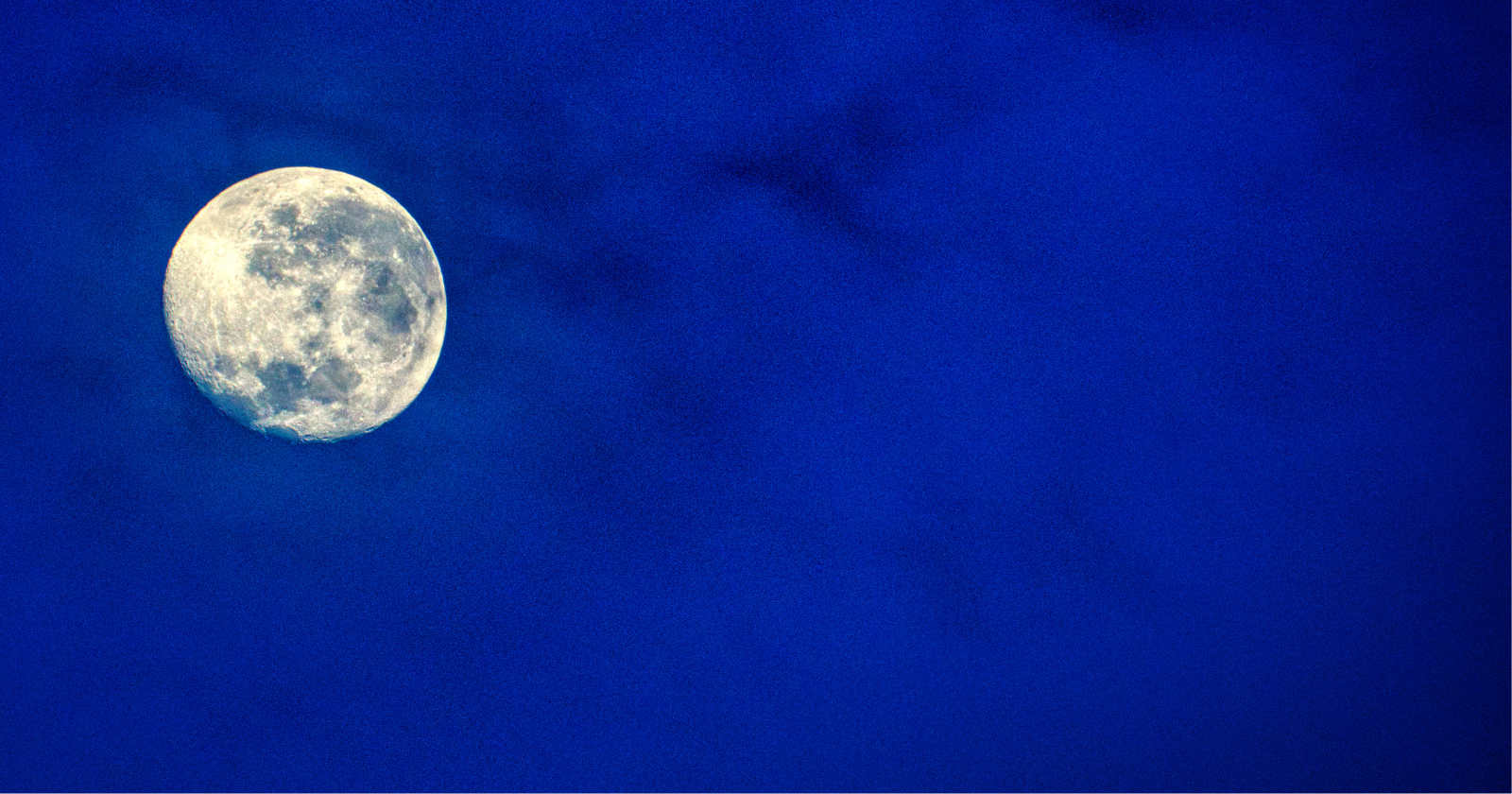
The English expression “once in a blue moon,” used as a stand-in for events that occur so infrequently that the speaker has effectively given up on tracking them, has, on the available etymological record, been in use for approximately four hundred years. The expression originated, more or less, as a way of describing things that were so unlikely as to seem essentially impossible. The expression has, across the intervening centuries, softened into the contemporary usage, in which it refers not to impossibility but to genuine rarity. The literal Blue Moon, the astronomical phenomenon the expression is calibrated to, is, on close examination, exactly as rare as the expression suggests, while being considerably more accessible to direct observation than the expression’s idiomatic register tends to imply.
On Sunday, May 31, 2026, a genuine Blue Moon will arrive. The Moon will reach peak illumination at 8:45 UTC, which corresponds to 3:45 a.m. Central Daylight Time, 4:45 a.m. Eastern Daylight Time, and various predawn or early-morning times across the rest of the world. The Moon will be located, at peak, in the constellation Scorpius, passing very near to the bright red supergiant star Antares, which is the heart of the constellation. The combination of features that the May 31 Moon brings together is, on the available astronomical record, not going to recur in this particular configuration for several years.
What actually makes Sunday’s Moon a Blue Moon
It is worth being precise about what a Blue Moon actually is, because the wider register has tended to absorb the term in considerably more poetic terms than the underlying astronomical definition warrants.
A monthly Blue Moon, in the standard contemporary definition, is the second full Moon to occur within a single calendar month. The phenomenon is, by every available measure of how the Moon’s orbital period interacts with the calendar, infrequent. The Moon completes its cycle of phases every 29.5 days, which means that most calendar months contain exactly one full Moon. The conditions under which a second full Moon falls within the same calendar month require the first full Moon to occur within approximately the first day or two of the month, leaving sufficient time for the next full Moon to arrive before the month ends.
May 2026 is one of these rare months. According to EarthSky’s documentation, the first full Moon of May 2026 occurred on May 1, and the second is arriving on May 31. The second one is, by definition, a Blue Moon. The next monthly Blue Moon after this one, on the available calendrical analysis, will not occur until December 31, 2028. The 2030 year contains no Blue Moons at all. The May 31, 2026 Blue Moon is, accordingly, the only monthly Blue Moon between now and the very end of 2028.
The Moon will not, despite the name, actually appear blue. The familiar yellow-white color of the Moon remains the same regardless of the calendrical designation. The exception involves unusual atmospheric conditions, such as volcanic dust or wildfire smoke, that can occasionally scatter light in ways that produce an actual bluish tint. The name itself, on the available etymological record, has nothing to do with the Moon’s color. The name traces back to older usage in which “Blue Moon” referred to something so unlikely that it was thought to essentially never happen, which is also the origin of the contemporary English expression.
What makes the May 31 Moon additionally rare
The feature that makes the May 31 Moon worth specifically attending to, on close examination, is not just that it is a Blue Moon. The Moon is also, by every available measurement, the most distant full Moon of 2026. According to the Old Moore’s Almanac coverage, the May 31 full Moon is, by virtue of occurring near the Moon’s apogee in its slightly elliptical orbit, a micromoon. The micromoon designation refers to the Moon’s apparent diameter being slightly smaller than the average full Moon, although the difference is, in practice, not easily detectable by the naked eye.
The combination of Blue Moon and micromoon makes the May 31 Moon what the wider astronomy register has been calling a “Blue Micromoon.” The combination is, by every available measure, infrequent. The combination does not, in itself, produce any unusual visual effect. The combination is, more accurately, a piece of calendrical coincidence that the wider register has been registering as additionally significant.
The more interesting feature of the May 31 Moon, on close examination, is what it does in the sky during the relevant viewing window. The Moon, at peak illumination, is located very close to Antares, the brightest star in the constellation Scorpius. Antares is a red supergiant, which means it has a distinctly reddish-orange color visible to the naked eye. The star is approximately 550 light-years from Earth. The star is the 15th-brightest star in the entire night sky.
The proximity between the Moon and Antares on May 31 will be, by every available measurement, close. Star Walk’s documentation describes the pairing as visible to the naked eye, with Antares shining at magnitude 1.0 beside the glowing disk of the Blue Moon. Both objects will be highest around midnight local time and will be easy to see throughout the night.
The lunar occultation that will only be visible from some places
The most dramatic feature of the May 31 event, on close examination, will not be visible from most of the world. The Moon will, in some regions, briefly pass directly in front of Antares, producing what astronomers call a lunar occultation. The occultation involves the Moon physically blocking the star from view for several minutes, before the star reemerges on the other side of the lunar disk.
The occultation is specific to the geographical regions where the geometric alignment of the Moon, Earth, and Antares produces the line-of-sight obstruction. According to Star Walk’s documentation, the May 31 occultation of Antares will be visible from parts of southeastern Australia, New Zealand, the southern parts of South America, and Antarctica. The wider population of the planet will, in most cases, see the Moon and Antares as a close pairing rather than as an occultation.
The feature worth attending to is that lunar occultations of bright stars are themselves, by every available measure of how often they occur, relatively rare events. The Moon’s orbital plane passes through a relatively narrow band of the sky, called the ecliptic, and the various bright stars near the ecliptic are the ones that can occasionally be occulted by the Moon. Antares is one of these stars. The occultations of Antares occur in series across periods of approximately eighteen months, separated by intervals during which the Moon’s orbital path does not cross the star’s position. The current series of Antares occultations is one of the more accessible viewing opportunities of this particular configuration that the wider observing community will have for some time.
How to actually see it
The features of the May 31 Blue Moon and its proximity to Antares are, on close examination, accessible to virtually any adult who is willing to look at the appropriate part of the sky at the appropriate time. The viewing requires no special equipment beyond the naked eye, although binoculars or a small telescope will reveal additional detail.
The Moon will be in the southern or southeastern sky for observers in the Northern Hemisphere, and in the northern sky for observers in the Southern Hemisphere. The most rewarding viewing window, on the available astronomical analysis, will be the late evening hours of May 30 and the predawn hours of May 31, when the Moon and Antares are both highest in the sky and the visual contrast between the bright lunar disk and the orange-red star is most striking.
The Moon, even at micromoon dimensions, will be considerably brighter than Antares, and the proximity may make the star slightly harder to see than it would be on a moonless night. The feature that makes the pairing visually interesting is exactly the contrast between the two objects, with the bright white Moon adjacent to the distinctly orange-red star. According to the When the Curves Line Up viewing guide, on the night of the Blue Moon itself, the Moon will be approximately 15 degrees above the south-southeast horizon at two hours after sunset, with Antares positioned very close by.
Final words
The viewing requires no special equipment. The viewing requires, more modestly, the willingness to step outside at the appropriate time and look at the appropriate part of the sky. The cumulative window of the event extends across the evening of May 30 and the predawn of May 31. The wider register would benefit, on the available evidence, from absorbing what events of this kind actually offer the urban populations that have, by long design, mostly stopped attending to the sky. The events offer, more specifically, the small temporary access to the fact that the wider universe is doing things, on its own timescales, that are visible to anyone willing to look up. The looking up is small. The looking up is, in some real way, what most of the rewarding contact with the wider cosmos has been available to the species through, for the entire history of the species. May 31 is a particularly accessible night on which to do the looking up.
