
China’s first microsatellite Tsinghua-1 is performing without problems, says Tsinghua University here.
On June 28 a Russian Kosmos-3M rocket launched the microsat from the Plesestk Cosmodrome in northern Russia to a polar sunsynchronous orbit of 700 km.
The spacecraft completes a circuit around the globe once every 100 minutes. As the Earth rotates below the spacecraft, the ground track repeats every four days.
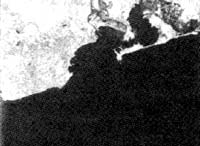
Tsinghua-1 transmitted the first image on July 3 . Since then the microsat has returned more than 100 images of different parts of the world.
According to Xu Xin, a senior engineer at the Tsinghua University Aerospace Centre, since Tsinghua-1 is primarily an experimental satellite and not for commercial operation, imagery taken for any government unit or client is free of charge initially.
Xu said, “The Aerospace Centre will run a commercial enterprise in the future. However, the main revenue will come from selling microsatellites. As to the Tsinghua-1 image acquisition service, there may be a small nominal fee charged or no fee at all in its initial operation.”
The multispectral Earth imaging cameras on board provide an imaging resolution of 39 metres at nadir in three spectral bands.
Tsinghua-1 imagery will aid in monitoring vegetation growth in the ambitious large-scale development of the western part of China. Images will also be used in monitoring and mitigation of natural and human-induced disasters such as wildfires, floods, desertification, and red tides, and assisting farmers in agricultural operations.
“Previously for China to obtain similar imagery, we had to rely on American, European, Japanese and Indian satellites and paid higher fees. To a certain degree Tsinghua-1 fills the technological gap [for China],” added Xu.
The Aerospace Centre says that the 0.07-cubic meter, 50-kg microsat has a design life of five years. If all systems function well, the life expectancy can reach 10 years.
While the first microsat performs flawlessly, the Aerospace Centre is pursuing the launch of its first nanosat next year.
The Centre sees the development of a nanosat an important step in advancing its aerospace technologies and gaining a foothold in the blooming market.
Xu said, “A nanosatellite combines nanotechnologies with microelectronics. The smaller the satellite, the higher the technology content. The aerospace industry pays serious attention [to nanosatellite development].
“Tsinghua [Aerospace Centre] will rely on our own ability to advance technologies in this area.”
Dr. You Zheng, Assistant Director of the Aerospace Centre, notes that the attractiveness of microsats are their lightweight, high quality, fast research and development period, and low cost.
Late last year a specialist group codenamed 863-2 approved Tsinghua University’s proposal to design and develop a nanosat.
The 10-kg nanosat will have similar capabilities as the Tsinghua-1 microsat. The nanosat may also carry an experiment on intersatellite communications.
The Aerospace Centre recognizes that the nanosat project will need support and collaboration from various government units and research institutions in order to further develop and define its applications.
The Centre plans to launch the nanosat as a piggyback payload on a Changzheng (“Long March”) rocket towards the end of 2001.
