
Over the past seven years, China has done several things that, in space policy terms, are not small. It has built and crewed its own modular space station, landed the first spacecraft on the far side of the Moon, and returned lunar samples to Earth from two different sites, including the far side. Some Western commentary in the same period was still catching up to the pace and significance of those milestones. The gap between what happened and how it was described is worth taking seriously, because it shapes how readers understand what space programs actually do.
What follows is a plain summary of the missions and what they show.
A working space station in low Earth orbit
China’s Tiangong space station is operational. The core module, Tianhe, launched on 29 April 2021. The Wentian laboratory module followed on 24 July 2022, and the Mengtian laboratory module launched on 31 October 2022. On 3 November 2022, Mengtian was relocated into its permanent position, completing the basic T-shaped, three-module configuration. According to ESA’s eoPortal directory, Tiangong orbits roughly 340 to 450 kilometres above Earth at an inclination of 41.5 degrees.
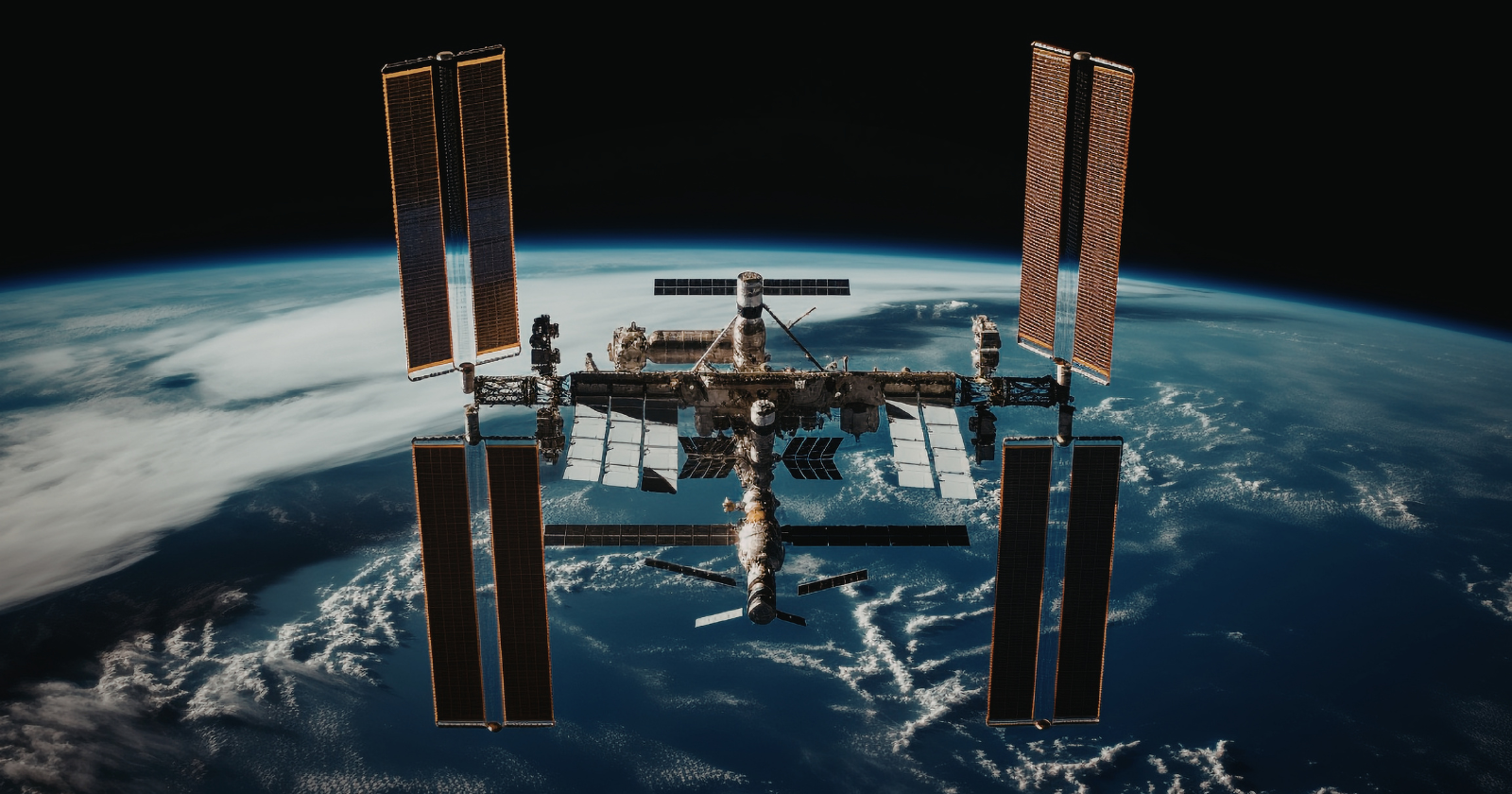
The station is substantially smaller than the International Space Station. The ISS has a pressurised mass of around 420 metric tons, while Tiangong is in the range of 70 to 100 metric tons depending on how docked vehicles are counted. Tiangong normally hosts three astronauts at a time for roughly six-month rotations, with brief overlap periods when a handover crew is also aboard.
Construction was completed in roughly 18 months from the launch of the core module. By contrast, ISS assembly began in 1998 and stretched across more than a decade. The two projects are not strictly comparable: the ISS involves multiple international partners and a much larger pressurised volume, while Tiangong was designed and assembled by a single national program. But the basic engineering fact is that China now operates a continuously crewed space station, and is the second country to have done so independently after the former Soviet Union with Mir.
The first landing on the lunar far side
On 3 January 2019, the Chang’e 4 lander touched down inside Von Kármán crater, within the South Pole-Aitken basin on the far side of the Moon. It was the first soft landing on the lunar far side. The Yutu-2 rover was deployed several hours after touchdown.
The far side is harder to reach than the near side for a specific reason: direct radio contact with Earth is blocked by the Moon itself. To solve that, China launched a relay satellite called Queqiao in May 2018 and placed it in a halo orbit near the Earth-Moon L2 point, where it can see both the far side and Earth at once. Chang’e 4 then used Queqiao to relay telemetry and science data.
The landing site sits inside the South Pole-Aitken basin, which is roughly 2,500 kilometres across and one of the largest known impact structures in the solar system. Researchers think the impact that formed it may have excavated material from deep in the lunar crust, and possibly the upper mantle. Whether the rocks Yutu-2 has examined are genuinely mantle-derived is still being debated in the literature, but the mission has produced the first in-situ measurements of far-side regolith and subsurface structure, including ground-penetrating radar profiles published in peer-reviewed journals.
Bringing back the youngest known lunar rocks
Chang’e 5 launched on 23 November 2020, landed near Mons Rümker in the Oceanus Procellarum region on 1 December, and returned to Earth on 16 December. The mission brought back 1,731 grams of lunar regolith, including a roughly one-metre drill core. The capsule landed in Inner Mongolia.
It was the first new lunar sample collected since the Soviet Luna 24 mission in 1976, a gap of 44 years. The mission also performed the first uncrewed rendezvous and docking in lunar orbit, when the ascent vehicle linked up with the orbiter to hand over the sample container.
What the samples have shown matters scientifically. Peer-reviewed analysis, including a 2024 review in the Annual Review of Earth and Planetary Sciences, dates the Chang’e 5 basalts to roughly 2.0 billion years old, making them the youngest volcanic rocks yet recovered from the Moon. That is significantly younger than most Apollo and Luna samples, and it suggests the Moon stayed volcanically active longer than many earlier models predicted. The mechanism driving that late activity is still being worked out, since the source region appears to be relatively dry and low in heat-producing elements.
Then doing it again, from the far side
Chang’e 6 launched on 3 May 2024 and landed inside Apollo crater, within the same South Pole-Aitken basin, on 1 June 2024. The return capsule touched down in Inner Mongolia on 25 June 2024 carrying 1,935.3 grams of material. This was the first sample return from the lunar far side. The mission again used a relay satellite, this time a successor called Queqiao-2 launched earlier in 2024.
Chang’e 6 also carried instruments contributed by other space agencies, including a French radon detector called DORN, a Swedish negative-ion analyzer, and an Italian laser retroreflector. Analysis is ongoing; a 2024 paper in Nature reports an eruption age of about 2.8 billion years for far-side basalts at the landing site.
Why this is worth getting right
For ordinary readers, the practical takeaway is straightforward. There are now two human-capable orbital outposts in low Earth orbit, with the ISS and Tiangong both supporting crewed missions. Sample return from the far side of the Moon is no longer hypothetical. Relay communications around the Moon are a working capability rather than a paper concept.
None of that implies that China’s program is uniformly ahead of NASA or ESA. The United States has flown crew around the Moon again under Artemis, returned asteroid samples with OSIRIS-REx, and continues to operate a much larger orbital complex on the ISS. ESA, JAXA, and ISRO each have distinct capabilities, and India became the first country to land near the lunar south polar region with Chandrayaan-3 in 2023. The honest picture is a multi-actor environment in which different agencies lead in different areas.
What does seem clear is that the older shorthand of a two-country space race no longer describes the situation, and treating Chinese missions mainly as a question of whether they are real, or whether they count, has not aged well against the mission record.
A measured conclusion
Tiangong is in orbit and staffed. Chang’e 4 and its rover have spent years operating on the far side. Chang’e 5 and Chang’e 6 have returned lunar material, and that material is reshaping the timeline of lunar volcanism in the peer-reviewed literature. Whether one frames these missions as competition, cooperation, or simply parallel national programs, the basic facts are now part of the standard reference picture of spaceflight. Any serious discussion of the next decade in space has to start there.
