
Chinese police said Thursday they had broken up a “terrorist cell” accused of carrying out lethal attacks in Xinjiang, as the restive region braced for the first anniversary of deadly ethnic unrest.
The announcement was made at a Beijing press conference that came ahead of the July 5 anniversary of rioting in Xinjiang’s capital, Urumqi, by the region’s Muslim ethnic Uighurs.
“Since 2008 this terror group planned and carried out many terror acts in Xinjiang, including an attack on police and border guards in Kashgar during the Olympics,” Public Security Bureau spokesman Wu Heping told reporters.
China has said 17 people were killed in the gruesome attack in Kashgar, an ancient city in Xinjiang, in which attackers assaulted police with explosives and machetes in August 2008.
It occurred just days before the Beijing Olympics began. Two Uighur men were later executed for the assault.
Wu said the group was also responsible for bombings and a shootout with police in the city of Kuqa in that month which was blamed for at least 10 deaths.
More than 10 people were detained in the operation, including members of militant groups seeking independence for Xinjiang, such as the East Turkestan Islamic Movement (ETIM), he said.
One of them, identified as Abdurixit Ablet, 42, was a leader of the group, Wu said. He was a native of Xinjiang who had gone abroad and was sent back to China by ETIM, which directed the gang’s activities.
From July to October last year, the group gathered bombs, axes and Molotov cocktails with plans to carry out a chain of attacks in Xinjiang. Some members fled abroad when the plan was foiled, he said.
Three gang members were then found to be among a 20-strong group deported back to China on December 20 from an unnamed country, Wu added. Cambodia sent a group of 20 Uighurs back to China late December 19, despite US and UN protests.
Dilxat Raxit, spokesman for the overseas World Uyghur Congress, said the timing of the announcement was politically motivated.
“Announcing this now just before July 5 shows China wants to push the perception that all Uighurs and all Muslims are terrorists,” Raxit, who is based in Europe, told AFP by telephone.
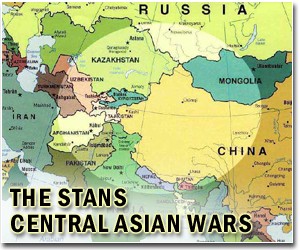
Xinjiang, a vast, arid but resource-rich region that borders Central Asia, has more than eight million Uighurs, and many are unhappy with what they say has been decades of repressive communist rule by Beijing.
That resentment burst out into savage unrest in July 2009 in Urumqi, when Uighurs attacked members of China’s dominant Han ethnic group in violence that left nearly 200 people dead, according to government figures.
China has blamed the unrest on “separatists” but provided no evidence of any organised terrorism. In subsequent days, angry counter-protests by thousands of Han threw the city into further chaos.
The United States and the United Nations have listed ETIM as a “terrorist” organisation. Both Washington and Beijing say ETIM militants have received training and funding from Al-Qaeda, although some analysts dispute that.
Nicholas Bequelin, a senior Asia researcher for Human Rights Watch and an authority on Xinjiang, said there were some in Xinjiang advocating violence but the existence of a genuine terror organisation was doubtful.
“It mostly looks like these events (in Kashgar and Kuqa) were the product of very heavy pressure ahead of the Olympic Games prompting people to try and bring attention to the situation in Xinjiang,” he said.
“But it doesn’t mean there is a link behind them — the only link to me is that the government has a theory that it faces separatist, extremist, terrorist groups and lumps it all together to make it look like it’s a conspiracy.”
However, Rohan Gunaratna, head of the Singapore-based International Centre for Political Violence and Terrorism Research, said ETIM presented the “most significant and the most enduring threat to Xinjiang”.
