
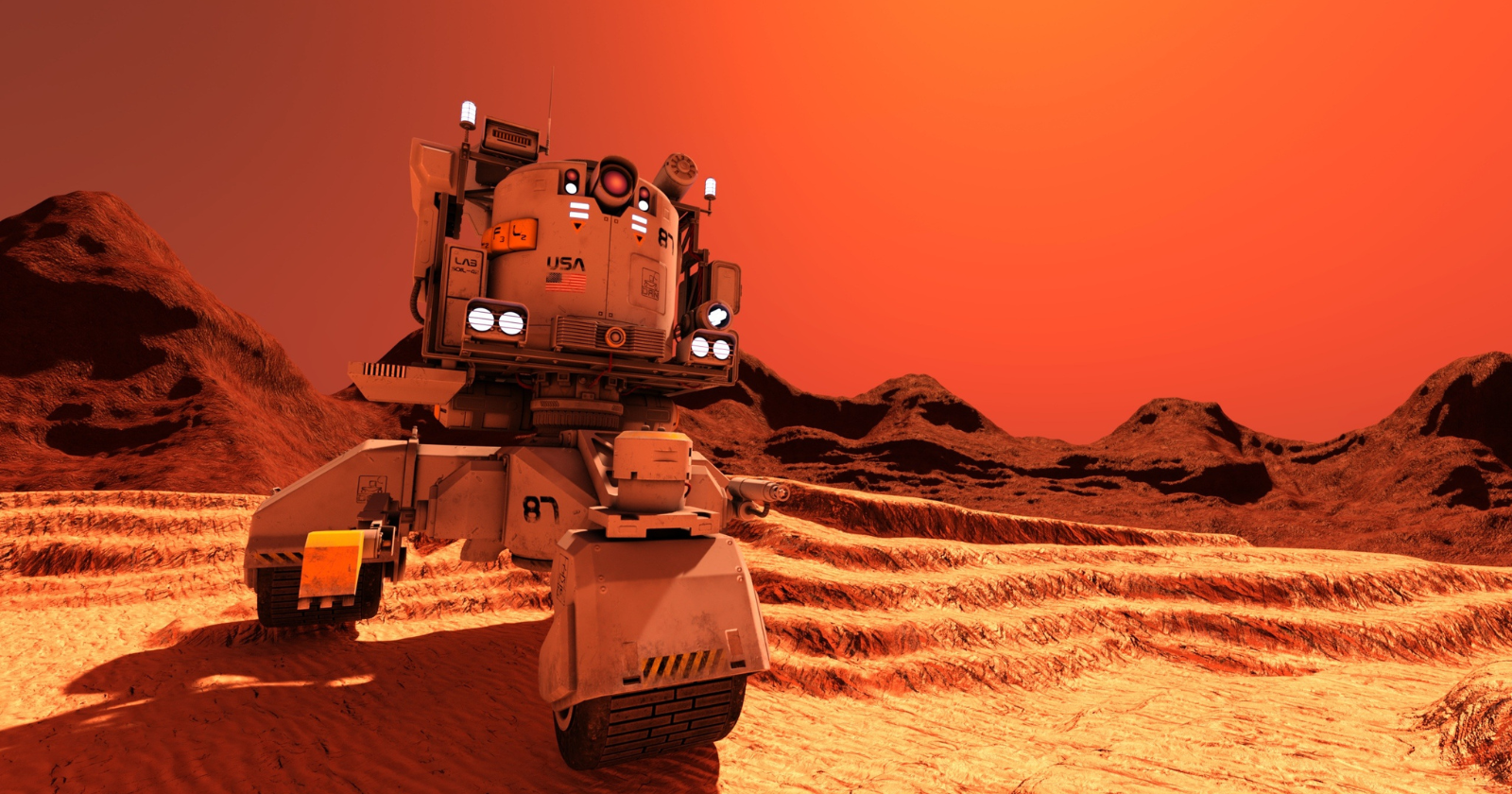
In January 2004, a golf-cart-sized robot bounced down through the atmosphere of Mars on a cluster of airbags, rolled to a stop, and started doing what it was sent to do.
NASA’s engineers had given it 90 Martian days to work. Maybe 92 Earth days if you wanted to be generous about it.
They thought the dust would get it. The cold would get it. The radiation, the moving parts, the solar panels — something was going to break, and when it did, the mission would end.
What actually happened is one of the most extraordinary stories in the history of robotic exploration. The little rover named Opportunity didn’t last 90 days. It lasted 14 years and 138 days. Fifty-five times its planned lifetime.
Its mission ended after a planet-encircling dust storm blocked sunlight and contact was never restored.
What 55 times longer actually means
To put 14 years on Mars in perspective: when Opportunity landed, the first iPhone was still three years away, Facebook had not yet launched and Lost had not yet aired. The rover was still working and sending data in 2018.
It travelled over 28 miles across the Martian surface in that time — more than any other off-world vehicle in human history at the time of its death. It explored Endeavour Crater, an impact basin 22 kilometres wide, and sent back evidence of ancient water that fundamentally changed what we know about Mars.
Engineers had calibrated everything for 90 days. The rover treated that number as a suggestion.
For 14 years, every morning when the sun rose on Meridiani Planum, Opportunity charged its batteries on schedule, sent its data, and got on with the work. Periodic dust storms would dim its panels. Then Mars wind — the same wind that drops dust on the rover — would, sometimes, blow it back off again. Engineers started calling these natural cleanups “cleaning events.” They were the closest thing the mission had to luck, and luck kept showing up.
Until June 2018, when the luck ran out.
The storm after which contact was lost
In late May 2018, NASA scientists spotted something forming on Mars they’d seen before but rarely at this scale. A regional dust storm. Within days, it had grown. By June 10, the storm had become what atmospheric scientists call a planetary-encircling dust event — a single storm system so vast it wraps the entire planet.
The Planetary Society described it as turning “day into night.” Mars effectively disappeared from view. Orbiters trying to take measurements found their instruments blocked. Photos taken from orbit during the storm show the planet as a featureless beige sphere — every crater, every ridge, every mountain hidden beneath an opaque dust cloud.
The atmospheric dust sharply reduced the sunlight reaching Opportunity’s solar arrays, forcing the rover into a low-power hibernation. Its final transmission arrived on 10 June 2018. NASA later said the rover’s condition was unknown. Possible explanations included diminished battery performance, cold-related faults or other storm damage; NASA also allowed for panel dust, while saying it was unlikely to be the root cause and that the amount was unknown.
The final telemetry indicated low batteries, deepening darkness and cold. Engineers’ last sense of Opportunity’s condition came from data, not words.
Then nothing. For weeks.
The thousand attempts
NASA didn’t give up easily. They had reason to hope.
The storm eventually cleared, as Martian dust storms always do. By September 2018, sunlight was reaching the surface again. If Opportunity’s solar panels could catch enough of it, the rover might recharge and reboot.
So engineers at the Jet Propulsion Laboratory started sending commands. Wake-up signals. System checks. Anything that might prompt a response from a rover that had spent more than fourteen years answering calls.
NASA reported that engineers sent more than 1,000 commands in an effort to restore contact.
They got nothing.
They timed their attempts to take advantage of seasonal Martian winds — the same kind of “cleaning events” that had saved the rover before, where wind blows accumulated dust off the solar panels. They waited through the late 2018 dust-clearing season. They sent recovery commands during predicted windy periods. Still nothing.
After the final commands were sent, Billie Holiday’s I’ll Be Seeing You played in Mission Control as the team said goodbye. NASA/JPL’s transcript records the music as part of the Mission Control farewell and does not describe it as being transmitted to Opportunity.
It didn’t come. The next day, NASA officially declared the mission over.
Why this story matters
There’s a tendency to file the Opportunity story under “cool space facts.” But the more time you spend with it, the harder it is not to feel that something more interesting is happening.
A team of engineers built a machine for a 90-sol primary mission. Opportunity was a single-string design rather than internally redundant; sending the twin rovers Spirit and Opportunity gave the mission two chances to succeed on Mars.
And the machine they built — exposed to brutal cold, abrasive dust, cosmic radiation, mechanical wear, and the slow grinding decay of being a complex system far from any possibility of repair — kept working for fifty-five times its design lifetime. Across three American presidencies. Through every dust storm Mars threw at it. Communications stopped during the 2018 storm, and the subsequent recovery campaign could not restore contact.
That isn’t luck. That’s the gap between what engineers say a machine can do and what a machine, treated well and protected by occasional Martian wind, actually turns out to be capable of.
Opportunity remains at its final resting spot in Perseverance Valley, where it last communicated in June 2018. Its condition is unknown, and NASA ended recovery efforts in February 2019.
The machine is still there, silent, on a planet it spent a decade and a half mapping for the rest of us.
It just stopped answering.
