
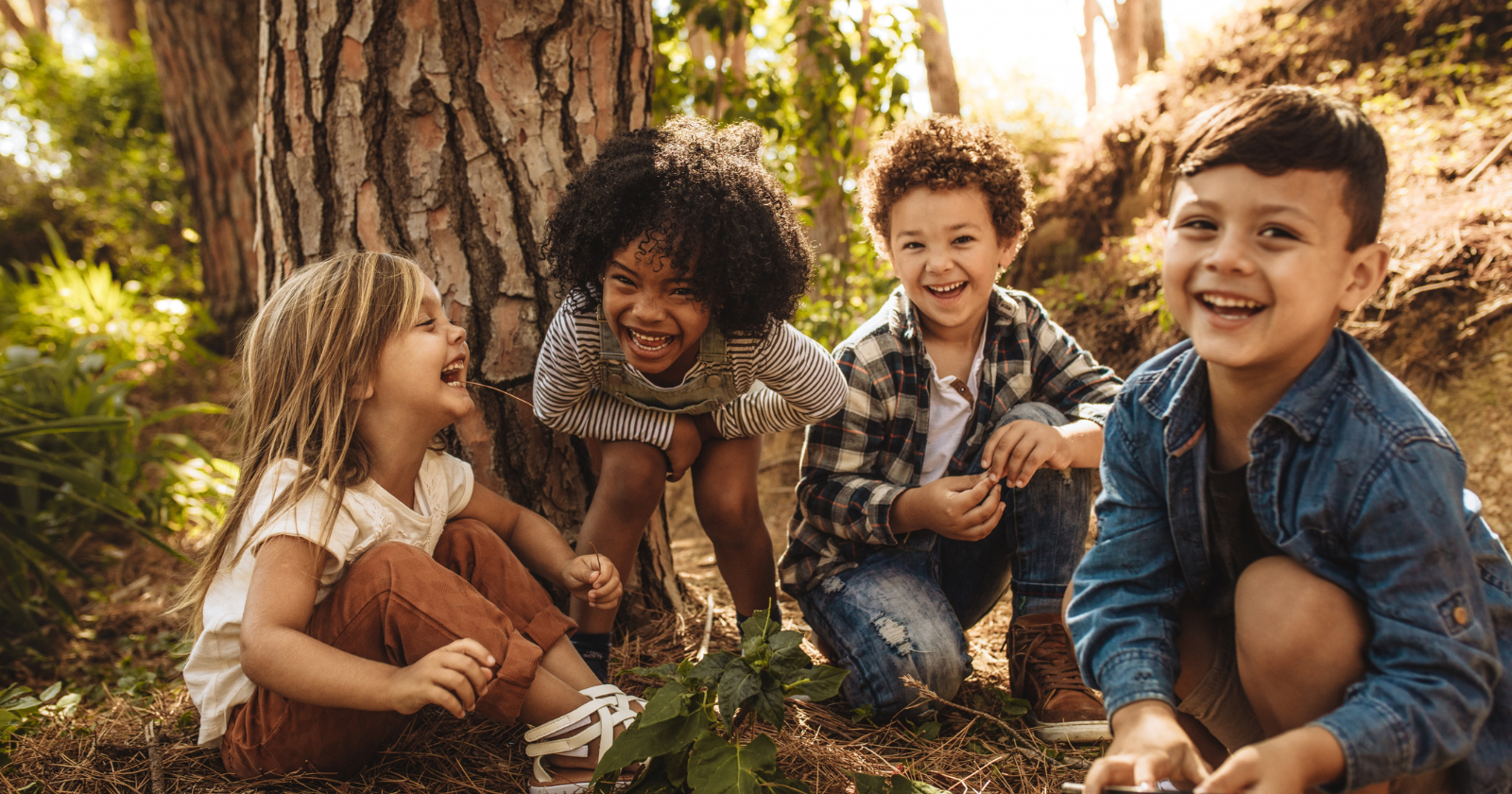
Picture a typical Saturday in 1972. You’re eight. Your mother says be home by dinner. That’s the whole conversation. You leave after breakfast and spend the next eight hours unsupervised, handling about thirty small problems with zero adult help.
Now picture a typical Saturday in 2026. You’re eight. There’s a scheduled activity. A scheduled snack. A scheduled lift. By dinner, you’ve had maybe two problems and an adult solved both of them for you.
The difference between those two Saturdays, multiplied across ten years of childhood, is the whole story of why one generation grew up tough and the next one is anxious.
And the research is finally catching up to what people have been quietly noticing for years.
What the science actually says
In 2023, the psychologist Peter Gray and colleagues published a major paper in The Journal of Pediatrics. Their conclusion was blunt: the steady decline in children’s independent activity since the 1960s is a major driver of the rising rates of anxiety, depression, and suicide among young people.
A Cambridge meta-analysis went further. It described overparenting as a modifiable risk factor for childhood anxiety and depression — research-speak for this is something parents are doing that’s making things worse, and it can be changed.
Both bodies of research land in the same place. The thing the 60s and 70s kids got, by accident, was the chance to face problems alone. The thing today’s kids aren’t getting, by design, is exactly that.
What was actually happening in all that unsupervised time
Nobody in 1972 was thinking I’m building my child’s resilience. They had bills to pay and dinner to make. The unsupervised hours weren’t a strategy. They were a side effect.
But during those hours, very specific things were being learned.
The kid who fought another kid over whose turn it was had to negotiate. No adult was coming. Either he worked it out or the game ended. He learned, by repetition, that conflict can be handled without a grown-up swooping in.
The kid who fell off his bike had to decide if it was actually bad. He looked at the scrape. He chose whether to keep playing or limp home. He learned, by repetition, to trust his own read of his own injuries.
The kid who was bored on a Tuesday afternoon had to do something about being bored. Nobody was going to entertain him. He learned, by repetition, that boredom is a problem you solve yourself.
None of this was taught. All of it was absorbed. By twenty, those kids had thousands of hours of evidence — banked in their own bones — that they could handle things.
That bank of evidence is what psychologists call internal locus of control. And it’s one of the strongest predictors of a low-anxiety adult life.
What’s different now
Today, kids are watched. Walks to school are escorted. Park play is supervised. Conflicts between children get mediated by parents within twenty feet. Boredom is solved by a screen.
Every one of those changes was made with love. Every one is, on its own, defensible. None of them looks like a problem.
But add them all together and you’ve removed the thousands of hours of small-problem-solving the 1970s kid got by default. Today’s child rarely fights without intervention. Rarely gets lost. Rarely calibrates his own injury. Rarely figures out boredom on his own.
He arrives at twenty with very little personal evidence that he can handle things. And that empty bank account is, the research suggests, exactly what’s driving so much of the anxiety we keep reading about.
The part nobody wants to say
This isn’t a back to 1972 argument. The 60s and 70s also produced higher injury rates, kids who actually got hurt, kids who needed help and didn’t get it because nobody was watching. The unsupervised model wasn’t all gift.
The honest version is that we overcorrected. Somewhere between be home by dinner and text me every twenty minutes, we stripped out the small manageable problems alongside the genuinely dangerous ones.
We protected our kids from the scraped knees that build resilience along with the actual risks. The trouble is, the scraped knees were doing most of the work.
What you can actually do
You can’t recreate 1972. The traffic’s different. The neighbourhood’s different. The other kids aren’t out there for yours to find.
But you can give back some of what those Saturdays were doing. In small doses. Starting now.
Let your child be bored without solving it. Let them walk somewhere alone — at an age a little younger than your instincts want. Let them have a fight with a friend and work it out without you mediating. Let them fall off the bike, look at the scrape, and decide for themselves whether it’s worth crying about.
Each of those small refusals to step in is a deposit into the bank. Over years, the deposits add up.
By the time your kid is grown, they’ll have something the 1970s kids had by accident — and that the research now suggests was the most important thing nobody knew they were giving them.
It wasn’t the parenting that built the resilience.
It was the absence of it, in exactly the right doses, at exactly the right ages.
We can give some of that back. Not by parenting harder. By stepping back a little. By letting them have the small problems we keep trying to solve for them.
That’s where the muscle actually gets built.