
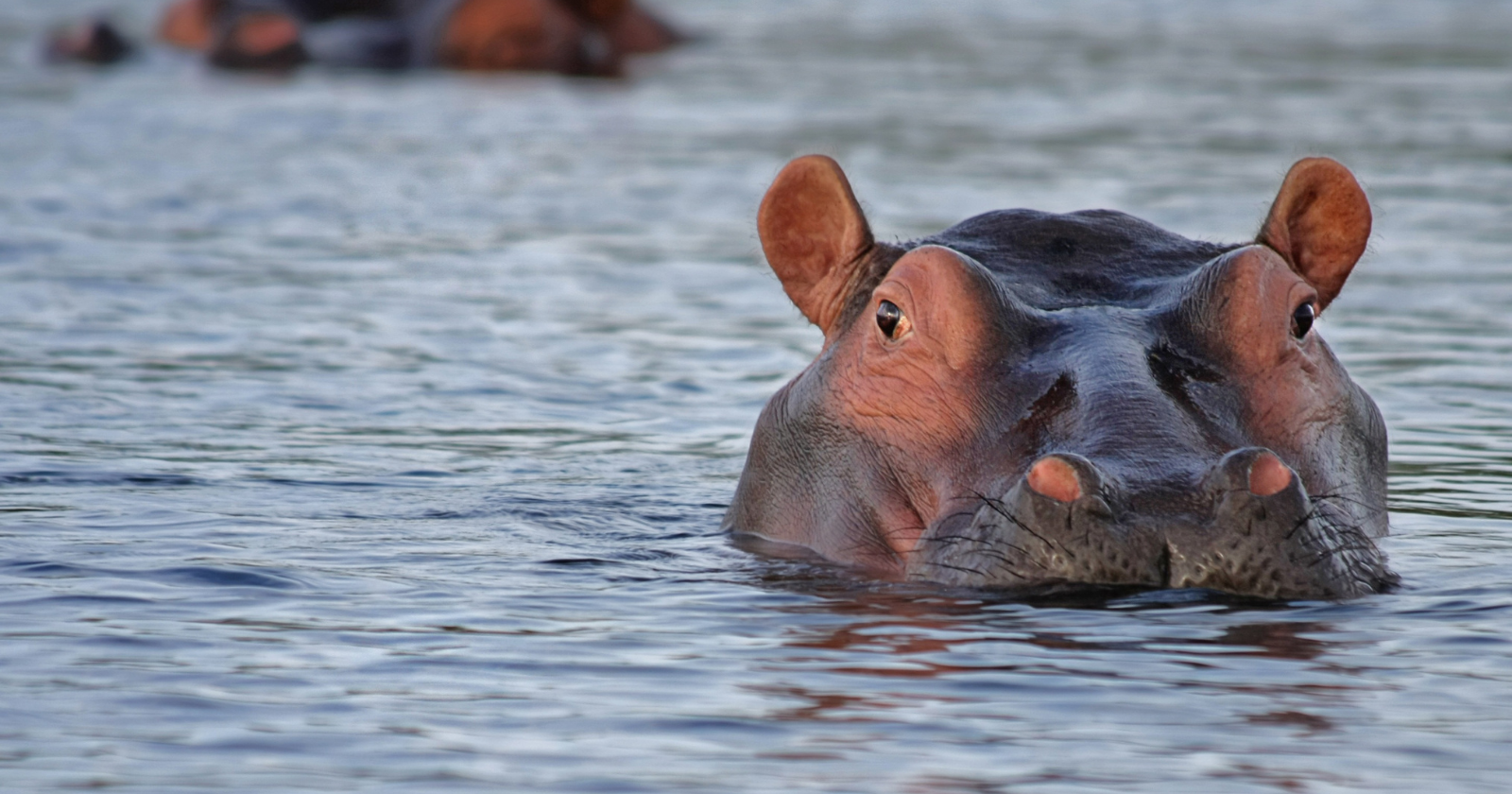
Pablo Escobar bought animals the way he bought everything, in defiance of paperwork. At Hacienda Nápoles, his 7,000-acre pleasure estate in the Magdalena valley between Medellín and Bogotá, the cocaine billionaire assembled a private zoo smuggled in around Colombia’s import laws: elephants, giraffes, zebras, kangaroos, ostriches, and, in the early 1980s, four hippopotamuses flown in from a dealer, one male and three females, released into the estate’s ponds to entertain his guests.
Every other animal on that list has an ending you could guess. The hippos do not, because the hippos are still there, and there are now vastly more of them.
The animals nobody would take
When Escobar was shot dead on a Medellín rooftop in December 1993, the state seized Nápoles, and the menagerie was broken up the sensible way: the giraffes, zebras and other exotics died off or were parceled out to zoos and sanctuaries. The hippos were the exception, and the reason was logistics, not sentiment. An adult hippo weighs up to three tons, spends its days submerged, is aggressive, territorial and widely rated among the most dangerous large animals on Earth, and in the 1990s nobody in Colombia had the equipment, budget or appetite to sedate and truck a pod of them anywhere. So the seizure simply went around them. The estate fell into ruin, the fences fell, and the four hippos walked out of the abandoned zoo into the adjacent Magdalena River system.
What they found there was, from a hippo’s point of view, an upgrade on Africa. Year-round warmth and water, endless grass, no droughts to cull the calves, no lions, no rival pods, and a river basin webbed with lakes and slow tributaries. Female hippos can calve every couple of years for decades, and in Colombia they start younger and breed faster than they do at home. Males pushed out of the founding pod did what exiled males do, swimming off down the river to claim new territory and found new herds, and the population compounded in the dark, uncounted, for twenty years.
Counting the uncountable
Counting hippos is genuinely hard, since they spend daylight almost entirely underwater, and for years the official numbers were guesses trailing far behind the animals. A 2021 estimate put the population near 98. Then came the first serious census, with researchers counting in person, by drone and by track, and the result, published in 2023, was a shock even to the pessimists: 181 to 215 hippos, roughly double the previous estimate, and the government’s own confirmed count settled at 169, with officials at the regional environment agency Cornare allowing the true figure could be 200. It is the largest hippo population anywhere outside Africa, all of it descended from one male and three females, a genetic bottleneck that has visibly failed to slow the animals down. Projections that once warned of 1,000 hippos by 2035 have been revised toward 1,400 by 2040, and the biologists mapping their spread down the Magdalena note that nothing stops the river route to the sea.
The ecological bill is the standard hippo invoice, delivered to an ecosystem with no evolutionary experience of hippos. The pods mow riverbank vegetation by the ton and deposit the processed result in the water, where the nutrient load feeds algal blooms and drains oxygen, to the detriment of native fish and the Magdalena’s own threatened river turtles, otters and manatees, whose habitat the newcomers occupy. Fishing communities share the water with a three-ton territorial animal, and attacks, though still rare, have begun. In 2022 Colombia formally declared the hippo an invasive species, the largest invasive animal in the world.
The experiment nobody can end
What makes the Colombian hippos a perfect natural experiment is that every attempt to shut it down has run into the same forces that started it. A 2009 cull ended after one hippo: soldiers shot an aggressive male named Pepe, posed with the carcass, and the resulting photograph caused a national outcry that froze lethal control for more than a decade. The animals became beloved, the mascot of the tourist economy that grew up around the old estate, now a theme park, and locals in Doradal speak of them as neighbors. The state’s toolkit since has been the slow one: catch-and-castrate surgeries at a reported cost of tens of thousands of dollars per animal, a sterilization target of 40 hippos a year, and long negotiations to export animals to overseas sanctuaries that mostly haven’t happened. The arithmetic has never closed; the herd outbreeds the scalpels. This April the government finally announced the step it had avoided for decades, a plan to cull about 80 hippos beginning late this year, alongside continued sterilization, and the announcement immediately reopened the national argument.
Which leaves the experiment running, 45 years in. Four animals went into a gangster’s pond because no law he respected said otherwise; they were left behind because they were too heavy to move; and their two hundred descendants now hold a river basin that is home to two-thirds of Colombia’s people. Escobar’s fortune was seized, his estate is a water park, his zoo is dispersed and his cartel is history. The hippos are the only part of the empire still expanding.
