
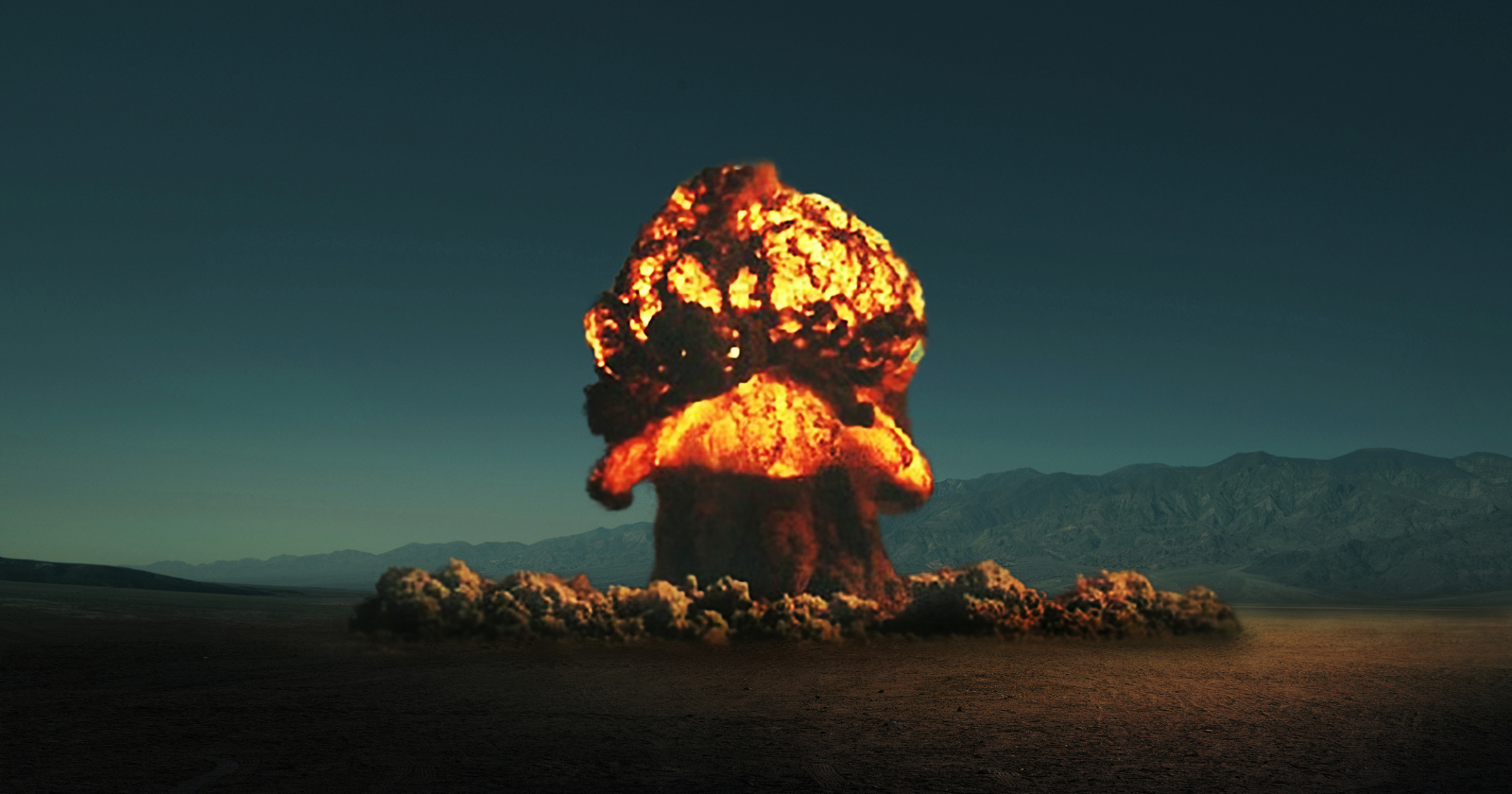
On the morning of June 30, 1908, the sky over a remote stretch of Siberian forest split open.
Eyewitnesses — and there were only a handful, because almost nobody lived there — described a column of bluish light, nearly as bright as the sun, moving across the sky. Then a flash. Then a sound like artillery fire. Then a shockwave that knocked people off their feet, shattered windows, and was felt hundreds of miles from where it happened.
One local, interviewed years later, described it simply: “the sky split in two, and fire appeared high and wide over the forest.”
What happened over the Podkamennaya Tunguska River that morning is still, more than a century later, the largest impact event in recorded human history. And the strange thing — the thing that keeps it interesting all these years on — is that scientists still can’t completely agree on what it actually was.
The scale of it
The numbers are difficult to hold in your head.
The explosion flattened roughly 80 million trees across an area of about 830 square miles — a region larger than Greater London, levelled in an instant. The trees fell in a distinctive radial pattern, all pointing away from a central point, like spokes on a wheel.
The energy released is estimated at somewhere between 10 and 15 megatons of TNT, though some estimates run lower and some run higher. At the upper end, that’s roughly 1,000 times the energy of the atomic bomb dropped on Hiroshima. Even conservative estimates put it in the range of hundreds of Hiroshimas.
The blast was heard hundreds of miles away. Seismic stations across Europe and Asia registered the shockwave. Atmospheric pressure waves from the explosion were detected as far away as Britain. For days afterward, the night skies across Europe were strange and bright — bright enough, in some places, that people could read newspapers outdoors at midnight.
And here’s the part that still unsettles people. If the same object had arrived just a few hours later, the rotation of the Earth would have placed a major city directly underneath it. Tunguska happened over empty forest. It very nearly didn’t.
The crater that wasn’t there
The first scientific expedition didn’t reach the site until 1927 — nineteen years after the event. The delay wasn’t negligence. The site was extraordinarily remote, and in the intervening years Russia had been consumed by the First World War and a revolution.
The expedition was led by a Soviet mineralogist named Leonid Kulik, and Kulik went in expecting to find a crater. A blast that powerful, he reasoned, must have been a meteorite striking the ground, and a meteorite that size must have left an enormous hole.
He found no crater. He found something stranger.
He found 80 million flattened trees — but at the very centre of the devastation, directly below where the blast must have happened, a cluster of trees was still standing upright. Stripped of their branches and bark, but standing. Like a forest of telegraph poles.
Kulik couldn’t explain it. He spent years searching for his crater and never found it. But his careful documentation of that strange standing-forest-at-the-centre turned out to be the single most important clue of all — and it pointed to something the science of his day had barely begun to understand.
What actually happened in the sky
The reason there was no crater is that nothing ever hit the ground.
The object — whatever it was — never reached the surface. It exploded in the air, several miles up, in what scientists now call an airburst. As the object plunged into the atmosphere at enormous speed, the air in front of it compressed and heated catastrophically. The pressure rose faster than the object could withstand. It fractured, flattened, and in a fraction of a second dumped all of its energy into the atmosphere at once.
That explains Kulik’s standing trees. The blast came from directly overhead, so the trees at the very centre had their branches stripped downward but weren’t pushed over — there was no sideways force on them. The trees further out caught the shockwave at an angle, and were knocked flat.
The object itself was, by then, vapour. There was no rock left to find. No crater. Just 80 million trees and a mystery.
In 2013, the world got a small live demonstration of the same physics when a much smaller object exploded over Chelyabinsk, Russia — an airburst that blew out windows across a city and was caught on hundreds of dashcams. Chelyabinsk was a fraction of Tunguska’s size. It was still terrifying.
Why scientists still argue about it
Here’s where the genuine, century-long disagreement lives.
Almost everyone now agrees Tunguska was an airburst — an object from space exploding in the atmosphere. What scientists still debate is what kind of object.
The leading theory is a stony asteroid, perhaps 50 to 100 metres across. NASA leans this way. The pattern of the felled trees, computer simulations of the blast, and microscopic particles found in the soil and tree resin all fit a stony asteroid reasonably well.
But the comet theory has never fully gone away. A comet is essentially a dirty snowball — ice and dust — and a comet would explain something the asteroid theory struggles with: those strange bright night skies across Europe afterward. A comet disintegrating in the atmosphere would dump enormous quantities of ice and water vapour into the upper atmosphere, which could produce exactly the glowing, luminous skies that were reported. An asteroid wouldn’t.
So the debate sits roughly here. The asteroid theory explains the ground evidence better. The comet theory explains the sky evidence better. Neither fully accounts for everything.
There are also looser ends. A nearby lake, Lake Cheko, has been proposed by some researchers as a possible fragment crater — though that idea is contested and most scientists don’t accept it. And because no fragment of the object was ever conclusively recovered, the case has never been fully closed.
Why it still matters
Tunguska is not just a historical curiosity. It is the reason planetary defence is taken seriously at all.
For most of human history, the idea that an object from space could flatten a city was treated as fantasy. Tunguska proved it wasn’t. An object large enough to do this didn’t arrive in some distant geological era — it arrived in the 20th century, within living memory of people’s grandparents, and it happened to come down over empty forest purely by chance.
Objects the size of the Tunguska impactor are estimated to strike Earth somewhere between once every few centuries and once every millennium. That’s rare. It is not never.
Today, NASA runs a Planetary Defense Coordination Office. In 2022, the DART mission deliberately crashed a spacecraft into a small asteroid to prove that an incoming object could, in principle, be nudged off course. The entire field of defending Earth from space objects traces a direct line back to a June morning in Siberia in 1908.
The forest grew back, eventually. The trees Kulik photographed have long since rotted into the ground. But the question that morning raised has never quite been answered.
Something came out of the sky over Siberia with the force of a thousand atomic bombs. We know roughly when. We know roughly how. We still cannot say, with full certainty, exactly what it was.
A century on, the largest explosion in recorded history remains, in part, an open case.
