
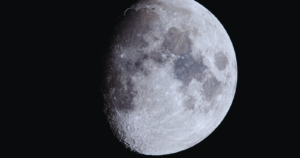
Moon Daily
A lunar meteorite found in northwest Africa has been shown to record evidence of an…
The first few billion years of Earth's history are largely inaccessible to direct geological investigation.

The first few billion years of Earth's history are largely inaccessible to direct geological investigation.

The popular framing of algorithmic recommendation, repeated across most contemporary writing on consumer technology, is that personalised suggestions surface preferences the consumer already has.
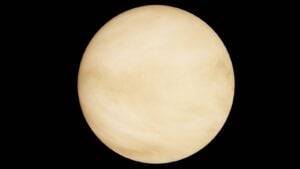
NASA GISS modelling suggests Venus may have held a shallow ocean for up to two billion years before volcanic resurfacing and a brightening Sun tipped it into a runaway greenhouse. A 2021 Nature study disputes it, arguing Venus never had oceans. Why its past is still an open question.

AI's water footprint, from the bottle-per-email estimate to the 4.2-6.6 billion cubic metre projection for 2027. Where the water goes, why the figures are estimates with wide ranges, the difference between withdrawal and consumption, and why local concentration and disclosure matter more than the global total.
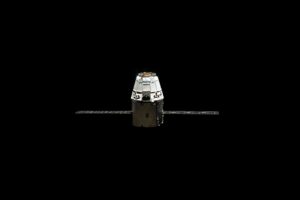
The Pentagon's blue-sky research arm wants industry to figure out how to rebuild a shot-up satellite constellation in hours, not years.
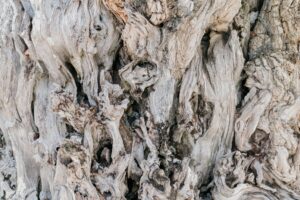
Methuselah, a Great Basin bristlecone pine in California's White Mountains, was dated to roughly 4,855 years old by 2025 — the oldest known non-clonal living organism. The US Forest Service keeps its exact location secret to protect it from vandals and souvenir hunters.
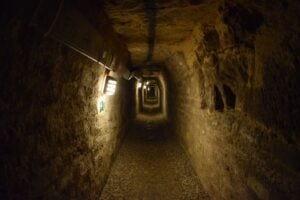
Greek colonists began quarrying soft yellow tuff beneath Naples 2,400 years ago. Romans turned the voids into cisterns. In 1942, the same chambers sheltered 200,000 civilians from Allied bombing.

The American population pyramid is changing shape in real time, and the rate of change is accelerating.

Viktor Frankl dictated 'Man's Search for Meaning' in nine days in the summer of 1945, weeks after his liberation from the Nazi camps that killed his wife, parents, and brother. The book, which has sold more than 16 million copies, argues that meaning is found in serving something beyond yourself — and that chasing happiness directly is the surest way to lose it.

Mihaly Csikszentmihalyi named flow in 1975 after watching Chicago painters skip meals and lose track of time. His decades of pager studies revealed the state appears only when attention points fully outward at a task — the moment the self steps back into the frame, flow collapses.
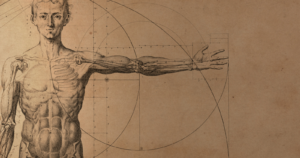
The objection Darwin knew would be hardest to answer was not about bones or fossils.
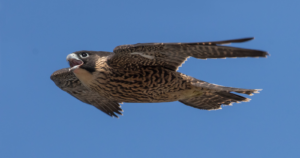
A peregrine falcon in a hunting dive reaches a terminal velocity of about 320 km/h (200 mph), which makes it the fastest animal alive.
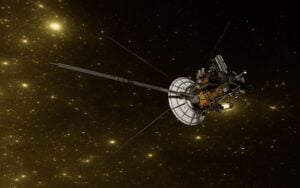
The uranium-238 electroplated onto the Voyager record cover really is a clock a finder could read. But with a half-life of 4.51 billion years it keeps time far longer than the 'billion years' usually quoted, which describes the disc's lifespan, not the clock's. Plus the pulsar map, a second clock.

The World Health Statistics 2026 report, published by the World Health Organization on 13 May, carries a paradox on almost every page.
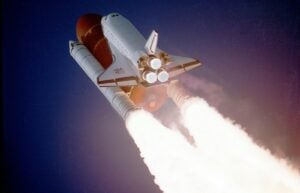
The thing that has happened to the global space economy over the past 25 years is the kind of phenomenon that is easier to see in retrospect than to recognise while it is occurring.
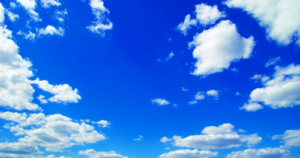
The question of why the sky is blue is one of the older questions in the history of human curiosity.