
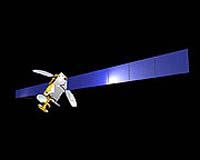
aeroTelesis, Inc., recently conducted a live demonstration for a major satellite conglomerate where through the use of its proprietary USM technology achieved success in the data transmission of six Megabits per second (Mbps) through a single 3 Khz (3 dB Band Width) channel.
AeroTelesis will continue to conduct more demonstrations with the addition of different factors to simulate real current working environments, i.e. noise, interference channels, etc.
“The demonstration served to be a great success enabling the Company to proceed to the next step to eventually integrate USM in existing satellite communication systems improving data transmission by several folds,” said Dr. Jagan Narayanan, Chairman/CEO of aeroTelesis.
The Company is working closely and making progress with other satellite vendors and operators and proceeding with further discussions of USM application with the satellite conglomerate that has already seen and approved the demonstration. The number and names of the satellite companies are being withheld at this time for confidential considerations of all companies involved.
aeroTelesis is an emerging-growth company that provides next-generation wireless technologies for voice, video and data applications encompassing mobile cellular, wireless local loop, broadband wireless data, VoIP, satellite communications and others. The foundation of its technology platform is a patented modulation technique known as Ultra Spectral Modulation (USM).
USM is believed to be a breakthrough modulation technique designed to substantially increase frequency and network efficiency, with data throughput rates of more than 200 times that of conventional modulation techniques. This is achieved through just ten percent of the bandwidth channel normally used — with greater transmission distance and lower power requirement.
Broadband-like services with data rates of three Mbps (megabits per second) can be transmitted through a three-kilohertz channel with lower power consumption. The company anticipates commercial deployment of its technology across multiple applications beginning in 2004.
