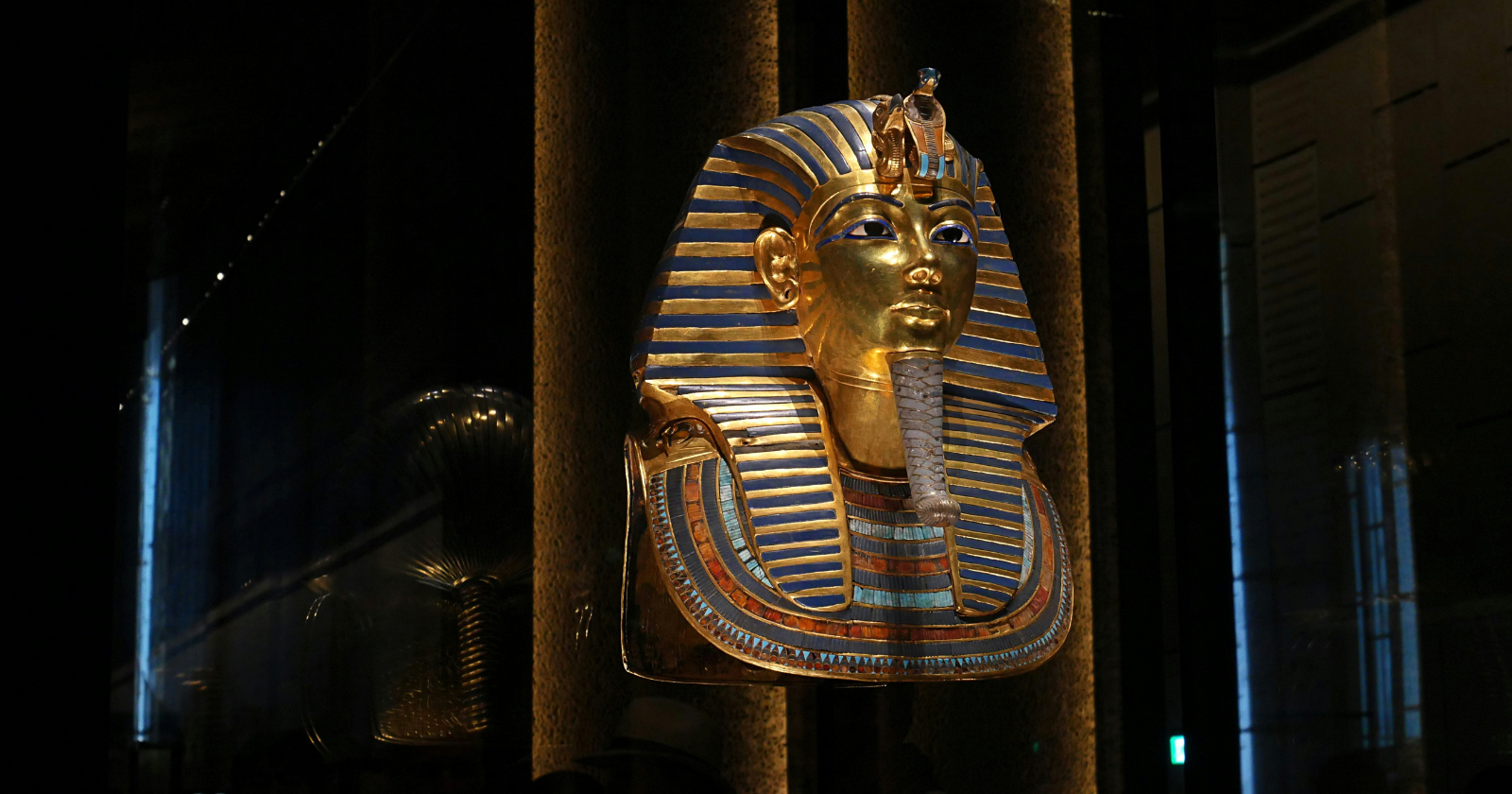
Most people who have heard of Tutankhamun know the shorthand version: archaeologists broke a 3,000-year-old seal, and the people involved started dropping dead.
It’s a satisfying story, the kind that survives a century of retelling because it already comes with its own moral built in.
It’s also, according to the people who have actually gone back and checked, mostly wrong.
What actually happened after the tomb was opened
Howard Carter’s team broke into Tutankhamun’s tomb in November 1922, after years of searching funded by Lord Carnarvon. Carnarvon died four months later, in April 1923, and that timing is the entire foundation the curse legend was built on.
The actual cause was mundane: an infected mosquito bite on his cheek that he’d aggravated while shaving, which developed into blood poisoning in an era before antibiotics existed. Of the other people present at the tomb’s opening, most went on to live ordinary lengths of life. Carter himself, the man who spent the most time inside the tomb by far, lived another 17 years and died at 64.
A researcher eventually put a number on this. Mark Nelson, in a study published in the BMJ in 2002, tracked the Western individuals present in Egypt when the tomb and sarcophagus were opened and compared their survival against a matched group who weren’t. His conclusion was blunt: “There was no significant association between exposure to the mummy’s curse and survival and thus no evidence to support the existence of a mummy’s curse.” The two groups lived comparably long lives, statistically indistinguishable from each other.
None of that stopped the story from spreading. If anything, it explains why the story needed to spread in the first place, and that’s the part worth sitting with longer than the ghost story itself. A tomb sealed for three millennia, opened by a team funded by a wealthy British lord who then dies within months, is exactly the kind of setup a good story doesn’t want to waste on an insect bite.
How a mosquito bite became a curse
Lord Carnarvon had sold exclusive coverage rights to the tomb’s discovery to The Times of London, which meant every other newspaper on the planet was locked out of the story they wanted most.
Rival papers didn’t have access to Carter’s actual findings, so they filled the gap with something they could print without permission: speculation. A curse didn’t need an interview or a photograph. It just needed a headline.
David Silverman, an Egyptologist who served as project Egyptologist for a major Tutankhamun touring exhibit, put it directly when asked about the coverage: “most if not all references to the curse derived from ignorance and a desire for a catchy headline — not necessarily in that order.”
nce a handful of papers ran with it, later deaths of anyone loosely connected to the excavation got folded into the same narrative, regardless of how many decades had passed or how unrelated the actual cause was. A pattern doesn’t need to be real to feel undeniable once enough headlines repeat it.
That’s a strange kind of story to still be circulating a century later, and it’s not the only one. We made a video recently that traces a nearly identical mechanism at work in modern self-help culture, and the specific case it opens with stuck with us long after the edit was finished: Napoleon Hill, the author of Think and Grow Rich, built much of his authority on a meeting with Andrew Carnegie that Carnegie’s own meticulously kept visitor records show never happened.
Hill wrote about it in loving, specific detail anyway, a mahogany desk and a ticking clock included, and millions of readers believed him enough to build an entire industry on the claim.
Why a good story beats a boring fact
The curse of the pharaohs and the myth behind modern manifestation culture share the same load-bearing wall: a coincidence, or an invented detail, that gets repeated until repetition starts to look like evidence. Neither one needed to survive scrutiny. They needed to survive retelling, and retelling has never required accuracy.
A mosquito bite is forgettable. A curse from beyond the grave is not. A man quietly going bankrupt while writing a book about manifesting wealth is an inconvenient detail. A secret formula passed down from one of the richest men in America is a story people want to be true badly enough to skip the fact-check.
This is not a flaw unique to the 1920s press or to any single guru. It’s closer to a default setting, and it shows up anywhere a frightening or desirable explanation is competing against a duller, more accurate one for the same attention. Once a story explains something frightening or promises something desirable, most people extend it the benefit of the doubt a plain fact never gets. The Nelson study didn’t fail to reach anyone because it was hidden. It failed to compete because “no significant association” doesn’t sell the way “ancient curse” does, and a debunked meeting with Andrew Carnegie doesn’t sell the way “secret of the wealthy” does either.
What’s actually worth taking from this
None of this means every unexplained pattern deserves automatic suspicion, or that coincidence is always the full explanation for anything strange. It means the burden of proof runs in the opposite direction from where most retellings put it. The interesting question was never whether Lord Carnarvon’s death was mysterious. It’s why a mosquito bite needed to become a curse before anyone found it worth remembering, and what else in daily life gets the same treatment: a compelling story quietly promoted ahead of a duller, better-supported one, simply because it was more satisfying to repeat.
A hundred years on, the tomb itself is no longer the mystery. What still holds up is the pattern it revealed: an audience willing to trade a small, checkable fact for a bigger, unverifiable one, over and over, as long as the bigger one comes with better drama attached.