Correction, 18 September 2026: an earlier version of this article said lasers left by Apollo astronauts. It has been amended to say laser retroreflectors left by Apollo astronauts.
“Despite his open and acute mind, he nevertheless lent his ear and his consent to the moon’s dominion over the waters, to occult properties, and to such puerilities.” That’s Galileo Galilei, in 1632, dismissing a rival astronomer named Johannes Kepler for suggesting something Galileo considered childish nonsense: that the moon reaches across empty space and physically drags the ocean around. Galileo had his own theory, that tides were just Earth’s oceans sloshing around like water in a moving bowl. He went to his grave convinced of it.
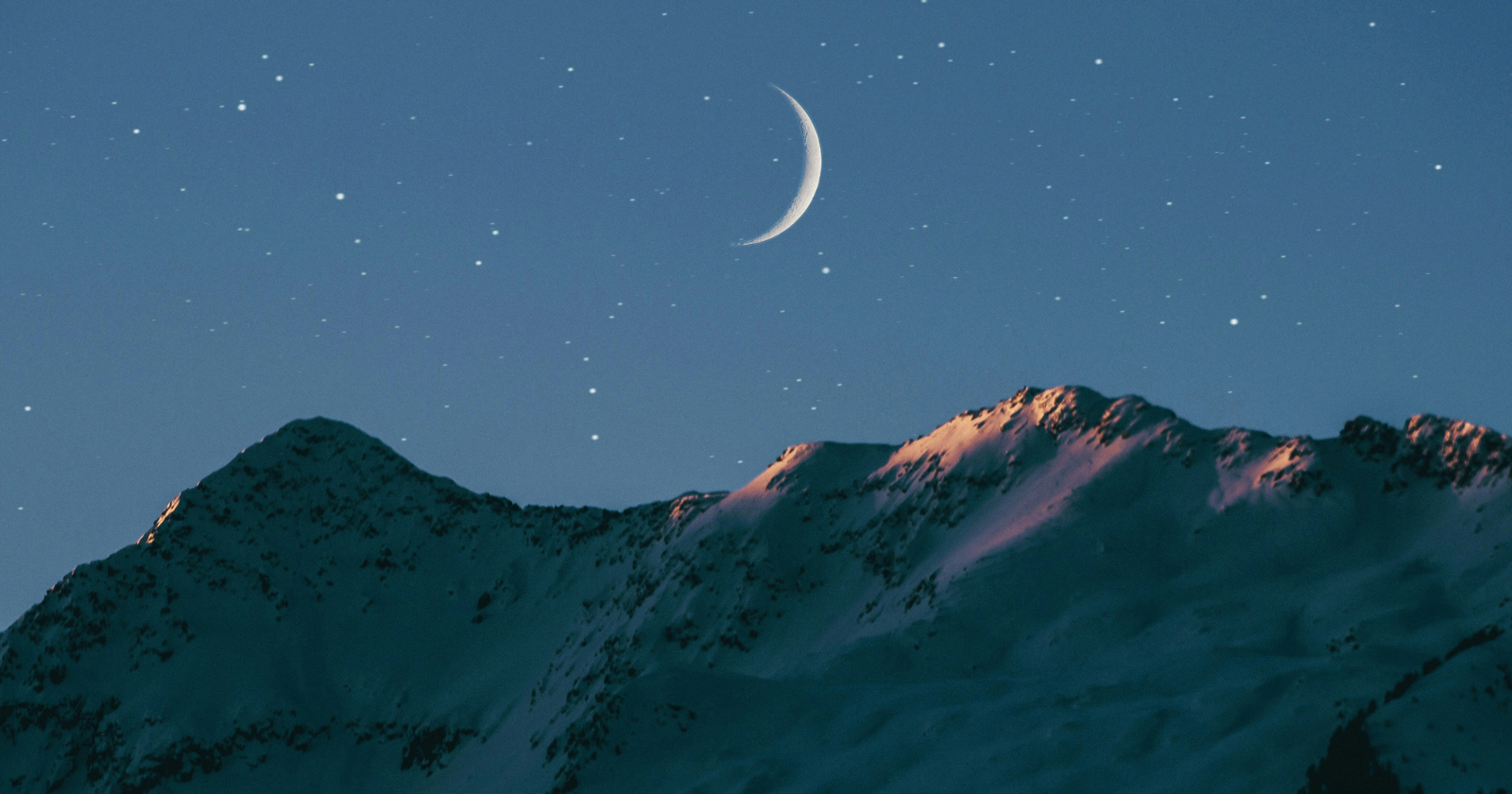
He was wrong, and Kepler’s “puerility” turned out to be the correct answer to one of the oldest patterns sailors ever noticed: that the sea keeps appointments, rising and falling on a schedule tied to the moon. The full story took another half century to arrive, and once it did, it kept going in a direction nobody expected, one that ends with the moon quietly leaving.
The mockery that turned out to be backwards
Isaac Newton supplied what Galileo had demanded and Kepler couldn’t give him: a mechanism. Gravity acts on everything, at any distance, and it weakens the farther away you get. That means the moon pulls the ocean nearest to it harder than it pulls the solid Earth underneath, dragging that water into a bulge reaching toward the moon. The far side of the planet gets pulled weakest of all, even weaker than the Earth itself, so the solid planet gets tugged forward and the ocean on the far side effectively gets left behind, bulging outward in the opposite direction. Two bulges, always on opposite sides of the planet, regardless of where the moon happens to be overhead.
Earth spins all the way around once a day underneath both of those bulges at once, so most coastlines pass through one, then the other, which is why the tide rises twice a day even though the moon only crosses overhead once. It’s straight arithmetic once you have the mechanism, and it’s exactly the arithmetic that embarrassed every theory that came before Newton, Galileo’s included.
A doomsday bestseller that bet against the same math, and lost
Gravity being real doesn’t mean gravity is limitless, and one popular book badly misjudged that distinction. In 1974, astrophysicist John Gribbin and astronomer Stephen Plagemann published “The Jupiter Effect,” arguing that a rare alignment of the planets on March 10, 1982 would combine their gravitational pull enough to trigger catastrophic earthquakes along California’s San Andreas Fault. The book became a bestseller. An astronomer at Griffith Observatory dismissed it at the time as the “Great Earthquake Hoax,” and he was right to. The date came, the planets lined up, ocean tides shifted by a matter of millimeters, and nothing else happened at all.
Run the actual numbers and it’s obvious why. The sun’s tide-generating pull on Earth comes out to about 46 percent of the moon’s, respectable for an object 27 million times more massive than the moon, but still second place on account of distance. Every other planet in the solar system combined, even perfectly aligned, contributes a pull buried somewhere beneath the effect of an ordinary passing weather front. Venus at its closest manages a few thousandths of one percent of the moon’s tidal force. Jupiter, for all its bulk, does a little better and still isn’t close. Your local tide table is solar system geometry, but only two bodies in it are doing any real work, and one of them is doing less than half of what the other one does.
We put together a fuller walk-through of that arithmetic, along with the part of this story most people never hear about at all: what all that daily tidal dragging actually costs the Earth, and where the bill eventually gets paid. It includes the exact moment the story stops being about beach schedules and starts being about the length of your own day.
The bill hiding behind every high tide
Here’s the part Galileo never got close to, and the part that makes this more than a historical curiosity. Those two tidal bulges don’t just sit there. As Earth spins underneath them, the water grinds across seabeds and piles into coastlines, and that friction acts as a brake on the planet’s own rotation, applied every hour, for the planet’s entire existence. Energy taken from Earth’s spin doesn’t vanish. Because Earth spins faster than the moon orbits, the planet’s tidal bulge sits slightly ahead of the moon rather than lined up directly beneath it, and that offset bulge has its own gravity, tugging the moon forward and feeding it energy. Feed an orbiting body energy and its orbit widens. That’s the whole mechanism behind a moon that never stops climbing away from us, one 3.8-centimetre step at a year, funded entirely by a planet that’s very slowly running down.
How anyone actually caught the moon in the act
Proving a drift that small took one of the more understated experiments in the history of science. Apollo astronauts left small panels of mirrored prisms sitting on the lunar surface, and observatories on Earth have spent decades since firing lasers at them and timing how long the reflected light takes to return. Do that consistently enough and the verdict is unambiguous: the moon is retreating at 3.8 centimetres a year, roughly the speed a fingernail grows.
The other half of that same transaction shows up in the length of a day, stretching by about two milliseconds every century, a change too small to feel and just large enough that Babylonian eclipse records pressed into clay tablets nearly 3,000 years ago still line up with it once you run the physics backward. Rock laid down in tidal bands in South Australia tells the same story on a longer timescale, recording a 21.9-hour day some 620 million years ago, back when the moon sat close enough to pull noticeably harder than it does now.
Where this slow trade is heading
None of this stays quietly theoretical forever. The moon’s orbit carries an 18.6-year wobble that astronomers have tracked for centuries, alternately suppressing and amplifying ordinary daily tides. In 2021, a NASA-funded team led by Phil Thompson, an assistant professor at the University of Hawaii, projected that the amplifying half of that cycle will land on top of sea levels already raised by climate change starting in the mid-2030s, producing a sharp jump in nuisance flooding on sunny days with no storm in sight.
“It’s the accumulated effect over time that will have an impact,” Thompson said. “If it floods 10 or 15 times a month, a business can’t keep operating with its parking lot under water. People lose their jobs because they can’t get to work. Seeping cesspools become a public health issue.”
Zoom out far enough and the same slow trade eventually changes the sky itself. The moon is drifting toward a distance at which it will appear too small to fully cover the sun, meaning total solar eclipses have a genuine, if extremely distant, expiration date. None of that touches anyone reading this. What does touch you is smaller and stranger: every day of your life has run a few milliseconds longer than the days Galileo lived, the ones he spent so certain he’d already solved the mystery. He hadn’t. The ocean and the moon settled it without him, and they’re still settling it, one high tide at a time.