
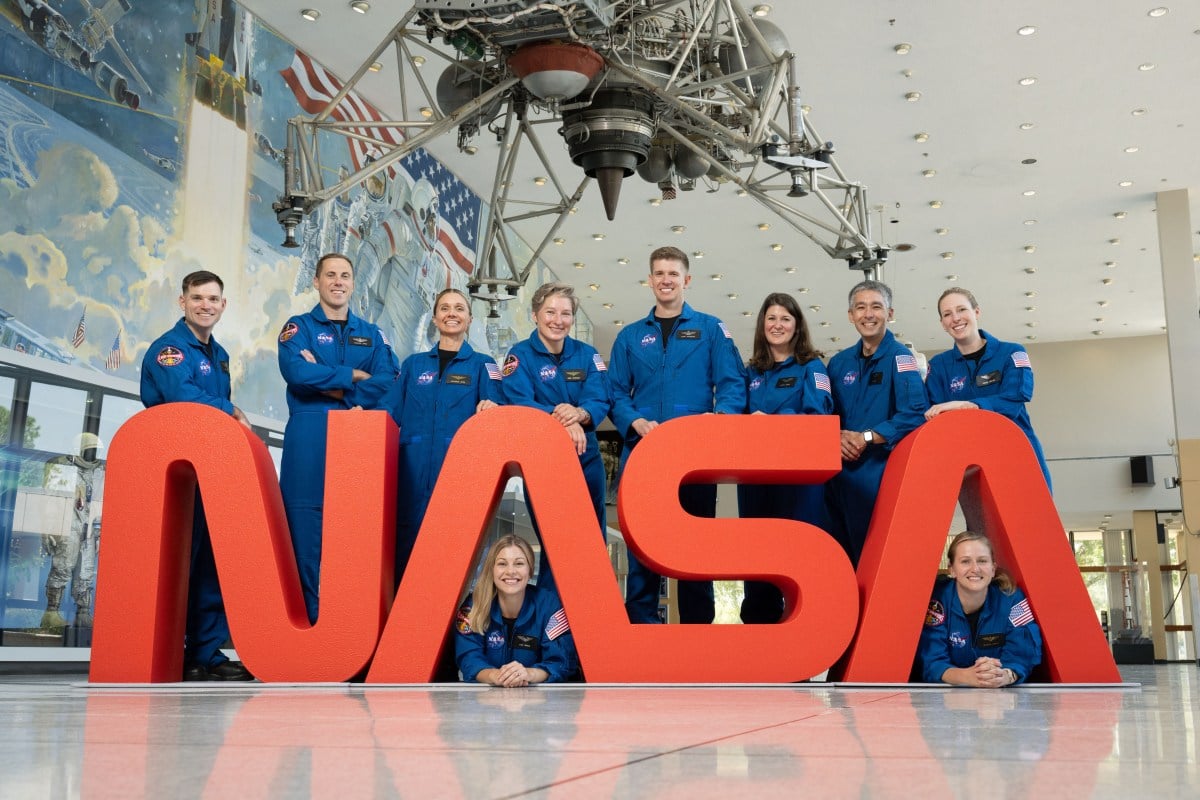
The odds were never the most interesting part, though they were sharp enough to make the point. More than 8,000 people applied to NASA’s astronaut candidate program during the 2024 application cycle. In September 2025, NASA introduced 10 of them as its newest astronaut candidates.
That is the clean arithmetic of the selection. But it does not explain what NASA was selecting for.
The popular image of an astronaut still leans toward speed, strength and fearlessness: the fighter pilot, the athlete, the person who can endure anything by force of will. Those qualities are not irrelevant. Several members of NASA’s 2025 candidate class are military test pilots with thousands of flight hours. One trained with the U.S. women’s rugby national team. Another has already flown to space on a private mission. But the astronaut job has become too broad to be reduced to physical toughness.
NASA’s own description of the class is more revealing. The candidates now face nearly two years of training in robotics, land and water survival, geology, foreign language, space medicine and physiology, simulated spacewalks and high-performance jet flying. In other words, the agency is not only looking for people who can perform under pressure. It is looking for people who can keep learning under pressure, across fields that do not naturally belong together.
The 2024 applicants became the 2025 class
The timeline matters. NASA opened the application process in 2024. The selected group was announced on September 22, 2025, as the agency’s 24th astronaut class. NASA’s release says the 10 candidates were chosen after a competitive process involving more than 8,000 applicants from across the United States.
The class includes U.S. Army Chief Warrant Officer 3 Ben Bailey, geologist Lauren Edgar, U.S. Air Force Major Adam Fuhrmann, U.S. Air Force Major Cameron Jones, engineer Yuri Kubo, former U.S. Navy Lieutenant Commander Rebecca Lawler, engineer and former private astronaut Anna Menon, physician Imelda Muller, U.S. Navy Lieutenant Commander Erin Overcash and former Marine Corps pilot Katherine Spies.
The backgrounds are not interchangeable. Edgar has spent years supporting Mars rover exploration and helped define lunar science goals for Artemis III. Muller trained as an undersea medical officer and was completing an anesthesiology residency. Kubo worked across SpaceX teams and earlier supported NASA programs as a Johnson Space Center co-op. Menon supported medical hardware and software for the International Space Station before flying on Polaris Dawn in 2024. The pilots bring test-flight, combat, carrier, hurricane-hunter and flight-test engineering experience.
That spread is the point. Modern astronaut crews are not selected for one heroic template. They are built from people who can translate between machines, science, medicine, operations and teams.
The minimum bar is already high
Before NASA can even begin comparing candidates, applicants must clear a demanding baseline. NASA’s current astronaut requirements include U.S. citizenship, a master’s degree in a STEM field or an equivalent qualification, relevant professional experience or qualifying high-performance jet flight time, and the ability to pass the agency’s long-duration astronaut physical.
There are alternate pathways through medical degrees, doctoral work and nationally recognized test pilot school programs, but none of those pathways are shortcuts. They are different forms of evidence that the applicant can absorb complex systems, make decisions under constraint and work in environments where error has consequences.
NASA also names leadership, teamwork and communication as required skills. That may sound softer than jet hours or medical training, but in a spacecraft it is not. A crew member who cannot communicate clearly, accept correction, hold attention through boredom and avoid making stress contagious can become a risk to everyone else.
The selection board invites only a small group of the most qualified applicants for interviews at Johnson Space Center. About half of those interviewees are invited back for a second round. From there, the final astronaut candidates are chosen.
What the training is really testing
After selection, the candidates are not yet flight-ready astronauts. They report to Johnson Space Center and spend roughly two years learning the basic skills required for future mission assignments. NASA’s general astronaut page describes training in spacewalking, space station operations, T-38 jet flying and robotic arm control. The 2025 class announcement expands that list to include land and water survival, geology, foreign language, space medicine and physiology.
Each part tests a different kind of adaptability.
Robotics matters because astronauts do not simply ride spacecraft. On the International Space Station and future lunar missions, they may operate robotic arms, support berthings, move hardware and coordinate with teams on the ground. A robotic arm is slow, precise and unforgiving in a different way from an aircraft.
Medicine matters because crews may be far from immediate help. On the station, medical support is available from Earth, but the astronaut in front of the problem is still the first responder. On lunar missions, and especially on longer future missions, that responsibility grows.
Foreign language training reflects the international structure of human spaceflight. For years, Russian has been a central part of astronaut training because of Soyuz, station operations and work with international partners. The point is not simply vocabulary. It is learning to operate inside another technical culture.
Survival training matters because launch and landing do not always place a crew in a comfortable environment. Astronauts must be able to wait, coordinate and stay functional after an off-nominal landing, in water or on land, while recovery teams reach them.
High-performance jet flying is not about turning every astronaut into a fighter pilot. It is a way of training attention, procedures, communication and judgement in a fast-moving environment. The aircraft makes hesitation and task saturation visible.
The hidden skill is composure
The one skill space demands most is difficult to list as a credential. It is the ability to stay calm when the plan starts to fray.
That does not mean being emotionless. It means being able to keep working when a warning tone sounds, a procedure changes, a tool floats away, a teammate needs help, or the timeline no longer matches the simulation. Spaceflight is built around planning, but it is also built around the expectation that plans will meet reality under pressure.
NASA’s training architecture reflects that. Simulated spacewalks, survival exercises, T-38 flights and operational drills all do the same thing in different settings: they ask candidates to keep thinking while their bodies and attention are under load. The agency is not only teaching procedures. It is watching how people behave when a procedure becomes hard to execute cleanly.
This is why the “strongest and fastest” frame misses the centre of the job. Physical conditioning matters, but strength alone cannot operate a robotic arm, diagnose a medical problem, describe a geological feature, coordinate with mission control, translate a warning light into action or keep a crew cohesive during a long mission.
Selection favours range. The astronaut who survives the process has to be teachable, technically fluent, emotionally steady and useful to other people when things are inconvenient, boring, frightening or unclear.
A different kind of elite
The 2025 class also says something about what human spaceflight has become. The Mercury astronauts were selected in 1959 from a narrow world of military test pilots. NASA has now recruited 370 astronaut candidates across its history, and the job has widened with the missions.
Today, astronauts may fly commercial crew vehicles to the space station, support private and government operations in low Earth orbit, prepare for Artemis flights around and to the Moon, and eventually help define what a Mars mission would require from a crew. The spacecraft are different. The science is different. The public and international context is different.
So the candidate pool has changed too. The 10 people selected from more than 8,000 applicants are not merely the survivors of a competition. They are a forecast of the kinds of humans NASA thinks it will need: pilots who can be scientists, scientists who can be operators, doctors who can be expedition teammates, engineers who can work under public pressure, and all of them able to learn from one another quickly.
That is the quieter meaning of the selection number. More than 8,000 people applied. Ten were chosen. But the filter was never simply who could run hardest, lift most or look most like the old astronaut myth. It was who could be trusted with complexity when there is no easy way out.
Space does not reward panic. It does not care about resumes once the hatch is closed. It asks whether a person can keep listening, keep learning and keep doing the next correct thing when the original plan has already failed. NASA’s newest astronaut candidates are now entering two years of training built around that question.
Sources
NASA: NASA Selects All-American 2025 Class of Astronaut Candidates
NASA: Become an Astronaut
Associated Press report on NASA’s newest astronaut class
Times Union report on Imelda Muller and the 2025 astronaut candidate class
