
The teddy bear that smuggled Katalin Karikó’s life savings out of communist Hungary in 1985 still exists. It sits, somewhat the worse for wear after 40 years and an Atlantic crossing, in the Karikó family’s possession in suburban Philadelphia. The two-year-old who carried it onto the airplane that took the family to Pennsylvania is now Susan Francia, a two-time Olympic gold medalist in rowing for the United States (Beijing 2008, London 2012), and the small amount of cash inside the bear’s stuffing was, by the standards of the family’s situation in 1985, essentially their entire net worth. The Hungarian government had permitted Karikó to take only $100 in foreign currency out of the country — a standard restriction applied to all citizens of the People’s Republic of Hungary during the late Communist period to prevent capital flight — and the Karikós, who had a two-year-old child and no obvious means of generating immediate income in the United States, considered $100 substantially inadequate to the situation. The Lada car they had sold on the black market produced approximately $1,200. The teddy bear concealed the money sufficiently that Hungarian customs officials did not detect it. The family arrived in Philadelphia with the teddy bear, the cash inside it, and Karikó’s accepted postdoctoral offer at Temple University.
The three-year period at Temple University (1985-1988), followed by a year at the Uniformed Services University of the Health Sciences in Bethesda (1988-1989), constituted, by Karikó’s own subsequent account, the most professionally promising stretch of her American career. As detailed in the Nobel Prize organization’s official biographical summary of Karikó’s career and the scientific work that produced the 2023 prize, Karikó worked at Temple on RNA-based experimental treatments for AIDS — a substantial and well-funded area of late-1980s clinical research, given the public health emergency of the early AIDS epidemic. The work went well. Her professional trajectory appeared to be establishing itself. The disruption that ended this period came not from her own work but from a dispute with her Temple supervisor, who attempted to block her from accepting a more senior position at Johns Hopkins University. The result was that Karikó left Temple in 1988 to take a position at the Uniformed Services University of the Health Sciences in Bethesda, Maryland, and the following year accepted a research assistant professorship at the University of Pennsylvania — a low-level, grant-funded position that, in the academic-career hierarchy of American biomedical research, was substantially less prestigious than either the Temple postdoc or the Johns Hopkins offer she had been prevented from accepting. The 1989 move to Penn was meant to be temporary. It became, in essential respects, the next 24 years of her professional life.
The 24 years at Penn
The University of Pennsylvania’s biomedical research culture of the 1990s and 2000s was, by every available account from the period, substantially unkind to research that did not produce immediate, publishable, grant-attractive results. Karikó’s persistent interest in messenger RNA — the genetic molecules that carry instructions from DNA to the cell’s protein-making machinery — was, in the broader 1990s scientific consensus, considered a dead end. As reported in Scientific American’s reconstruction of Karikó’s career and the scientific obstacles she encountered at Penn, the dominant view in late-20th-century biochemistry was that mRNA was too unstable to function as a therapeutic agent. Any mRNA introduced into the human body would be detected almost immediately by the innate immune system, treated as a viral intrusion, and either degraded by enzymes or triggered into producing dangerous inflammatory responses. The standard biomedical research path of the period was to focus on DNA-based therapies and protein-based pharmaceuticals. mRNA was, by general consensus, not commercially viable.
Karikó disagreed. She continued working on mRNA across the 1990s, applied repeatedly for NIH grants to support the work, and was rejected essentially every time. In 1995 she was demoted by Penn — informed, in language she would subsequently quote in multiple interviews, that the faculty committee had concluded “she was not of faculty quality.” The same year, she was diagnosed with cancer. Her husband was, in this period, frequently stuck in Hungary for visa-related reasons and unable to provide much practical support. The collaboration that would eventually produce her Nobel-winning work began essentially by accident: a 1997 chance encounter at the Penn medical school’s photocopy machine, where she met Drew Weissman, a Penn immunologist whose research interests in vaccine development complemented her own work on mRNA in a way that neither of them had anticipated. They began collaborating immediately. The collaboration would, across the subsequent 16 years, produce essentially all of the underlying scientific work that the COVID-19 mRNA vaccines depended on.
The discovery and the 16 years that followed
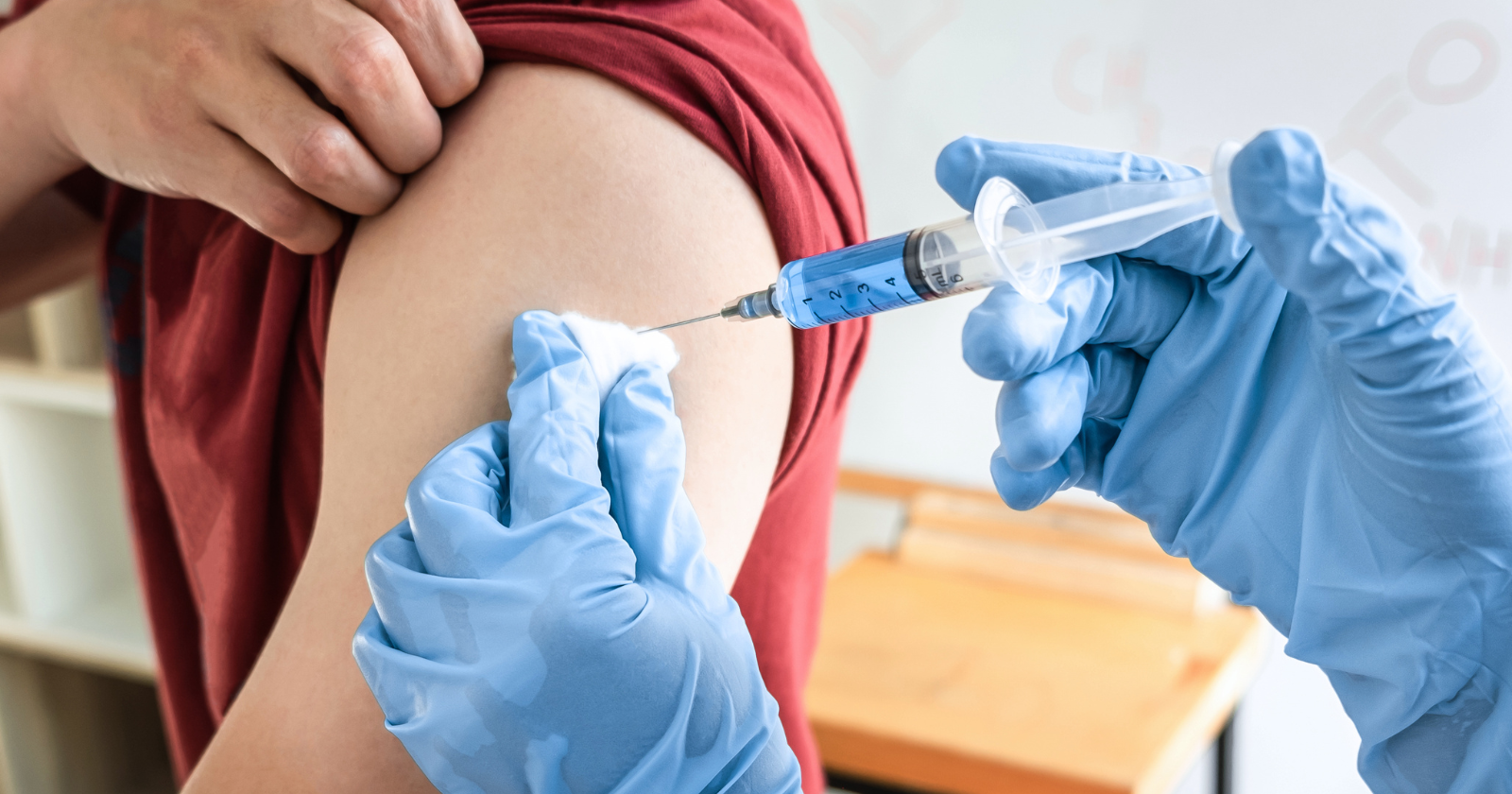
The substantive breakthrough that Karikó and Weissman produced was published in the journal Immunity in 2005. As described in Penn Today’s institutional summary of Karikó’s career and her eventual recognition by the University of Pennsylvania, the 2005 paper demonstrated that replacing one of the standard nucleoside building blocks of mRNA — uridine — with a closely related natural variant called pseudouridine produced modified mRNA molecules that did not trigger the immune detection response that had previously made mRNA-based therapeutics commercially impossible. The modification was, in technical terms, the missing piece that the prior generation of mRNA researchers had been unable to identify. With the pseudouridine substitution, mRNA could be administered to human cells without triggering inflammatory responses, could deliver instructions for the synthesis of any desired protein, and could function as the basis for a wholly new class of therapeutic agents — including, eventually, vaccines that worked by instructing the recipient’s own cells to manufacture a specific viral protein, which would then prime the immune system to recognise and respond to the actual virus.
The 2005 paper received almost no attention. Per the National Women’s History Museum’s biographical summary of Karikó’s broader career trajectory, the pharmaceutical industry was essentially uninterested for the next decade. Two small biotechnology companies — BioNTech (founded 2008 in Mainz, Germany, by Uğur Şahin and Özlem Türeci) and Moderna (founded 2010 in Cambridge, Massachusetts) — quietly licensed the patents that Penn had registered on the Karikó-Weissman discovery and began developing the technology for therapeutic applications. Karikó herself left Penn in 2013, at the age of 58, having been offered a Senior Vice President position at BioNTech — a company her Penn colleagues mocked at the time of her departure as “not even hav[ing] a website.” She moved to Germany. The company developed mRNA cancer therapies across the rest of the 2010s. The technology had not produced any commercially approved products by the end of 2019. When the SARS-CoV-2 virus emerged in early 2020, BioNTech and Moderna independently recognised within weeks that the Karikó-Weissman mRNA platform was the fastest possible route to a vaccine. BioNTech launched “Project Lightspeed” in late January 2020 and partnered with Pfizer for global distribution. The resulting Pfizer-BioNTech vaccine — designed in days, tested at unprecedented speed, demonstrated 95 percent efficacy in Phase 3 trials, and emergency-authorised by the US Food and Drug Administration on 11 December 2020 — became, alongside the chemically similar Moderna vaccine, the foundation of the global response to the COVID-19 pandemic. More than 5 billion doses of mRNA-based COVID-19 vaccines, all of which use the Karikó-Weissman 2005 nucleoside modification, have been administered worldwide as of 2026. The Nobel Prize in Physiology or Medicine, awarded to Karikó and Weissman on 2 October 2023, recognised the 18-year arc between the original publication and the global vaccination campaign. Karikó donated her approximately $500,000 share of the prize money to the University of Szeged in Hungary — the institution where she had completed her PhD in 1982, three years before her lab at the BRC lost its funding in 1985 and pushed her to sew her family’s savings into her daughter’s teddy bear and emigrate to the country that had then spent 30 years declining to fund her work.