
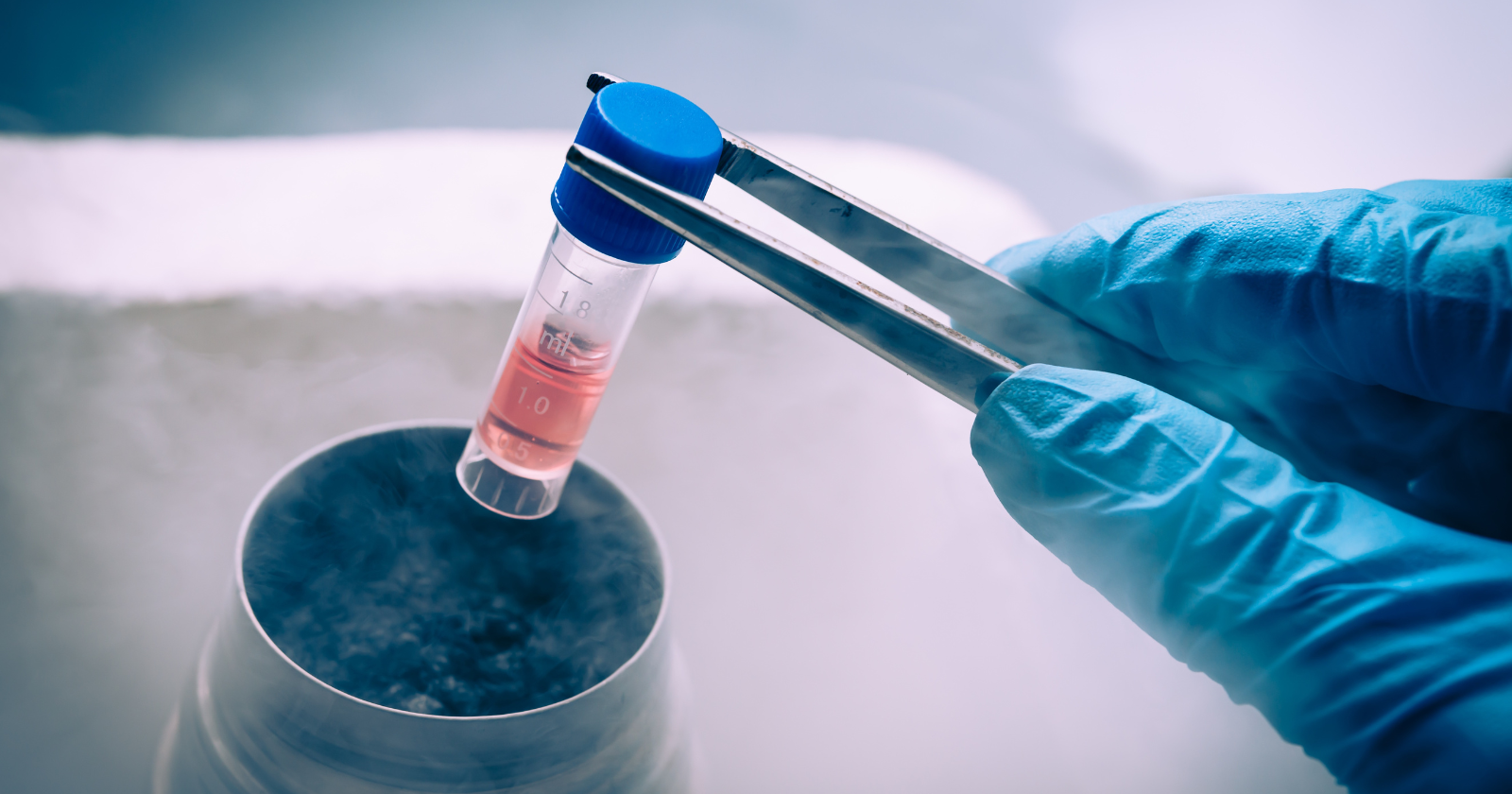
A 25-year-old woman in northern China spent every day of the preceding decade injecting insulin to keep herself alive — and then, one summer afternoon in 2023, she received the only treatment that has, in the recorded history of Type 1 diabetes therapy, restored a patient’s natural insulin production from cells derived entirely from her own body. The substantive medical significance of the Deng laboratory’s result, set against the broader context of Type 1 diabetes treatment across the past century, is difficult to overstate. Type 1 diabetes is an autoimmune disorder in which the body’s own immune system destroys the insulin-producing beta cells of the pancreas — typically in childhood or adolescence, typically without warning, and (until the present case) typically without any subsequent possibility of restoring the destroyed cells. The standard treatment since Frederick Banting and Charles Best’s 1921 isolation of insulin at the University of Toronto has been daily exogenous insulin administration: multiple injections per day, continuous glucose monitoring, careful dietary management, and the lifelong management of a chronic disease whose worst-case complications include diabetic ketoacidosis, severe hypoglycemia, kidney failure, blindness, and premature death. The number of currently living human beings worldwide for whom this is the standard daily routine is approximately 9 million.
The substantive challenge that Type 1 diabetes presents to cell-based therapy has always been twofold. The first problem is finding a source of functional insulin-producing islet cells in sufficient quantity to replace what the patient’s immune system has destroyed. The second is preventing the patient’s immune system — which destroyed her original islet cells in the first place — from also destroying any replacement cells. As described in Medical News Today’s coverage of the Deng laboratory’s stem-cell-derived islet transplant and the broader research context surrounding it, the Edmonton Protocol developed at the University of Alberta in 2000 had partially solved the first problem by demonstrating that islet cells could be isolated from deceased human donors and transplanted into the livers of Type 1 diabetes patients with substantial (though typically time-limited) restoration of insulin production. The Edmonton approach had not, however, solved the second problem: the transplanted donor cells were genetically foreign to the recipient and required lifelong immunosuppression to prevent rejection. The donor supply was also substantially insufficient to scale the treatment to the global Type 1 diabetes population, since each transplant required cells from one or two cadaveric pancreases.
What Deng’s laboratory actually did
The Peking University team’s methodological innovation, as detailed in Smithsonian Magazine’s reconstruction of the procedure and Deng Hongkui’s two-decade research trajectory toward the September 2024 publication, was to use the patient’s own cells as the source material for the transplant. The team extracted a small sample of adipose (fat) tissue from the patient’s abdomen — a standard outpatient procedure familiar to essentially any cosmetic-surgery practitioner. They then chemically reprogrammed the extracted fat cells, using a proprietary cocktail of small-molecule chemicals developed by Deng’s laboratory across the previous decade, back into a pluripotent stem cell state — meaning that the cells regained the embryonic capacity to differentiate into essentially any tissue type in the human body. The chemical reprogramming method — referred to in the literature as chemically induced pluripotent stem cells, or CiPSCs — is methodologically distinct from the more widely-known iPSC technology developed by the Japanese researcher Shinya Yamanaka in 2006 (for which Yamanaka received the 2012 Nobel Prize in Physiology or Medicine), in that it uses small-molecule chemical signals rather than the introduction of transcription-factor genes into the cells’ DNA. The chemical method is generally considered to carry a lower risk of insertional mutagenesis and tumor formation than the genetic Yamanaka approach.
The reprogrammed CiPSCs were then differentiated, again using small-molecule chemicals, into functional pancreatic islet cells capable of secreting insulin in response to elevated blood glucose. The differentiation process took several months. Once the cells were verified to be functionally insulin-producing in vitro, approximately 1.5 million of them were transplanted in June 2023 into the abdominal anterior rectus sheath — a previously unused anatomical site for islet transplantation, selected because it allowed for substantially easier post-transplant monitoring via standard medical imaging (the Edmonton Protocol’s liver-based transplantation makes the implanted cells difficult to observe directly). The surgery itself took approximately 30 minutes. The patient recovered without complication. Within two weeks, her daily insulin requirements had begun to decrease. Within 75 days, she had ceased external insulin administration entirely. As reported in the European Medical Journal’s clinical summary of the case, her HbA1c — the standard three-month blood sugar marker — moved into the non-diabetic range. Her time spent within healthy glucose range moved from approximately 43 percent before treatment to over 98 percent after.
What the result does not yet establish
The substantive limitations of the Deng laboratory’s published result are, on the available scientific evidence, three. As discussed in The Scientist’s 2025 analysis of the broader field of stem-cell-derived diabetes therapy, the first and most important limitation is that the patient is a single case — n=1 — and the results of a single patient cannot, by basic principles of clinical research methodology, support generalisation to the broader Type 1 diabetes population without substantial additional clinical work. Two additional patients have subsequently been enrolled in the trial; preliminary reports suggest they have also achieved insulin independence, but the results have not yet been published in peer-reviewed form. The second limitation is that the patient had previously received a liver transplant for an unrelated medical condition before the diabetes trial began, which meant she was already taking immunosuppressive medication at the time of the islet transplant. This complicates the interpretation of the trial in a critical way: the substantial theoretical advantage of an autologous (patient’s own cells) transplant is that it should not require immunosuppression, since the body should recognise its own cells as self rather than foreign. The patient’s existing immunosuppression means that the trial did not test whether the autologous cells would survive without it. Whether subsequent patients without pre-existing immunosuppression will retain function of their transplanted islets across the months and years following surgery is, on the available evidence from this single case, an open empirical question.
The third limitation is durability. The one-year follow-up period documented in the September 2024 Cell publication is encouraging but substantially shorter than the timescale on which previous islet-transplant therapies have typically lost function. The Edmonton Protocol’s donor islets typically restored insulin independence for one to three years before progressive loss of cell function returned most patients to some level of insulin dependence by approximately the five-year mark. Whether the Deng laboratory’s CiPSC-derived islets will follow a similar trajectory, or will prove more durable because they are autologous and chemically reprogrammed rather than allogeneic and genetically reprogrammed, is the substantive question that the trial’s continuing follow-up — and the additional patients now enrolled — will, across the next several years, progressively answer. Hongkui Deng himself, in interviews following the September 2024 publication, has emphasised that the result is not a cure for Type 1 diabetes and that substantial additional clinical research will be required before the procedure could be considered for broader clinical use. The autologous CiPSC islet transplant, at the present state of the research, is a single proof-of-concept result whose extrapolation to the broader global population of people living with Type 1 diabetes is still a clinical-research question rather than a clinical-practice option. It is, however, the first such proof-of-concept result that any laboratory anywhere in the world has so far produced — and the 25-year-old patient in Tianjin who, on her own behalf, agreed to be the first human being to test the procedure has, on the available evidence as of the September 2024 publication, lived for more than a year without an insulin injection for the first time since her original diabetes diagnosis in 2012.
