

Robot the dog never received an entry in the historical record. The four teenagers who descended into the Lascaux cave on 12 September 1940 are, by every formal account of the discovery — including those issued by the French Ministry of Culture and by the official archaeological documentation of the site — credited as the “inventeurs” (discoverers) of the cave. Robot, who had performed the actual initial reconnaissance and whose disappearance into the underground had been the operational basis of the entire subsequent investigation, was not. The four boys themselves, in their initial moments inside the chamber, did not believe that they had discovered prehistoric art. They believed, on the basis of a local Dordogne folk legend that had circulated in Montignac for several generations, that they had located the rumoured secret tunnel that supposedly connected the surface of the hillside to a subterranean treasure-room concealed beneath the nearby Lascaux Manor. The boys had brought a small oil lamp. They lit it. The light fell on the surrounding walls. The surrounding walls were not the walls of a treasure-room. They were covered, in dense overlapping patterns extending across approximately 250 metres of interconnected underground chambers, with painted and engraved depictions of animals: bulls, horses, deer, stags, ibex, bears, felines, rhinoceros, bison, and several creatures whose taxonomy has never been satisfactorily identified by subsequent archaeological analysis.
According to History Today’s reconstruction of the September 1940 discovery and its initial archaeological reception, the four boys initially kept their discovery secret. They returned to the cave several times across the subsequent week. They charged other children from the village small admission fees to descend through the shaft and look at the paintings. They eventually told their primary school teacher, Léon Laval, who recognised the significance of what they were describing and immediately contacted the substantial figure of French prehistoric archaeology — the 63-year-old Abbé Henri-Édouard-Prosper Breuil, a French Catholic priest and archaeologist then widely referred to in his profession as “the Pope of Prehistory” — who travelled from his temporary wartime residence to Montignac, descended through the shaft on 21 September 1940, examined the paintings by torchlight, and confirmed within several hours that the boys had discovered something approximately equivalent to the most important single addition to the corpus of known prehistoric art that any 20th-century archaeologist had ever encountered.
What was on the walls
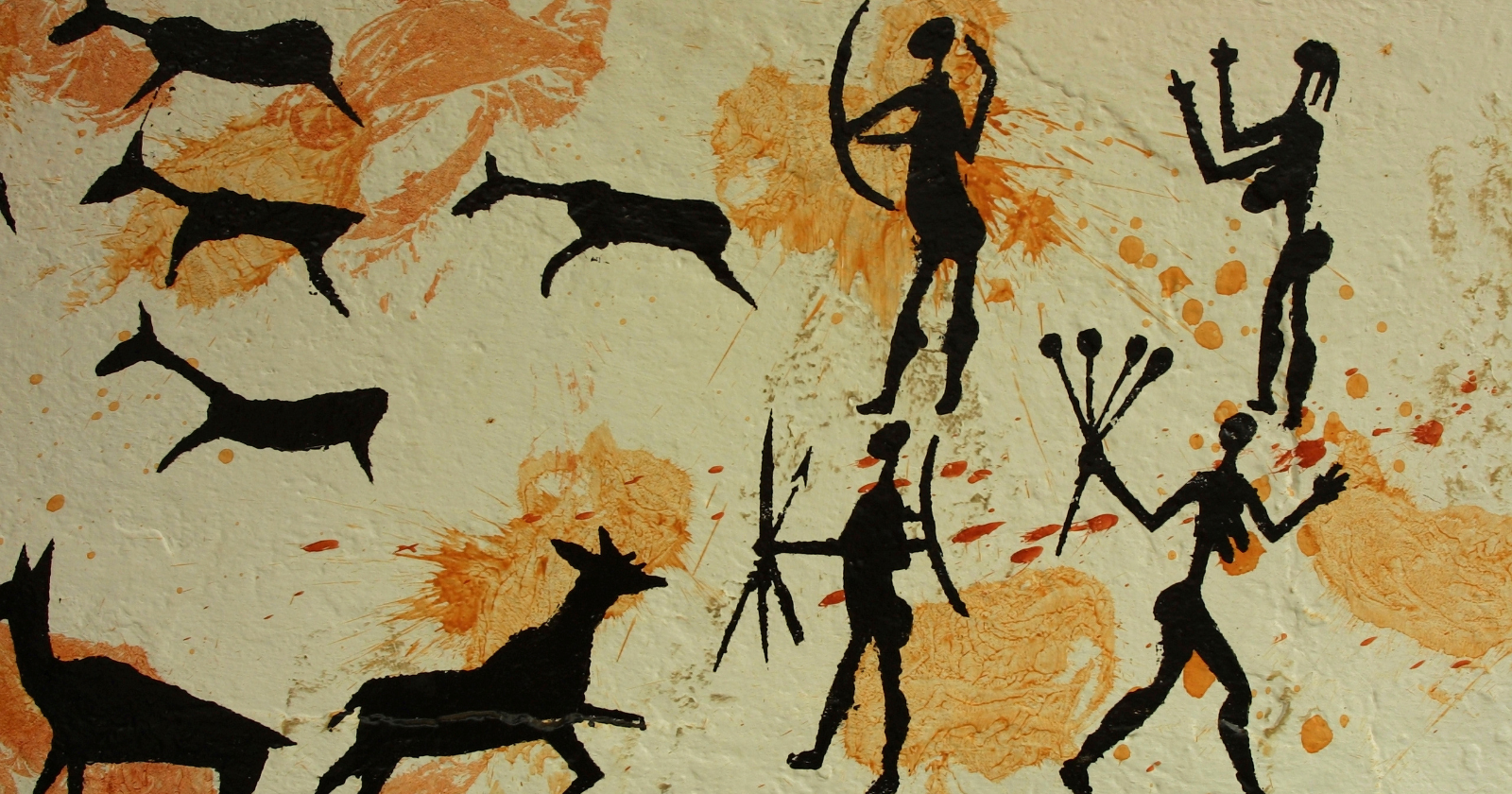
The cave system the four boys had entered contained, by the cumulative count of subsequent French archaeological documentation, approximately 600 painted figures and approximately 1,500 engraved figures across nine interconnected chambers extending approximately 250 metres into the hillside. As detailed in Euronews’ summary of the Lascaux discovery and its place in the broader corpus of European prehistoric art, the figures depict approximately 360 horses (the most numerous animal in the cave), large numbers of stags and aurochs (the extinct wild cattle that were the primary large herbivore of late-Pleistocene Europe), and smaller numbers of bears, felines, rhinoceroses, ibex, and a single bird-headed human figure depicted lying on the floor of the cave’s most remote chamber, near a wounded bison and an enigmatic upright object that some subsequent archaeologists have interpreted as a spear-thrower and others as a shamanic staff. The pigments were composed of charcoal (for black), manganese oxide (also for black, sourced from the Pyrenees Mountains approximately 250 kilometres south of Lascaux), and iron-oxide ochres (for red and yellow, available locally). The presence of Pyrenean manganese implies a degree of long-distance Magdalenian trade or population movement that has substantially shaped subsequent understanding of late-Pleistocene European cultural geography.
The most spectacular single chamber is the Hall of the Bulls — the first major chamber the four boys entered after descending the shaft, approximately 19 metres long, dominated by four enormous painted aurochs whose silhouettes extend across the white limestone ceiling and walls in continuous overlapping compositions. The largest of the four animals is approximately 5.2 metres long from the tip of its horns to the end of its tail, making it the single largest painted figure that has ever been documented in any cave art site anywhere in the world. The accumulated artistic and technical sophistication of the Hall of the Bulls — the use of natural rock contours to enhance the apparent three-dimensionality of the painted animals, the perspectival techniques used to render galloping motion, the precise pigment-application methods including the use of hollow bird-bone tubes to spray pigment in fine sprays — substantially exceeds essentially every other Paleolithic painting tradition the subsequent eight decades of archaeological investigation have catalogued. The cumulative consensus among prehistoric art specialists is that the Lascaux cave represents the technical peak of approximately 30,000 years of European Upper Paleolithic image-making.
What happened afterwards
The cave that had remained sealed beneath the Dordogne hillside for approximately 17,000 years was opened to public tourism in 1948, eight years after its discovery and three years after the end of the war. As described by an Utterly Interesting summary of the cave’s discovery and the subsequent conservation crisis, the response was immediate. By the mid-1950s, more than 1,200 visitors per day were descending through the (now substantially enlarged) entrance shaft and walking through the painted chambers, contributing approximately 90 metric tons of cumulative atmospheric carbon dioxide per year through their collective breathing, condensing approximately 200 litres of cumulative water vapour daily on the surrounding limestone walls, and substantially raising the cave’s internal temperature from its long-term equilibrium of approximately 13°C. The biological consequences appeared rapidly. Green algae colonies began growing on the painted surfaces in 1955. Mineral deposits began precipitating on the pigment. By the early 1960s, the cumulative damage to the paintings had reached a level that the French government considered irreversible without immediate intervention. The Minister of Culture, André Malraux, closed Lascaux to the public on 20 April 1963 — 15 years after its initial opening — and restricted access to a small number of conservation specialists who continued to enter the cave for limited research and remediation work.
The cave has remained essentially closed to public access for the subsequent 62 years. Lascaux II — a hand-painted replica of the Hall of the Bulls and the Painted Gallery, constructed approximately 200 metres from the original cave entrance — opened in 1983. Lascaux IV, a substantially larger and more technically sophisticated replica using 3D-modelled reproductions of the painted surfaces, opened in 2016 in the village of Montignac itself. The four original discoverers all lived substantial subsequent lives. Marcel Ravidat worked as a guide at the cave until its closure in 1963, then returned to mechanical work, and died of a heart attack in 1995 at the age of 72. Jacques Marsal — the 14-year-old who had camped at the cave entrance through the winter of 1940-41 to protect the paintings from possible vandalism — became the cave’s official lifelong warden and worked at Lascaux until his death in 1989. Georges Agnel returned to his home village and died in 2012. Simon Coencas, the Jewish refugee whose family had fled Paris three months before the discovery, survived the war (his father was deported to the camps and did not return; Simon and his immediate family survived in hiding), returned to Paris afterward, lived a long subsequent life as a wholesale clothing merchant, and died in February 2020 at the age of 92 — the last surviving member of the four teenage discoverers who had, on a Wednesday morning in September 1940, followed a dog named Robot down a hole on a hillside above their village and found themselves standing inside what is now generally considered one of the most important single archaeological sites in the recorded history of European civilisation.