
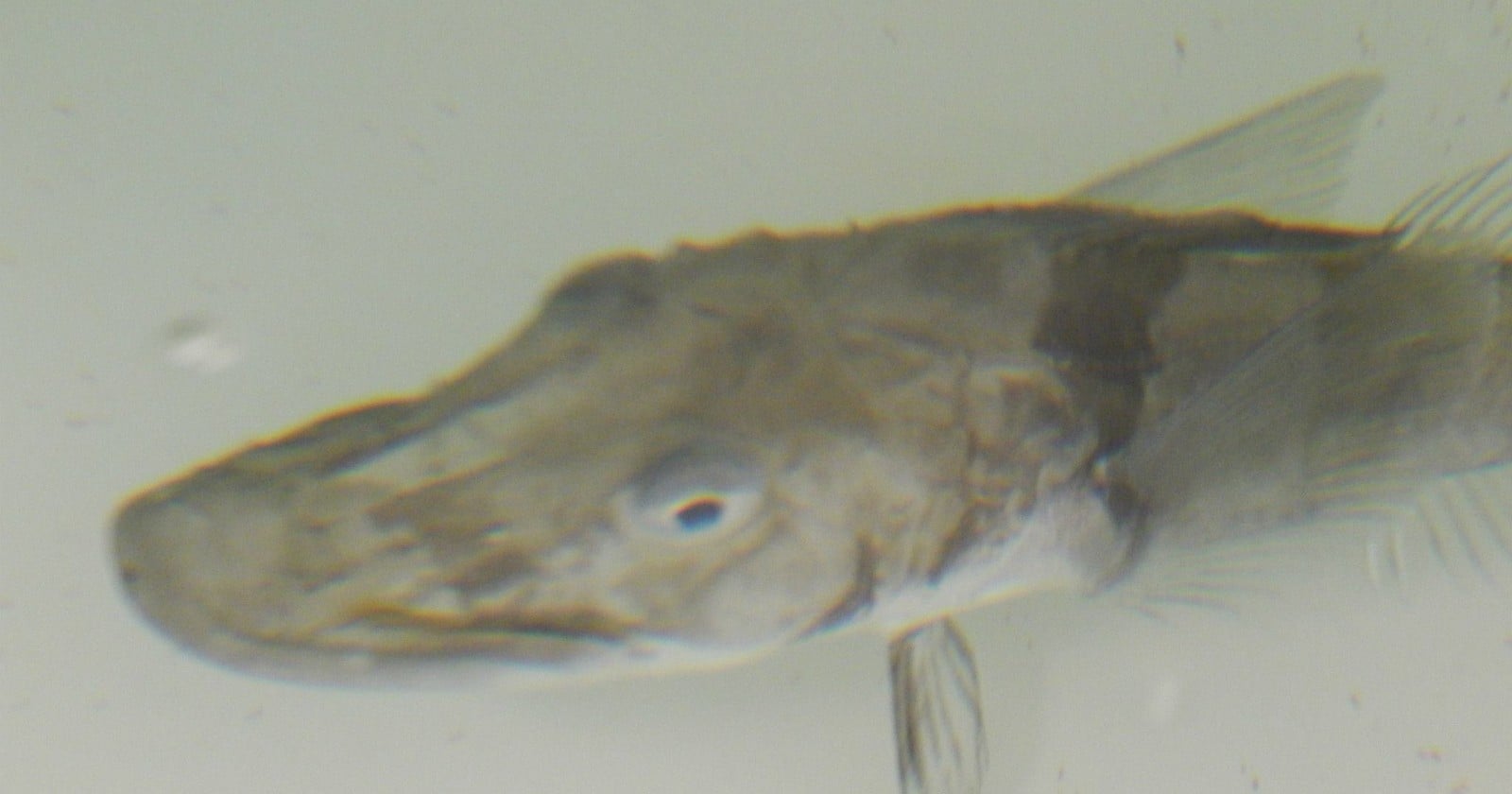
Draw blood from an Antarctic icefish and it does not run red. It runs pale and nearly colorless, nothing like the deep red of ordinary blood. The reason is that the fish has no hemoglobin, the iron-rich pigment that turns blood red and ferries oxygen through the bodies of nearly every other animal with a backbone. The crocodile icefishes of the Southern Ocean are, as far as anyone has found, the only vertebrates that live their adult lives without it.
That single absence makes them what one pair of physiologists called a set of natural “genetic knockouts.” In a review for the Journal of Experimental Biology, Bruce Sidell and Kristin O’Brien put the fact plainly: icefishes are the only known vertebrate animals to lack hemoglobin as adults. Their oxygen does not ride on a pigment at all. It simply dissolves into the liquid of the blood and is carried in physical solution, the way sugar dissolves in water.
A fish that gave up the molecule the rest of us depend on
Hemoglobin packs oxygen into red blood cells and lets vertebrate blood carry far more of it than plain fluid could. Strip the pigment away and the icefish’s blood holds less than a tenth of the oxygen that the blood of a related red-blooded fish can carry. By the ordinary rules of physiology, that should be a death sentence.
Icefishes get away with it through a combination of luck and drastic plumbing. They live in the coldest, most stable seawater on the planet, where temperatures near the Ross Ice Shelf hover close to minus 1.9 degrees Celsius year round. Cold water holds more dissolved gas, so the Southern Ocean is unusually rich in oxygen, and the icefish swims through a near-saturated bath of it. The animal also runs at a low metabolic rate, so its demand for oxygen is modest to begin with.
The fish the whalers had already noticed
The clear blood was no secret to the people who hauled these fish out of the water. Early British whalers working the Southern Ocean called them ice fish, and the family kept the name. Their pale, almost translucent flesh and bloodless look set them apart from anything in warmer seas.
The scientific account came later. The fish were first described physiologically in 1954, when the Norwegian researcher Johan Ruud reported a vertebrate that lived without red blood cells or blood pigment and tied its survival to the frigid, well-oxygenated water it lived in. Icefishes belong to a larger Antarctic group, the notothenioids, that dominates the waters south of the Antarctic Polar Front, accounting for roughly a third of the fish species there and about 90 percent of the fish by weight. Most of those relatives still carry hemoglobin. Only the icefish family let it go.
The engineering that makes clear blood work
A rich oxygen supply alone would not be enough. The icefish has rebuilt its circulatory system around the missing pigment. Its heart is huge for its body size, and it pushes out four to five times more blood per unit of body weight than the heart of a red-blooded fish. Its total blood volume can run up to four times larger, and its blood vessels are wide, so a large volume of thin fluid can move quickly at low pressure.
The result is a body that floods its tissues with great quantities of oxygen-poor blood rather than smaller quantities of oxygen-rich blood. It is a brute-force solution, and it works only because the surrounding water is cold and oxygen-dense and the fish asks relatively little of its muscles.
Some icefishes carry the loss even further. Sidell and O’Brien note that among the sixteen known species in the family, ten still produce myoglobin, the related oxygen-binding pigment that colors heart and muscle, while six have lost that too. The hearts of those six are a pale yellow rather than the usual deep red, the visible sign of a second pigment switched off.
How a vertebrate ends up white-blooded
The icefishes did not choose to shed hemoglobin. Somewhere near the point where their lineage split from its red-blooded relatives, a mutation knocked out the gene, and the trait was passed down to every species in the family. Their genomes still carry the scar: the DNA has lost the gene for one half of the hemoglobin molecule entirely and retains only broken remnants of the other.
The fish that inherited this defect happened to be living in exactly the environment that could tolerate it. The Southern Ocean had settled into its long deep freeze roughly ten to fourteen million years ago, and the icefish family branched off a few million years after that, into water cold and oxygenated enough that a creature with crippled blood could still breathe. The same mutation in a warmer, busier sea would almost certainly have ended the line.
Why “remarkable adaptation” is the wrong phrase
It is tempting to file the icefish under triumphant adaptation, a clever animal that engineered a better way to breathe. The scientists who study it most closely argue almost the opposite, and this is the part the wonder-fact version usually drops.
Losing hemoglobin, Sidell and O’Brien conclude, does not appear to have been an improvement. The enormous heart and the oversized blood volume are not elegant upgrades; they are expensive repairs. Moving all that thin fluid actually costs the icefish more energy to circulate its blood, not less. The myoglobin losses, in the species that suffered them, reduced how hard the heart could work. The most honest reading is that the icefish lost something useful and then spent a great deal of biological effort building workarounds, and that it survives despite the loss rather than because of it. The cold, oxygen-saturated water is what makes the whole arrangement viable; take that away and the design collapses.
There are other open questions worth keeping in view. The claim that icefishes are the only hemoglobin-free vertebrates is a statement about what biologists have found so far, not a survey of every fish in every ocean, and it applies to the adult animals. And the deeper puzzle, why a clearly costly trait was never selected back out over millions of years, remains unsettled; researchers have proposed that the loss was roughly neutral in such a cold environment, but the evidence does not fully support even that.
A window, not a marvel
What keeps icefishes in the laboratory is not that they beat the odds but that they let physiologists ask questions no ordinary animal allows. Because closely related notothenioid fishes still carry hemoglobin and myoglobin while the icefishes do not, scientists can compare near-identical bodies that differ chiefly in whether they make these pigments, and learn what the pigments actually do.
Those comparisons have already overturned textbook assumptions. Myoglobin was long described as essential to working muscle, until the icefishes that lack it turned up alive and swimming, forcing a more careful account of what the pigment is really for.
The icefish has been called a window into what cold can build and what it can excuse. Its clear blood is not a better design. It is a record of a loss that a frigid, oxygen-heavy sea happened to forgive, and of how much machinery a body will assemble to keep going after something essential is gone.
