
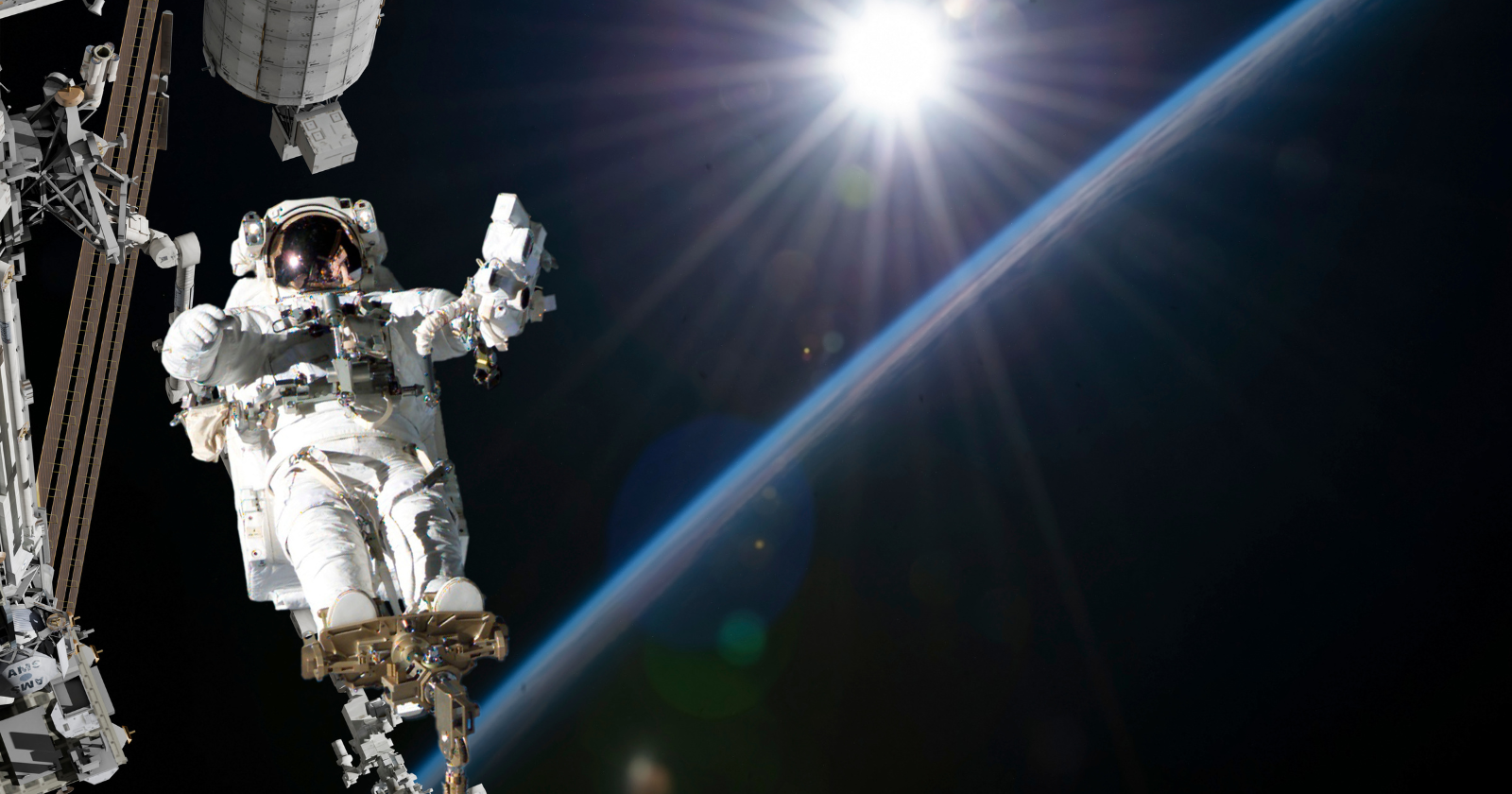
For years, NASA has used the International Space Station to watch a quiet signal of astronaut stress: dormant herpes viruses becoming detectable again during spaceflight.
That does not usually mean astronauts become ill. It means viruses that can persist silently in the body, including varicella zoster virus, the virus behind chickenpox and shingles, can reactivate when the immune system is altered. NASA has detected that kind of viral shedding in astronaut samples from space station missions, often without symptoms.
Artemis II moved the question beyond low Earth orbit. During the first crewed Artemis mission around the Moon, NASA astronauts Reid Wiseman, Victor Glover and Christina Koch, along with Canadian Space Agency astronaut Jeremy Hansen, collected biological data for studies meant to show how deep space affects the human body. One of those studies, Immune Biomarkers, uses saliva to probe whether radiation, confinement, isolation and distance from Earth affect immune function.
The mission later reached 252,756 miles from Earth, or 406,771 kilometres, during its lunar flyby. NASA’s Flight Day 4 update said the crew was scheduled to collect saliva samples while Orion was outbound, about 169,000 miles from Earth at wakeup that day. The larger point is that the same immune question once studied aboard the station is now being carried into the deep-space environment where Artemis and Mars missions must operate.
Why dormant viruses are useful signals
Herpes viruses are common and persistent. After the first infection, they can remain in the body for life, controlled by the immune system rather than fully removed. Varicella zoster virus can hide in nerve cells after chickenpox and later cause shingles. Other herpes viruses, including Epstein-Barr virus and cytomegalovirus, can also persist silently.
NASA’s 2019 article “NASA Investigates How Dormant Viruses Behave During Spaceflight” explains why these viruses are useful to researchers. When immune surveillance weakens or shifts, latent viruses can start replicating again. The reactivation may show up in saliva, blood or urine even when a person feels well.
The underlying peer-reviewed work, published in Frontiers in Microbiology, extended earlier NASA findings that latent herpes viruses can reactivate during spaceflight. NASA emphasised that the reactivation seen in astronauts was typically subclinical, meaning virus was detectable but astronauts were not necessarily sick.
That distinction is important. Detecting viral DNA in saliva is not the same as diagnosing shingles in space. It is a biomarker, a way to infer that the immune system is responding differently under spaceflight conditions.
What changes in spaceflight
Spaceflight combines several immune stressors that are hard to separate. Astronauts experience microgravity, altered sleep, heavy workloads, confinement, social separation, launch and re-entry forces, and radiation exposures different from those on Earth.
On the International Space Station, Earth still provides some radiation shielding through its magnetic field, and the station has far more habitable volume than Orion. Artemis II was different. Orion is small, the mission passed beyond the protective environment of low Earth orbit, and the crew spent days in a deep-space transit before flying around the Moon.
NASA’s Artemis II human research briefing says the mission was designed to study how deep space travel influences the body, mind and behaviour. Crew members were to collect and store saliva, wear monitors that track movement and sleep, and provide other data for NASA’s Human Research Program.
For Immune Biomarkers, saliva is attractive because it can reveal viruses, stress hormones, proteins and other signals related to immune function. It is also easier to collect in flight than blood. The challenge on Orion was storage. With no freezer available for this work, astronauts used dry saliva sampling, blotting saliva onto special paper stored in pocket-sized booklets.
From the station to Orion
NASA’s Artemis II deep-space research overview says dry saliva would be collected before, during and after the mission, with liquid saliva and blood collected before and after flight. The agency said researchers would use the samples to examine how astronauts’ immune systems are affected by radiation, isolation and distance from Earth, and whether otherwise dormant viruses reactivate in space as previously seen on the station.
That makes Artemis II a bridge between two eras of human research. The space station has provided years of data from low Earth orbit, including long-duration missions with regular sample collection. Artemis II offered a much shorter mission, but in a more relevant environment for lunar return flights and future Mars planning.
NASA’s Flight Day 4 mission update reported that the AVATAR payload, carrying bone marrow cells derived from crew blood samples, was operating as expected, and that the immune biomarkers activity would provide further data. The same update said the crew was scheduled to collect saliva samples that day.
Those samples are only one part of the wider health package. Artemis II also carried radiation sensors inside Orion, crew dosimeters, actigraphy devices for sleep and movement, psychological and performance measures, and organ-on-a-chip experiments designed to test cellular responses to deep-space conditions.
Why this matters for longer missions
A ten-day lunar flyby is not Mars. It is brief compared with a months-long transfer or a surface stay far from Earth. But it is long enough to test procedures, handling, sample storage and early biological responses in a crewed vehicle beyond low Earth orbit.
For future missions, NASA is less interested in a single yes-or-no answer than in patterns. Do stress hormones rise? Do sleep and activity change? Do immune markers shift? Do dormant viruses reappear more often beyond low Earth orbit than on the station? Do radiation readings inside Orion line up with biological changes in samples?
Those questions matter because immune problems can be harder to manage as distance grows. A crew on the station can return to Earth relatively quickly in an emergency. A crew on a lunar or Mars mission must carry more medical autonomy and better prediction tools.
If saliva biomarkers can warn that immune control is slipping, NASA could use that information to design countermeasures. Those might include vaccination where available, targeted antiviral treatments, sleep and workload adjustments, radiation procedures, or personalised medical kits for specific crew risks.
What Artemis II can and cannot show
Artemis II cannot settle how the immune system behaves during a Mars mission. It involved four people, a short timeline and a single spacecraft environment. It also cannot prove that radiation alone, isolation alone or distance alone causes any immune change, because those factors occur together in flight.
What it can do is extend the evidence chain. NASA already knows from station research that latent viruses can reactivate in astronauts and that saliva can reveal immune changes. Artemis II tested whether those same tools can work during a crewed mission around the Moon, in a small spacecraft and outside low Earth orbit.
The hidden biology is the point. A dormant virus becoming detectable in saliva may be invisible to the crew and undramatic to the public, but it gives researchers a sensitive readout of how spaceflight is pressing on the immune system. For Artemis and Mars planning, that quiet signal may become one of the practical ways to keep crews healthy when Earth is no longer close.
