
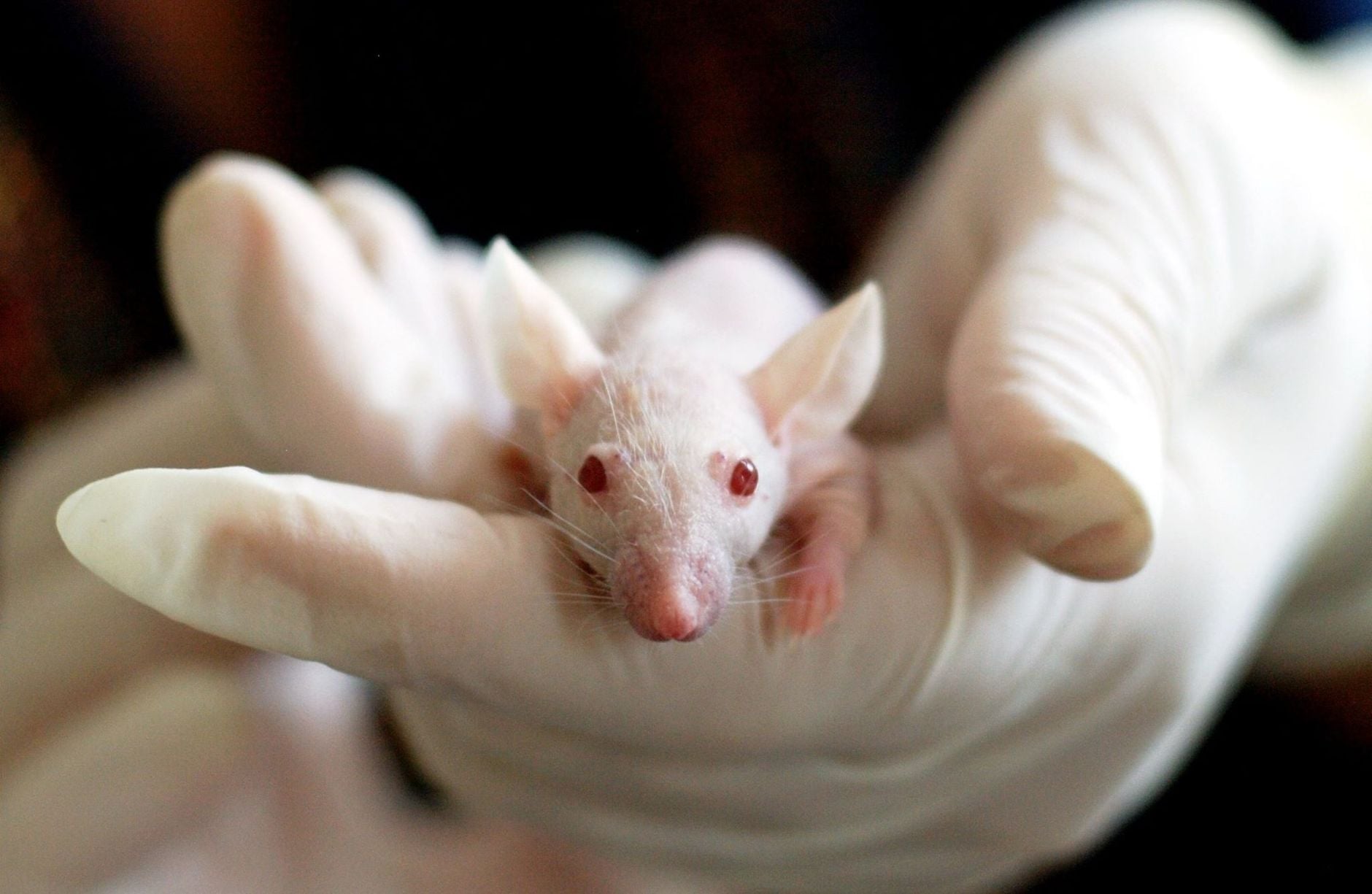
The naked mole rat is easy to underestimate. It is small, nearly hairless, lives underground, and looks more like a biological oddity than a guide to mammalian ageing. Yet for researchers interested in longevity, cancer resistance and tissue maintenance, it has become one of the most useful animals on Earth.
In 2023, a team led by researchers including Vera Gorbunova, Andrei Seluanov, Xiao Tian and Zhihui Zhang reported a direct test of one of the animal’s unusual defences. In a Nature paper titled Increased hyaluronan by naked mole-rat Has2 improves healthspan in mice, the team inserted the naked mole rat version of the hyaluronan synthase 2 gene, known as nmrHas2, into mice. The engineered mice produced more high-molecular-mass hyaluronan, lived longer on average, showed lower inflammation, and were more resistant to spontaneous and induced tumours.
This is animal research, not a human treatment. It does not show that people can extend life by taking hyaluronan supplements, using skin products, or copying one gene in isolation. The result is a finding from this dataset, not a universal rule about ageing. What it does show is more specific and more interesting: at least one molecular feature associated with the naked mole rat’s long life can be transferred into another mammal and still produce measurable effects.
The molecule behind the experiment
Hyaluronan is not exotic in itself. Humans, mice and many other animals make it. It is a long sugar-based molecule found in the extracellular matrix, the material around cells that helps shape tissue structure, hydration, repair and signalling. In ordinary discussion, hyaluronan often appears in relation to skin or joints. In the naked mole rat, however, it became interesting for a different reason.
A decade earlier, Gorbunova, Seluanov and colleagues reported in Nature that naked mole-rat tissues accumulate unusually high-molecular-mass hyaluronan. Their 2013 paper, High-molecular-mass hyaluronan mediates the cancer resistance of the naked mole rat, argued that this very large form of hyaluronan helped naked mole-rat cells resist uncontrolled growth. When the researchers disrupted that system, the cells became more vulnerable to transformation.
The 2023 mouse study asked the next question. If high-molecular-mass hyaluronan is not merely a marker of naked mole-rat biology but part of the mechanism, could another animal gain some of the benefit by being engineered to make more of it?
To test that, the researchers created transgenic mice carrying the naked mole rat Has2 gene. Has2 encodes an enzyme involved in hyaluronan production. The naked mole rat version appears to help produce the larger, more protective form of the molecule. The engineered mice, called nmrHas2 mice in the paper, accumulated more hyaluronan in several tissues.
What changed in the mice
The result was not a dramatic doubling of lifespan. It was more modest, and that is part of why it is worth reading carefully. The paper reported an increase in median lifespan of roughly 4.4 percent. That number is small enough to resist hype, but large enough to matter biologically because it came from changing one pathway inspired by another species.
The mice also showed signs of improved healthspan, the period of life spent in better biological condition. The study reported lower inflammation in aged animals, improved gut barrier function, and better resistance to tumours. In cancer-related tests, the nmrHas2 mice had lower incidence of spontaneous cancers and were more resistant to experimentally induced tumours.
The tumour result is especially important because naked mole rats are famous for their cancer resistance. They are not absolutely immune to cancer, and a few cases have been reported, but compared with ordinary laboratory mice they are striking outliers. Their cells appear to carry several layers of protection, and high-molecular-mass hyaluronan is one of the best studied.
The mouse experiment therefore did not try to move the entire naked mole-rat body plan into another species. It moved one genetic instruction linked to one protective molecule. The fact that this single change shifted lifespan, inflammation and tumour resistance suggests that the hyaluronan system is not just decorative biology. It can influence how mammalian tissues age and respond to damage.
Why naked mole rats became ageing models
Naked mole rats are rodents, but they do not live like typical rodents. Mice may live two to three years under laboratory conditions. Naked mole rats can live for decades. Some individuals have surpassed 30 years, and the species shows an unusual pattern in which mortality risk does not rise with age in the way expected for mammals of similar size.
That pattern was analysed in a 2018 eLife paper, Naked mole-rat mortality rates defy Gompertzian laws by not increasing with age, by J. Graham Ruby, Megan Smith and Rochelle Buffenstein. The result helped formalise what researchers had long suspected from captive colonies: the naked mole rat does not follow the usual rodent ageing curve.
That does not mean the animal is immortal. It dies, gets injured, and faces limits like every organism. But it ages unusually slowly for its size. It is resistant to many cancers, tolerates low oxygen, lives in eusocial underground colonies, and has tissue biology that differs sharply from the short-lived mouse.
For biologists, this makes it a natural experiment. Evolution has already produced a small mammal with unusual longevity and cancer resistance. The task is to identify which traits are causes, which are consequences, and which only work because they are embedded in the whole animal’s physiology.
The gene is not the whole animal
The caution matters. A naked mole rat is not long-lived because of one gene alone. It has differences in metabolism, protein maintenance, DNA repair, inflammation, pain sensing, oxygen tolerance, social structure and underground ecology. Its long life is almost certainly a network of adaptations, not a single switch.
That is why the Has2 result is both powerful and limited. It shows that one component can travel across species and still have effects. But it does not show that the naked mole rat’s longevity can be copied wholesale. It also does not show that the same intervention would be safe or effective in humans.
Hyaluronan itself is complicated. Different sizes of hyaluronan can have different biological effects. Very large hyaluronan may be protective in one context, while smaller fragments can be associated with inflammation or tissue injury in another. The body does not simply need more of the molecule in every place. It needs the right form, in the right tissue, at the right time, with the right controls.
Gene transfer also carries risks. A gene that helps a mouse produce more high-molecular-mass hyaluronan under experimental conditions is not automatically a therapy. Human applications would require ways to control expression, target tissues, monitor long-term effects and avoid unintended consequences. Ageing biology is especially unforgiving because an intervention may need to remain safe over years.
Why the study still matters
The value of the experiment lies in its direction. Many ageing studies identify correlations. A long-lived animal has more of one molecule, less of another, or a different pattern of gene expression. Those observations are useful, but they do not prove that the trait contributes to longevity.
The Has2 mouse study moves closer to causation. It takes a candidate trait from an unusually long-lived species, engineers it into a shorter-lived species, and observes measurable changes. The changes were not enormous, but they lined up with the naked mole-rat story: longer median life, lower inflammation and stronger tumour resistance.
That is a cleaner test than simply admiring the animal’s biology from a distance. It asks whether one of its tricks can work outside its original body. The answer, in mice, appears to be yes.
The study also shifts the way longevity research can use comparative biology. Instead of searching only inside humans or standard laboratory animals, researchers can look at species that have already solved particular problems unusually well. Bowhead whales, bats, naked mole rats and other long-lived animals are not templates to copy blindly. They are libraries of biological strategies shaped by evolution.
A small animal, a transferable clue
There is a useful modesty in the best version of this story. Scientists did not discover a universal anti-ageing gene. They did not make mice live like naked mole rats. They did not turn hyaluronan into a consumer shortcut for longevity.
They did something more precise. They took a gene linked to the naked mole rat’s production of unusually large hyaluronan, put it into mice, and showed that the animals gained measurable protection across several ageing-related outcomes. The mice lived somewhat longer, showed less inflammation and resisted tumours more strongly.
That is enough. In biology, a small, controlled transfer across species can be more informative than a grand promise. The naked mole rat’s long life remains a larger puzzle. But one piece of it has now been moved into another mammal and still carried some of its effect with it.
