
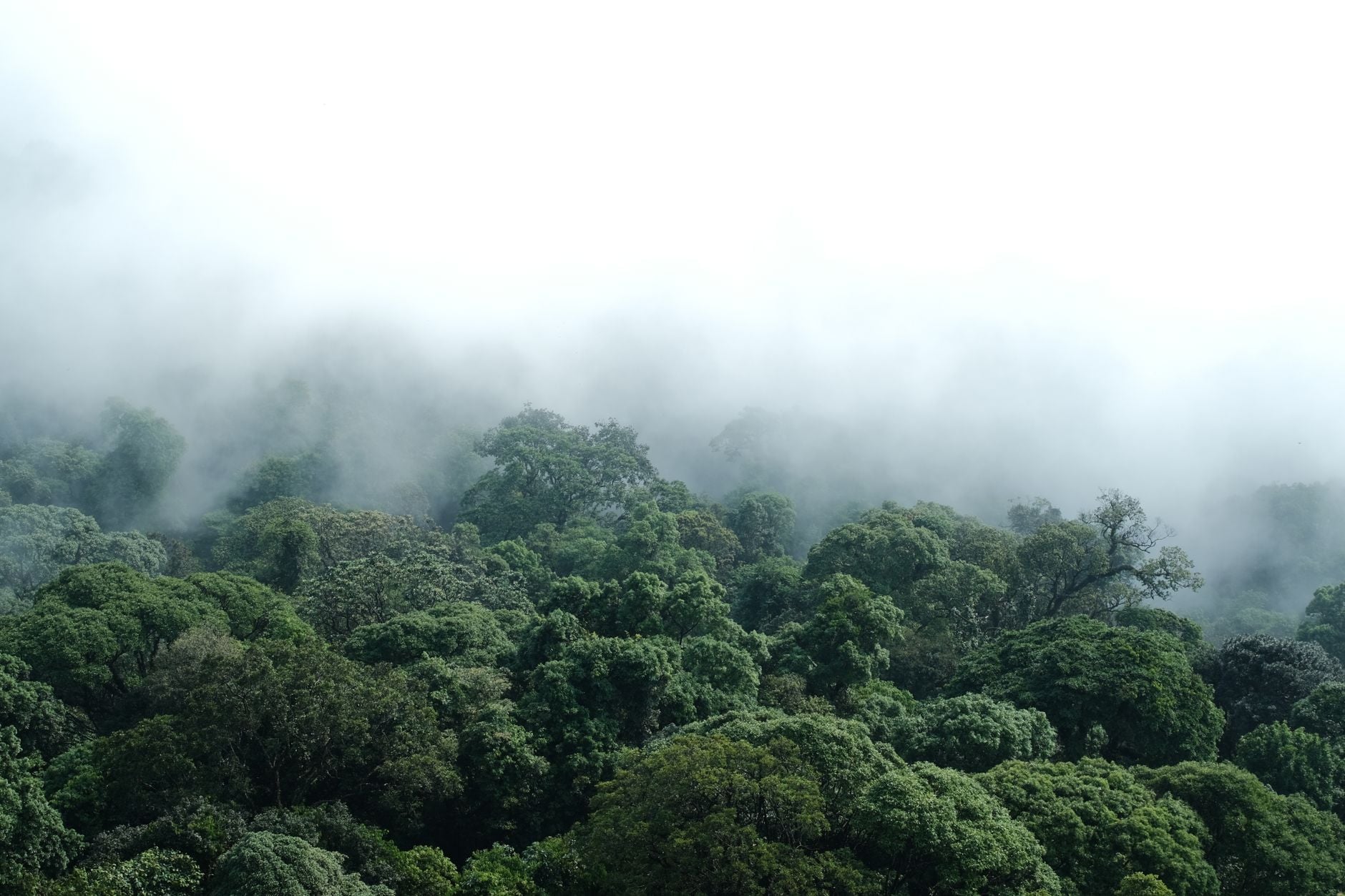
Two marsupials known to science only from fossils, and presumed gone for more than 6,000 years, have turned out to be alive in the rainforests of the Vogelkop Peninsula in Indonesian Papua. The finding was published in March in the Records of the Australian Museum, and it leaned less on a lucky expedition than on a misfiled museum specimen, a handful of photographs, fossil fragments, and the knowledge of the people who have always lived alongside the animals.
Both species are what biologists call Lazarus taxa, creatures that drop out of the fossil record, appear to be extinct, and then turn up living.
Two species back from the fossil record
The first is the ring-tailed glider, now named Tous ayamaruensis. It is the nearest living relative of Australia’s greater glider, though smaller, around 300 grams, with unfurred ears and a strongly prehensile tail. It nests in hollows high in the tallest forest trees, forms lifelong pairs, and raises a single young each year. It is also the first new genus of New Guinean marsupial described since 1937.
The second is the pygmy long-fingered possum, Dactylonax kambuayai, a boldly striped animal with one digit on each hand grown to twice the length of the next, used to probe for food. It appears to have disappeared from mainland Australia during the last Ice Age, alongside the better-known megafauna.
The work was led by Professor Tim Flannery of the Australian Museum and Professor Kristofer Helgen of the Bishop Museum, with a team of Australian and Indonesian researchers, and published on 6 March.
How they were confirmed
Neither animal was run down by a search party. The identification came from assembling scattered evidence until the conclusion was hard to avoid.
The most useful piece had been sitting in the Australian Museum since 1992, a specimen collected decades ago and filed under the wrong name. When researchers set it against fossil material from caves on the Vogelkop, the match was clear. Rare photographs taken by local researchers, including an image of a young ring-tailed glider from the South Sorong area, showed the animals alive in the forest. The fossils told the team what they were looking at. The specimen and the photographs told them it still existed.
The knowledge that made it possible
The part the researchers stress most is the one easiest to leave out of a species description. The animals were already known, in detail, to the people who live where they live.
Elders from the Tambrauw and Maybrat clans recognised the glider, distinguished it from other tree-dwelling possums, and described how it lives in the high hollows. To some Vogelkop clans the animal, called Tous, is sacred, regarded as a manifestation of ancestors’ spirits and tied to an educational practice known as initiation, and its forest has been protected for generations.
“We worked very carefully and collaboratively with Tambrauw Elders, and identification would not have been possible without cooperation with Traditional Owners,” said Rika Korain, a Maybrat woman and co-author of the paper. Dr Aksamina Yohanita of the University of Papua, also an author, thanked the people of the Misool, Maybrat and Tambrauw regions who supported the fieldwork.
Why the Vogelkop holds such relics
The location is not an accident. The Vogelkop, the bird-shaped peninsula at the western end of New Guinea, is an ancient fragment of the Australian continent that was carried north and joined to the island. Its isolated lowland forests have kept species that vanished elsewhere, and neither marsupial has close relatives anywhere else in New Guinea.
“The Vogelkop is an ancient piece of the Australian continent that has become incorporated into the island of New Guinea,” Flannery said. “Its forests may shelter yet more hidden relics of a past Australia.”
What to watch
The same forests are under pressure. The ring-tailed glider depends on old, tall trees and is threatened by logging, and the Vogelkop may be the last stronghold for both species. The research groups involved, working with local communities, have framed the discovery as a reason to protect the habitat rather than simply to catalogue it.
The two marsupials were part of a larger set. The March issue gathered eight papers from 29 researchers on New Guinea’s mammals, including a new bandicoot and genetic work on tree kangaroos, a sign that the island still holds more than the museums have recorded.
