

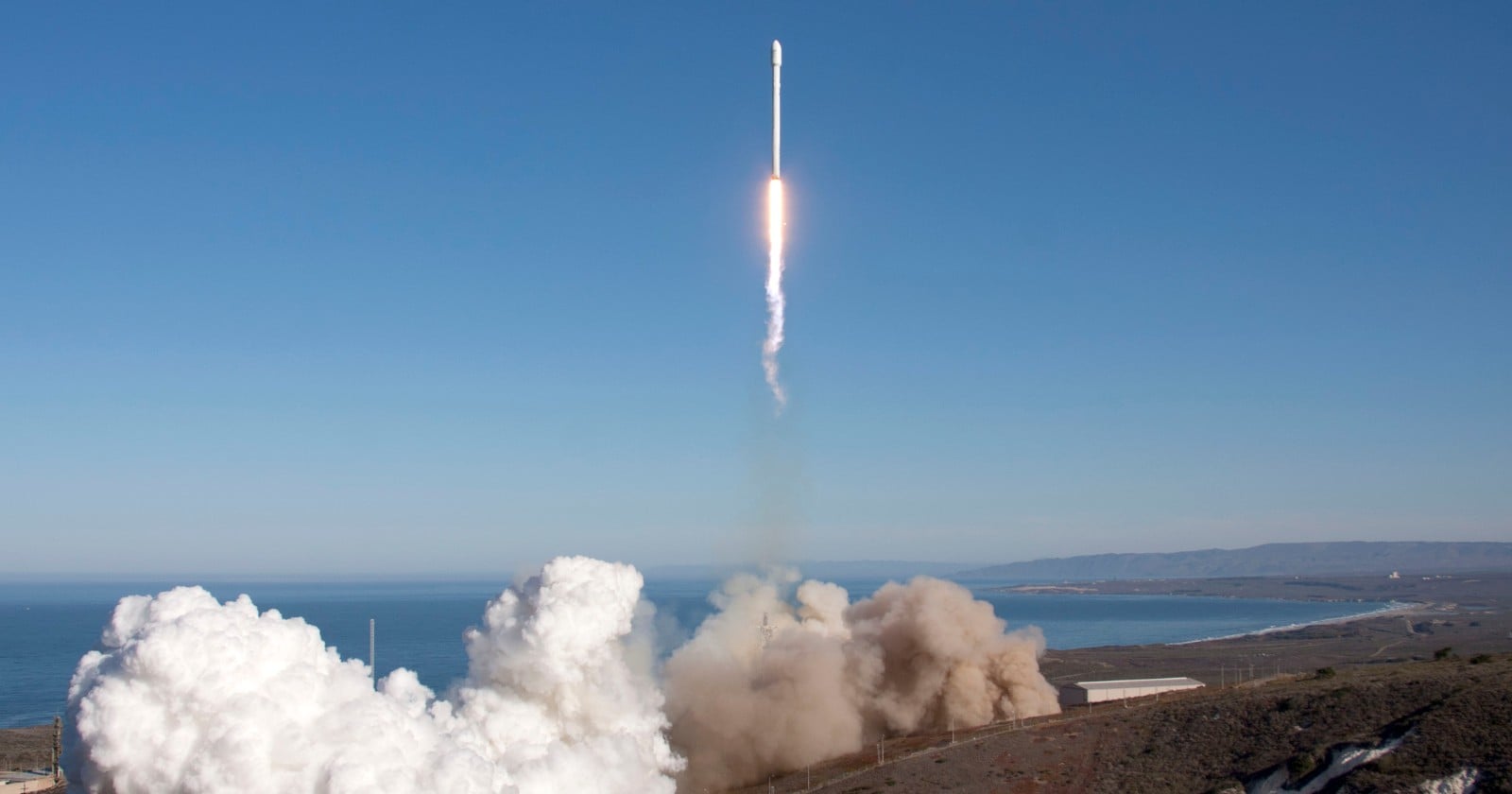
SpaceX is targeting a one-hour launch window opening at 6:43 a.m. ET on Tuesday, June 23, for a Falcon 9 launch carrying the first test flight of Starfall, a new uncrewed reentry capsule, from Space Launch Complex 40 at Cape Canaveral Space Force Station in Florida. The company is flying the demonstration to low-Earth orbit, with a backup window at the same time on Wednesday if Tuesday’s attempt slips.
Starfall is built to do something most rockets cannot: bring cargo back. According to a federal environmental review, the capsule is designed to return up to 1,000 kilograms of payload from orbit, and SpaceX has framed it as the foundation of a business that would manufacture goods in space and deliver them to the ground.
What Starfall is built to do
The clearest description of the vehicle comes not from SpaceX but from the Federal Aviation Administration. In a final environmental assessment published in May, the agency describes Starfall as a cylindrical capsule about 0.75 meters tall and 3.1 meters in diameter, which gives it the wide, flat shape of an oversized hockey puck. Empty, it weighs roughly 2,100 kilograms; loaded, about 3,100.
The capsule has two main parts. A 1,400-kilogram aluminum top plate sits above a 700-kilogram carbon-fiber heat shield, and the two separate after reentry to release a set of three parachutes. Starfall carries no main engine. It steers with cold-gas thrusters that can only adjust its orientation, which means it cannot fire itself out of orbit and must rely on its launch path and drag to come down.
The FAA review covers two planned Starfall reentries, with the capsules splashing down and being recovered in the Pacific Ocean about 1,300 kilometers off the West Coast of the United States, in much the way SpaceX recovers its Dragon spacecraft.
Why SpaceX wants a cargo-return capsule
The company has tied Starfall to the emerging business of making things in orbit. The FAA document states that the purpose is to “enable point-to-point delivery of critical cargo through space on rapid timelines” and to “create a self-sustaining commercial in-space manufacturing market” by offering microgravity, vacuum, and a safe return from orbit as a paid service.
The same document goes further, suggesting Starfall could serve as a “proliferated successor to the International Space Station,” scaling up the kinds of manufacturing experiments the station has run. A graphic SpaceX showed during its recent investor roadshow appeared to depict a satellite with slots for up to four Starfall capsules, labeled simply “In-orbit manufacturing.” The name also fits the company’s pattern, following Starlink, Starshield, and Starship.
How much of this is actually confirmed
Most of what is written above did not come from SpaceX. The company has said almost nothing publicly about Starfall, and it cut off the public timeline for Tuesday’s flight after the booster landing, roughly nine minutes in, rather than following the capsule. The specifications, the purpose, and even the recovery zone are drawn from FAA and Federal Communications Commission filings.
That leaves real gaps. SpaceX has not said how many capsules are aboard this flight, whether any customer payloads are riding along, how long Starfall will stay in orbit, or what would count as success. The 1,000-kilogram figure is a design capability stated in a regulatory filing, not a mass that has been flown and returned. This is a first demonstration, not an operational service, and a single test can fall short of what a filing describes on paper.
For Tuesday’s flight itself, the Falcon 9 first stage is making its 29th trip and is set to land on the droneship A Shortfall of Gravitas in the Atlantic. Weather officers put the odds of acceptable conditions at 95 percent. Whether the capsule that follows it into orbit works as designed is the part no filing can answer.