

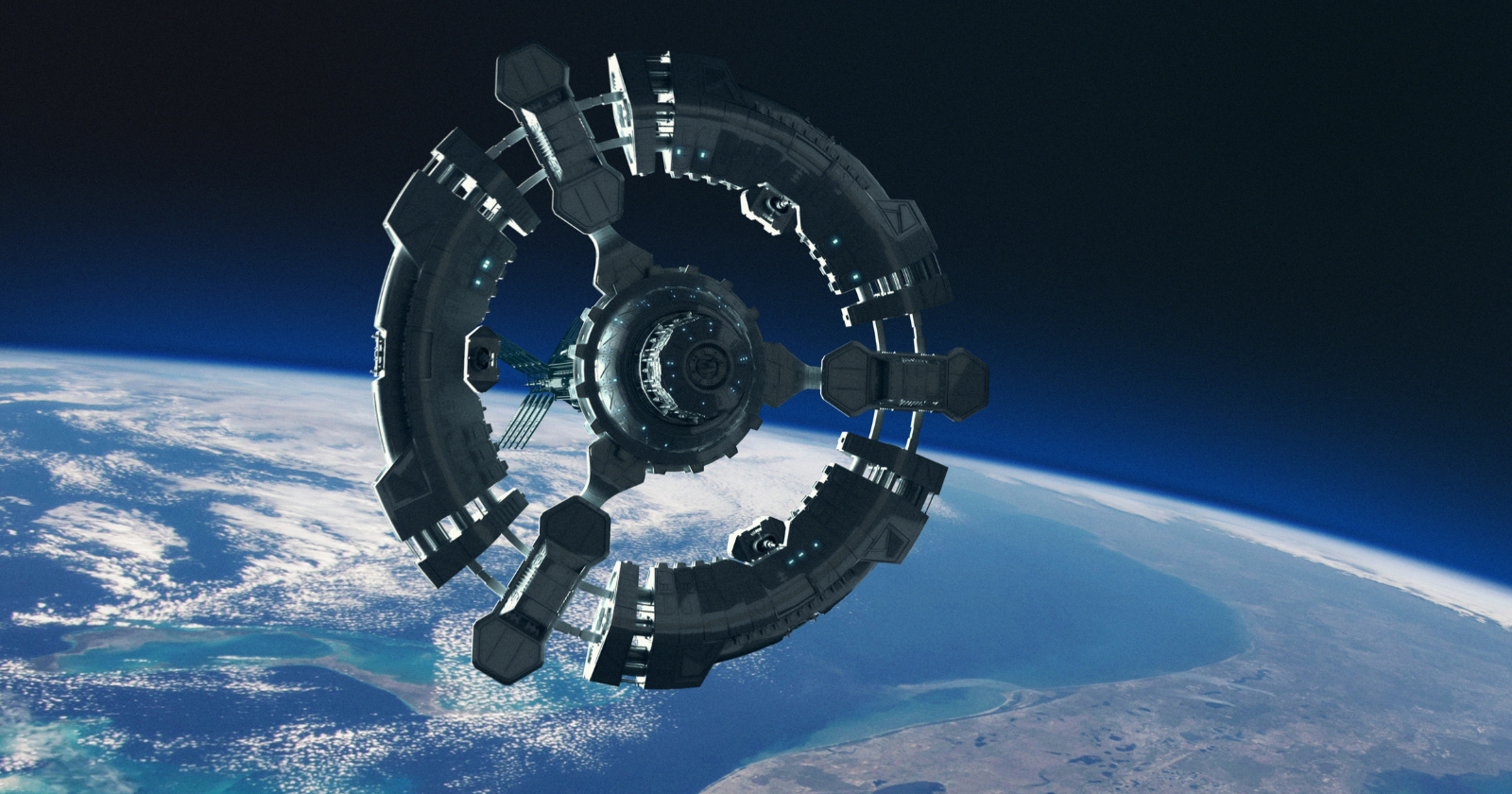
The threshold quietly crossed on 2 November 2000 was, in retrospect, one of the more consequential moments in the history of human spaceflight. For 39 years prior — beginning with Yuri Gagarin’s single-orbit flight in April 1961 — every human being who had ever travelled to space had eventually come home. The Soviet space stations, the American Skylab missions, the Space Shuttle flights, the various Soyuz long-duration missions to Mir, all of them produced a continuous procession of crews going up, staying for a while, and coming back. There were periods when humans were in space and periods when they were not. The longest single previous continuous-presence streak, sustained aboard the Soviet Mir space station from 1989 to 1999, had been broken multiple times by transitions between crews. When Shepherd, Gidzenko, and Krikalev arrived at the ISS in November 2000, they began a chain of overlapping crew rotations that has, against most reasonable expectations of how long such things normally last, continued unbroken for more than a quarter century.
According to NASA’s official commemoration of the 25-year milestone, the chain has now produced approximately 9,000 days of continuous human presence in low Earth orbit, hosted more than 4,000 scientific experiments contributed by researchers from 110 countries, and supported more than 270 spacewalks dedicated to assembly, maintenance, and research activities. Astronaut visits during the 25 years have included the first woman to command a space station (Peggy Whitson, 2007), the first all-female spacewalk (Christina Koch and Jessica Meir, 2019), the longest single American spaceflight (Frank Rubio, 371 days, 2022-2023), the longest single spaceflight by any woman (Christina Koch, 328 days, 2019-2020), the first commercial crewed flight to the station (Bob Behnken and Doug Hurley aboard SpaceX Crew Dragon, 2020), and the first all-civilian commercial visit by paying private citizens (multiple Axiom Space missions starting in 2022). The station that began operations with three people aboard now routinely hosts seven at a time and has accommodated as many as 13 simultaneously during shuttle-era handovers.
How the station got built
The infrastructure that supports the continuous presence was not in place when Expedition 1 arrived. As reported by the National Space Society’s anniversary essay on 25 years off-Earth, the ISS in November 2000 consisted of three modules: the Russian Zarya functional cargo block (launched November 1998), the American Unity Node 1 (launched December 1998 and connected to Zarya during the same Space Shuttle flight), and the Russian Zvezda service module (launched July 2000), which provided the life-support and habitation capabilities that made permanent crew occupation possible. Shepherd, Gidzenko, and Krikalev spent their four-month Expedition 1 mission activating these systems, installing equipment delivered by visiting Space Shuttle crews, and beginning the long process of bringing the station’s remaining modules into operational status. The assembly of the ISS continued in stages over the next decade, with major modules added through 2011 and individual research racks, external experiments, and visiting vehicle docking systems added intermittently since then. The station’s pressurised volume is now approximately 916 cubic metres — roughly the interior of a Boeing 747 — distributed across 17 connected pressurised modules and supported by extensive external truss, solar array, and radiator systems.
The orbital mechanics of the operation are continuously demanding. The ISS orbits at approximately 400 kilometres of altitude, travels at approximately 28,000 kilometres per hour, and completes a full orbit of Earth approximately every 90 minutes. The orbit is inclined at 51.64 degrees to the equator — a compromise inclination chosen to be reachable from both the American Kennedy Space Center in Florida and the Russian Baikonur Cosmodrome in Kazakhstan. Atmospheric drag at that altitude is small but nonzero, and the station gradually descends approximately 100 metres per day in the absence of corrective action. The orbit is therefore periodically boosted upward by visiting cargo vehicles or by Russian modules’ onboard engines — a routine maintenance operation that has been performed dozens of times over the past 25 years and that determines, in essential respects, how long the station can continue operating before its orbital decay becomes unmanageable.
What the continuous presence has actually involved
The 25-year streak has been sustained through three financial crises, two pandemics, three US presidential administrations of substantially different priorities, the ongoing Russian invasion of Ukraine, multiple periods of severe geopolitical tension between the US and Russia, several near-miss orbital debris events, and at least one instance (the Boeing Starliner thruster failure of 2024) in which astronauts who were supposed to return home after eight days remained in orbit for 286. None of these disruptions ever produced a gap in the continuous-presence chain. The reason, in essential terms, is institutional momentum: once the chain had been started in 2000, breaking it would have required an active decision by one of the partner space agencies to stop sending crews, and no such decision has ever been made. The default has been continuation; deviation from the default has never been institutionally chosen.
This is, by any measure, an unusual achievement. Most long-running institutional commitments have been broken over comparable timescales by changes in funding, political priorities, geopolitical realignments, or simple bureaucratic inertia. The ISS continuous-presence commitment has been sustained because the partner agencies have consistently treated it as a flagship achievement worth preserving for its own sake, because the station has consistently produced scientific output that justifies its operating costs, and because no participant agency has wanted to be the one whose policy decision broke the chain. The streak has, in effect, generated its own self-protective momentum.
Whether the chain survives the next decade
Per SpaceNews coverage of the policy uncertainty surrounding the ISS’s eventual retirement, the institutional momentum that has sustained the continuous-presence chain for 25 years may not be sufficient to sustain it through the planned 2030 retirement of the ISS. The current US administration’s revisions to NASA’s Commercial LEO Destinations programme, announced in summer 2025, eliminated the previous requirement that commercial successor stations maintain continuous crewed operations from day one. Several commercial space station developers — Axiom Space, Vast, Starlab, Orbital Reef — are progressing toward operational capability in the late 2020s and early 2030s, but there is no longer a binding policy commitment from NASA that the transition from ISS to commercial stations will preserve the continuous human presence the species has maintained since November 2000. The former NASA administrator Jim Bridenstine, speaking at a Center for Strategic and International Studies event marking the anniversary, characterised the prospect of a gap as “catastrophic from a diplomatic presence” and “catastrophic from a science perspective.” Whether the gap actually opens, and how long it lasts if it does, will be determined by decisions that the relevant partner agencies have not yet publicly made.
The deeper question that the 25th anniversary raises is what the continuous presence has actually meant. As described in the ISS National Lab’s photo essay on the 25-year milestone, the station has hosted everything from cancer research that has produced new drug candidates, to materials science investigations that have informed semiconductor manufacturing, to the Twin Study comparing Scott Kelly’s year in orbit against his Earth-bound brother Mark — research that produced foundational data on the long-duration physiological effects relevant to eventual Mars missions. The cumulative scientific output is substantial. The cumulative human experience is harder to summarise. For 25 consecutive years, somewhere between three and seven members of the human species have been continuously living off the planet that produced them, orbiting overhead at approximately 17,500 miles per hour, looking down through the cupola window at the home they came from and that the rest of the species was still living on. Whether the streak reaches 30 years, or breaks somewhere in the late 2020s during the handover to commercial successors, is a question the next several years of policy decisions will answer. The streak itself, for now, continues — at the time of writing, Expedition 74 is in residence aboard the station, and there is no scheduled date on which the last human will leave.