

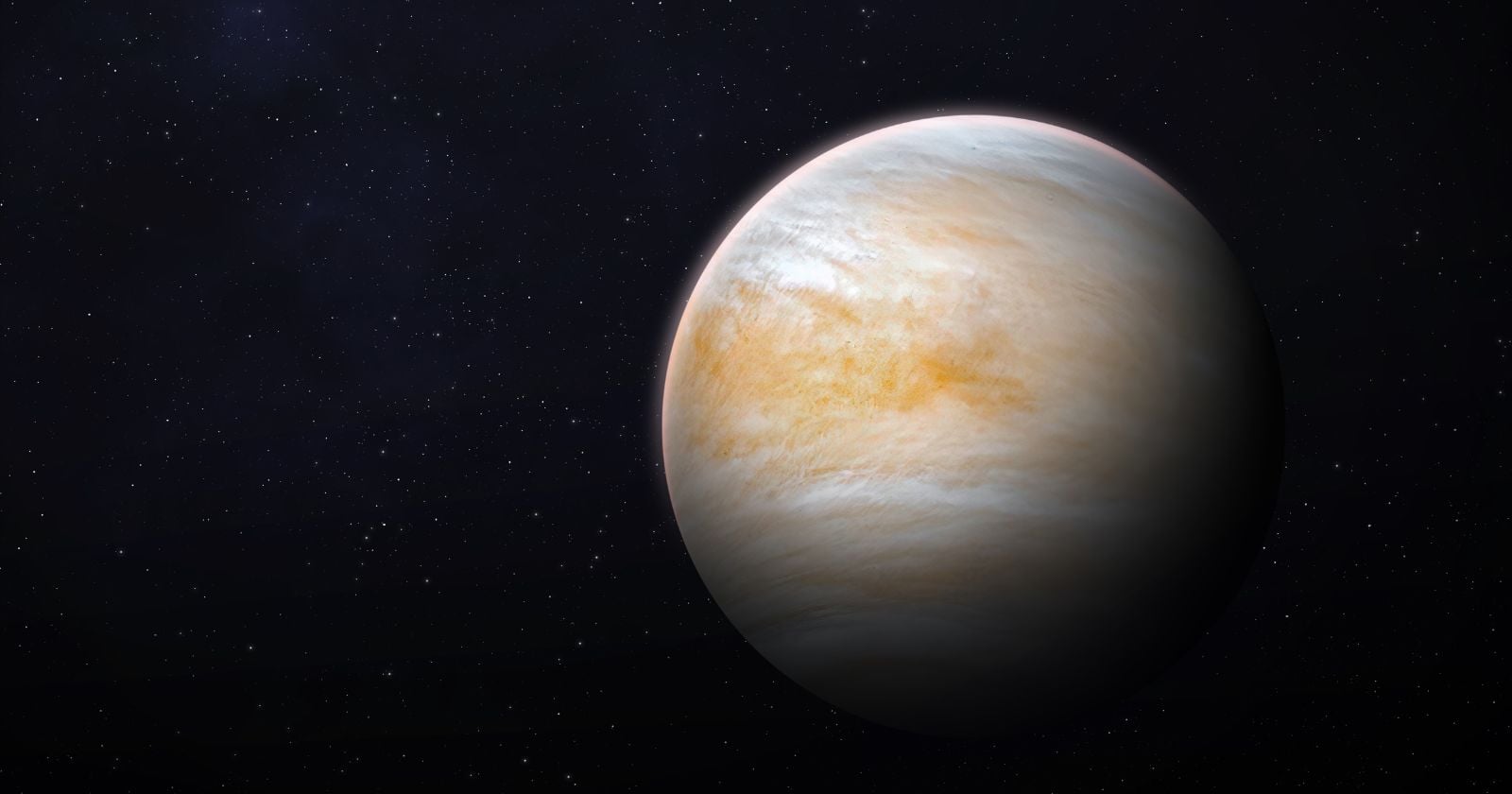
On 15 December 1970, a titanium sphere about the size of a beach ball slammed into the night side of Venus, bounced, rolled, and came to rest on its side in a furnace-hot plain where the air pressure equalled the weight of nearly a kilometre of seawater overhead. For 23 minutes it kept talking. Then it went quiet forever. Those 23 minutes made Venera 7 the first human-made object to transmit data from the surface of another world.
The temperature outside its hull was around 475 degrees Celsius. The pressure was about 92 times Earth’s at sea level, equal to roughly 612 kilograms pressing on every square inch of the spacecraft. The probe was already dying when it began transmitting. Engineers in Moscow, listening to a tape that sounded like wind in a microphone, came very close to filing the whole mission as a failure.
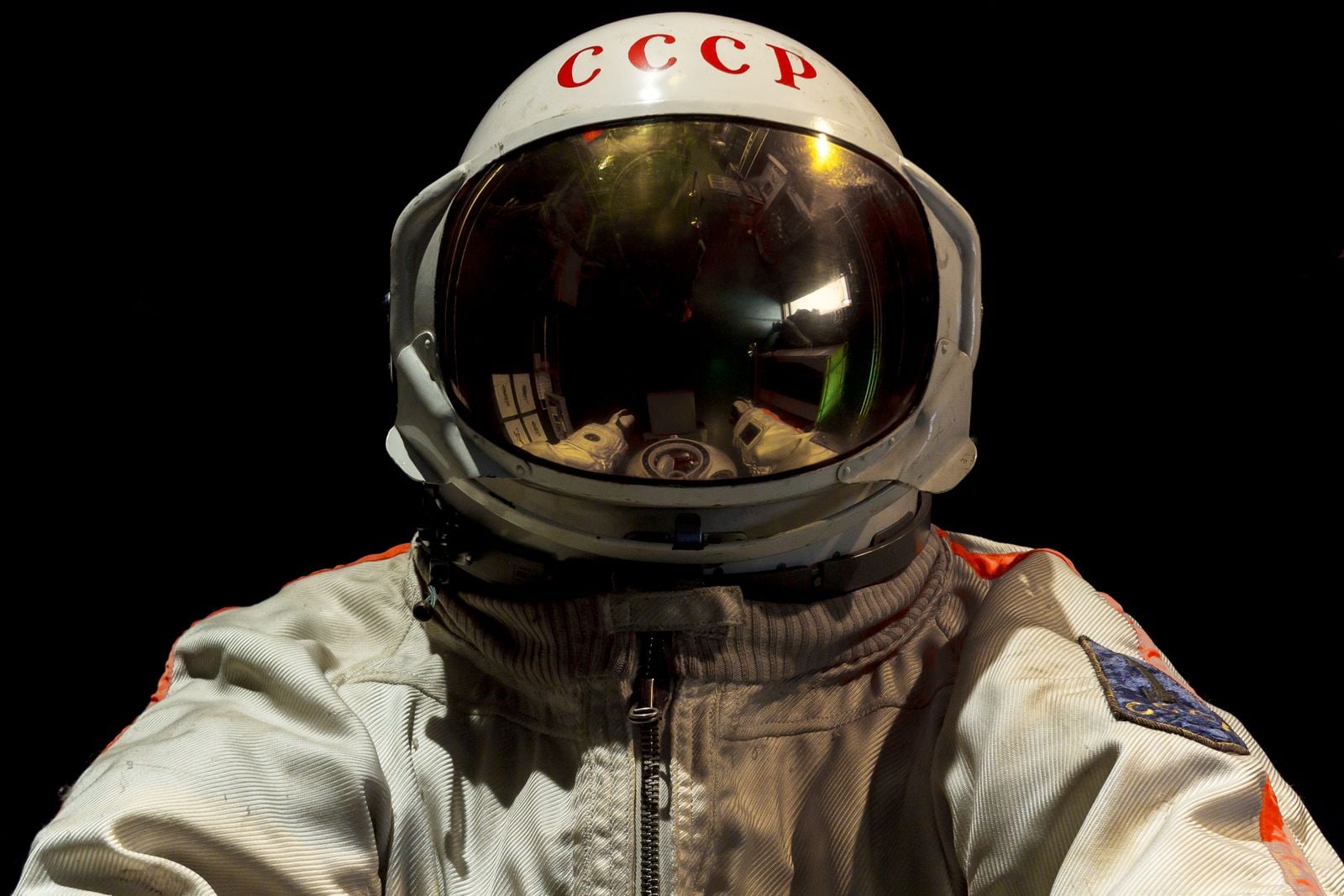
A ball of titanium aimed at a furnace
Venera 7 launched in August 1970 from Baikonur on a four-month cruise to Venus. Its lander was a pressure vessel built like a deep-sea bathyscaphe — a thick shell wrapped around instruments that measured temperature and pressure, and a radio that could only beam data home through a single low-gain antenna pointed roughly upward.
The Soviets had been trying to reach the Venusian surface since 1961. Venera 3 hit the planet in 1966 but went silent before it could send anything back. Veneras 4, 5, and 6 returned atmospheric data on the way down but were crushed before they touched the ground. By the time Venera 7 was being designed, the engineering team at the Lavochkin design bureau finally had numbers that matched the planet’s real cruelty. The earlier probes had been built assuming Venus might be only modestly worse than Earth — possibly even with surface oceans, as Astronomy Magazine has documented in its history of the Venera program. Venera 3 was even designed with a possible splashdown in mind.
Venera 7 was built for the truth. Its hull, fabricated as a single seamless titanium sphere and lined with shock-absorbing material, was designed to withstand temperatures and pressures far beyond those of Earth. It was pre-chilled before atmospheric entry to buy a few extra minutes of survival time inside the oven.
The descent that almost wasn’t
The probe hit the upper atmosphere on 15 December moving at more than 11 kilometres per second. Aerodynamic braking against Venus’s dense carbon dioxide blanket slowed it to a crawl within minutes — the air down there is so thick it does most of the deceleration work that a parachute would do on Earth.
Then the parachute deployed. And tore.
The fabric had been weakened by the heat. Instead of a controlled descent, the lander fell faster than planned through the final stretch of atmosphere, slamming into the surface at about 16.5 metres per second — roughly the speed of a car in a residential collision. The sphere bounced. It tipped over. It came to rest with its antenna pointing not at Earth but at an awkward angle into the Venusian sky.
The signal that sounded like noise
Back in the receiving station, the telemetry from the descent looked nominal until impact. Then the carrier signal weakened sharply. Mission controllers saw what they assumed was the end — a transmitter killed by the landing shock or the heat. The strip charts went flat. The official assessment that night was that Venera 7 had reached the surface but failed to transmit from it.
Days later, the radio astronomer Oleg Rzhiga took a closer look at the recorded tapes. Buried in what had been read as background hiss, he found a faint modulated signal continuing for about 23 minutes after impact. The probe had not died. It had been transmitting through an antenna pointed the wrong way, with most of its power radiating sideways into the Venusian sky instead of toward Earth. The signal had been arriving at roughly 1 percent of its design strength. When engineers re-processed the recording with higher gain, the temperature data emerged.
It read 475 degrees Celsius. The pressure gauge had failed on impact, but using the temperature and the descent profile, the team back-calculated a surface pressure of around 90 atmospheres. The first numbers humanity had ever received from the surface of another planet were on a tape someone had nearly thrown out.
What 23 minutes actually bought
The data was thin by modern standards. No images, no chemistry, no wind speed — just temperature and a derived pressure reading from a probe lying on its side in a place where lead would puddle. But it settled a question that had hung over planetary science for half a century. Venus was not Earth’s twin. It was not a steamy jungle, not a global ocean, not a slightly warmer Earth. It was the closest thing to a literal hell in the solar system.
The runaway-greenhouse models that had predicted these conditions were vindicated. The implications rippled outward into climate science on Earth, where the Venusian atmosphere became the standard worst-case reference for what carbon dioxide can do to a planet when nothing pulls it back out.
Later missions built on this achievement — Venera 13 lasted 127 minutes on the surface in March 1982 and returned the first colour photographs ever taken from the surface of Venus, images that remain the only colour views of that surface that any space programme has ever obtained. Every one of those later missions traced its design lineage back to the lopsided sphere that gave Soviet engineers 23 minutes of usable data in 1970.
The bureau, the secrecy, and the near-miss
Lavochkin’s engineers worked under a system that did not tolerate visible failure. The Soviet space program announced successes loudly and failures not at all — Venera 1 and Venera 2 had flown silent past Venus in the 1960s after telemetry failures, and were quietly written off. Venera 3 had crashed without a word transmitted. The team had reasons, both technical and political, to look very carefully at the Venera 7 tapes before declaring another loss.
That care is what saved the result. A first reading of the data could easily have concluded the probe had transmitted only during descent and died on landing — which would have been a partial win, on par with Venera 4. The reprocessed signal turned a partial win into a planetary first. The Soviet Union became, and remains today, the only nation to have successfully landed and operated spacecraft on the surface of Venus, a record Russian officials still invoke when discussing the planned Venera-D mission targeted for 2036.
Where Venera 7 is right now
The probe is still there. It has been lying on its side somewhere in the equatorial lowlands of Venus for 55 years, baking at temperatures that would melt zinc, soaked in a supercritical carbon dioxide that behaves more like a solvent than a gas. The widespread assumption among planetary scientists used to be that the lander would have been chemically erased within years or decades.
A 2026 study in the journal Geoarchaeology, led by space archaeologist Luca Forassiepi and colleagues and summarised by IFLScience’s review of the new analysis, argues the opposite. Looking at the geology of the likely landing sites and the chemistry of the Venusian surface, the authors conclude that seven probes — including Venera 5, 6, 7, and 10, the two VeGa landers, and NASA’s Pioneer Venus Night Probe — are probably still recognisable on the surface today. Deformed, perhaps. Partially infiltrated by supercritical CO₂. But preserved well enough that a future mission could find them.
Venusian lowland plains turn out to be remarkably quiet places. Without rain, without wind-driven sand, without biology, the only erosion is whatever the atmosphere itself does chemically — and the chemistry is slower than anyone assumed. The probes may end up being among the longest-lasting human artefacts ever placed on another world, outlasting the Apollo footprints, which will eventually be eroded by micrometeorites.
The ironic afterlife of a sibling probe
One Venera-program spacecraft did make it back. Kosmos 482, launched in 1972 as a Venus lander but stranded in Earth orbit when its upper stage failed, finally fell out of the sky on 10 May 2025 after 53 years circling the planet. Ars Technica reported on the reentry, noting that the spacecraft’s titanium pressure vessel — built to survive Venus — almost certainly survived the plunge through Earth’s atmosphere as well.
The fall raised a sharper question about debris risk. As The Conversation pointed out, spacecraft engineered for the worst environments in the solar system are exactly the spacecraft most likely to reach the ground intact when they come home unscheduled. The same shell that let Venera 7’s cousins kiss the Venusian surface and live a few minutes turns out to be very good at surviving a hypersonic re-entry through nitrogen and oxygen.
What the tape actually said
Strip away the politics, the bureau infighting, the Cold War symbolism. What Venera 7 transmitted, in the end, was a number: 475 degrees, give or take. A pressure: 90 atmospheres, calculated. A duration: 23 minutes of consciousness on a planet that had been guessing at its own conditions for centuries.
The signal was so weak that the Soviet receiving station nearly recorded over it. Popular Science has catalogued the handful of surface photographs later Venera probes managed to send back through the same kind of cracked-open transmission window — yellow-tinted volcanic plains, flat horizons, the underside of an atmosphere thick enough to refract light into a permanent haze. None of those photos would exist without the tipped-over sphere that proved a transmitter could survive the landing at all.
Somewhere on Venus right now, in air hot enough to melt lead, the titanium ball is still lying on its side. Its antenna still points at the wrong piece of sky. The tape that almost got dismissed as noise is the reason anyone bothered to go back.