
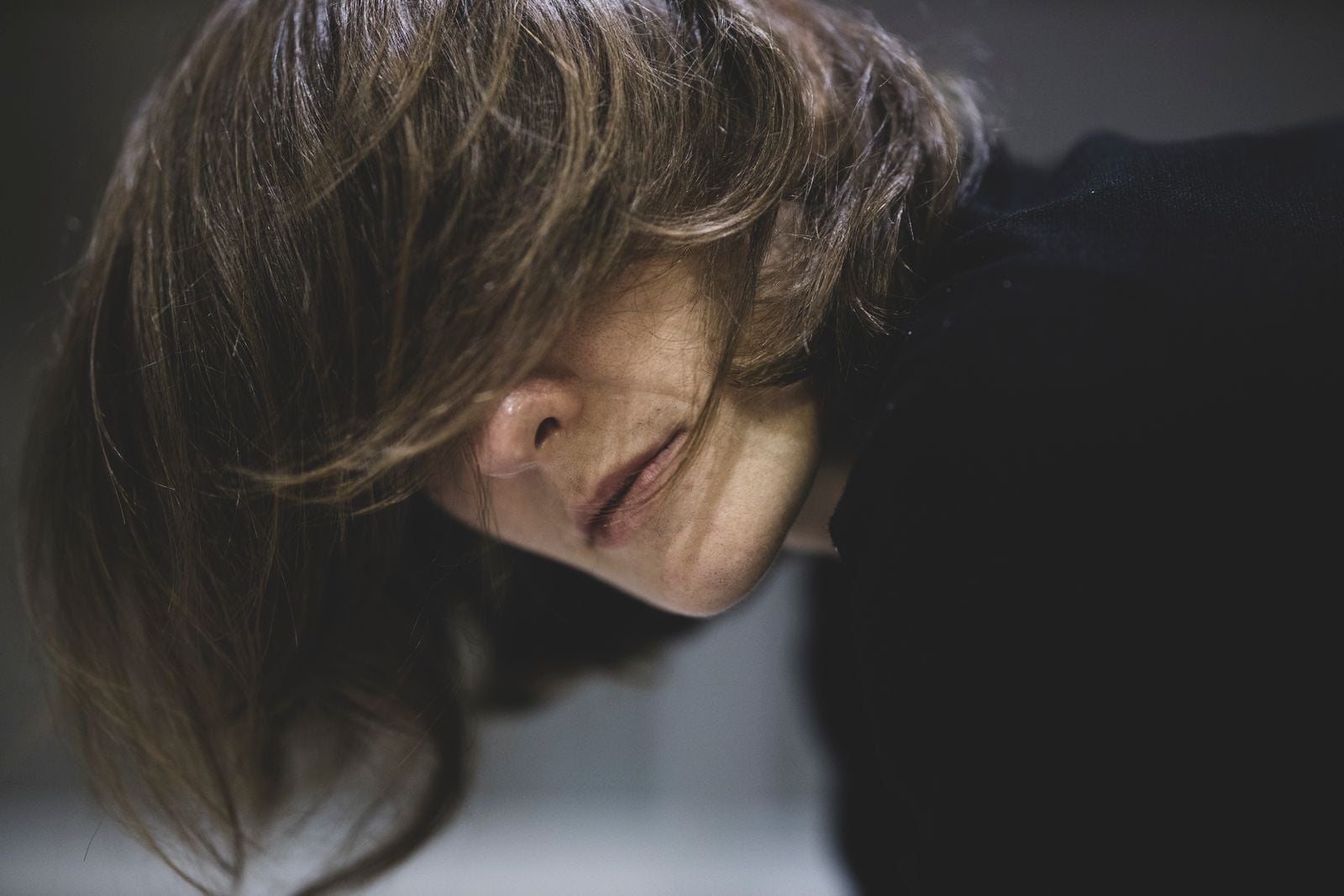
In 1872, Charles Darwin published The Expression of the Emotions in Man and Animals. Inside, between woodcuts of weeping infants and a snarling dog, Darwin laid out a strange and durable idea: that when a person tries to hide rage, the face does not go blank. It compresses. The jaw sets, the nostrils flare a fraction, the corrugator muscle above the bridge of the nose tightens against a forehead the person is consciously trying to smooth. He proposed a rule for it — what he called the principle of antithesis — and 154 years later, clinicians who study facial electromyography are still circling the same observation with better instruments.
The book was a commercial success upon publication.
What Darwin actually catalogued
Darwin collected material for the Expression over many years. He wrote to asylum superintendents asking how the insane scowled. He sent questionnaires to missionaries and colonial officers asking whether grief in a Maori widow looked like grief in a Yorkshire one. He photographed his own children. He worked with the French neurologist Guillaume-Benjamin Duchenne to reproduce the now-famous plates in which Duchenne ran electrical current through the facial muscles of an elderly man to isolate which fibre produced which expression.
The resulting catalogue named the muscles by their anatomical labels — corrugator supercilii, orbicularis oculi, depressor anguli oris, platysma — and tied each to a specific emotional output. Rage, in Darwin’s account, was not a single signal. It was a layered one. The teeth clenched through the masseter. The lips retracted through the risorius. The eyes widened as the frontalis lifted the brow while the corrugator simultaneously pulled it inward. The nostrils dilated. The platysma, the broad sheet of muscle running down the neck, tightened visibly in men who were trying not to strike someone.
Suppressed rage, he argued, was the most legible of all the suppressed emotions, because the muscles involved were too many and too distributed to fully silence at once.
The antithesis principle, in one sentence
Darwin’s second contribution was the framework he wrapped around the catalogue. He proposed three principles to explain why faces do what they do. The first was habit — useful actions, repeated across generations, become automatic. The third was direct nervous discharge — strong feeling has to go somewhere, and the face is where it goes.
The second, the antithesis principle, was the strange one. Darwin argued that when an animal feels the opposite of a strong emotion, it produces the muscular opposite of the original expression, even when that opposite serves no practical purpose. A hostile dog stands tall, ears forward, tail rigid. A submissive dog crouches, ears back, tail low — not because crouching is useful, but because it is the inverse posture, and inversion itself is the signal.
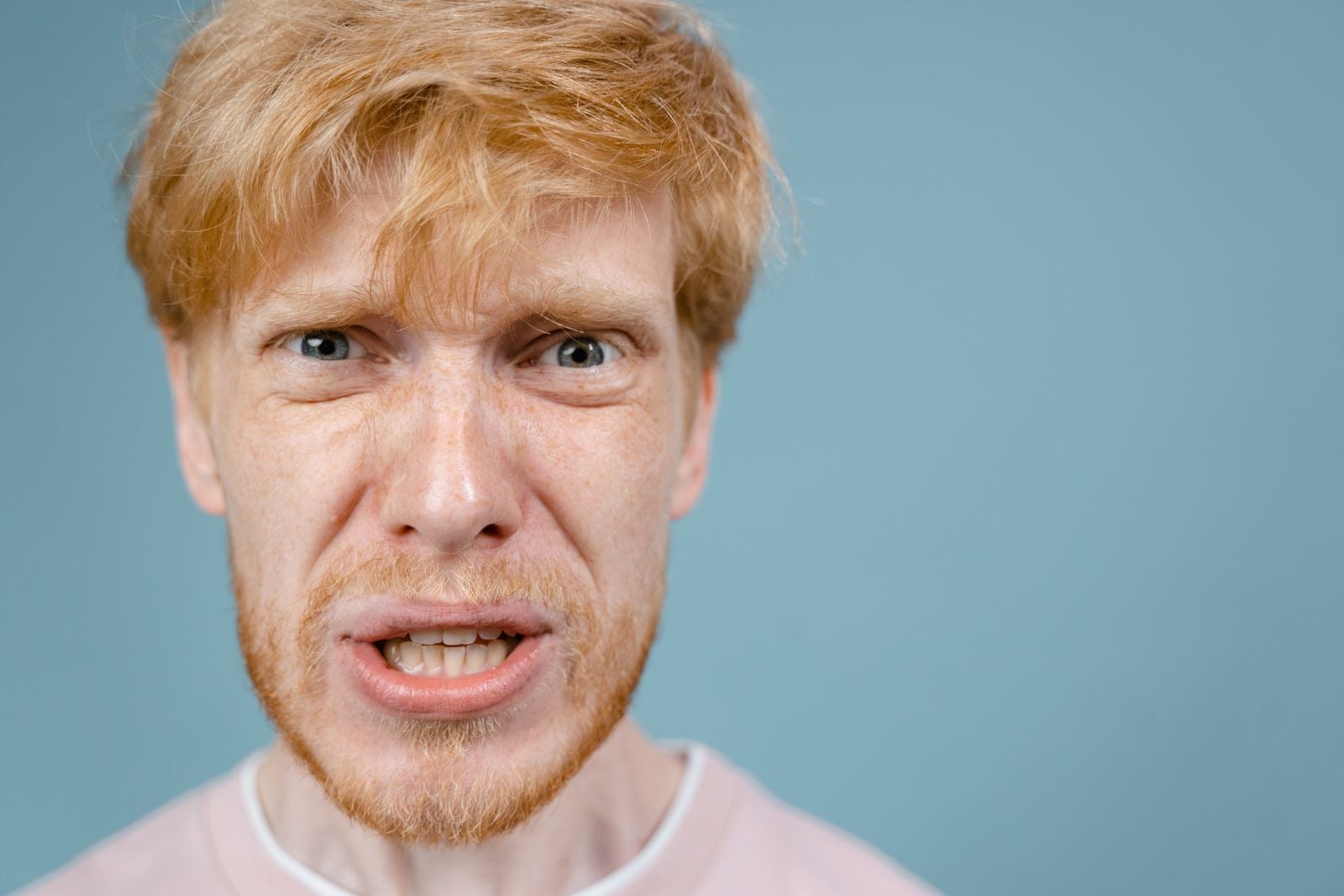
Applied to a human face trying to hide anger, the principle predicts something specific. The person will not simply relax. They will overshoot toward calm — the brow too smooth, the mouth held in a fractional upward set, the breathing slowed in a way that looks deliberate. The signal of suppression is the visible effort of producing the antithesis.
What modern electromyography actually sees
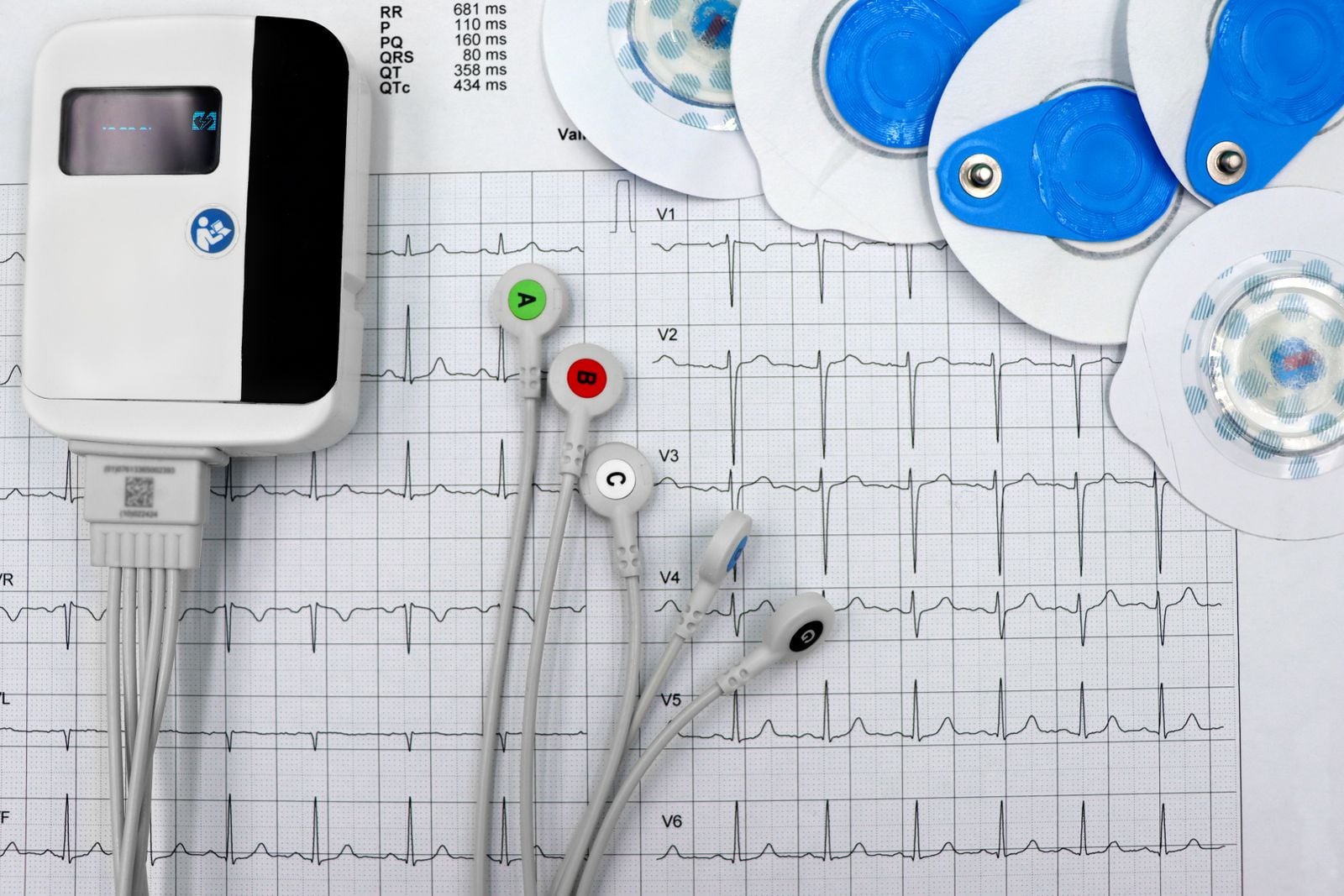
The Victorian woodcut has been replaced by the electrode. In 2023, a team at Jena University Hospital ran a prospective study using high-resolution surface electromyography on 36 healthy adults, recording from both sides of the face while participants imitated the six basic emotional expressions. They used two electrode schemes simultaneously — the classical Fridlund-Cacioppo arrangement, which targets eleven specific facial muscles, and a newer landmark-oriented scheme by Kuramoto that covers the face like an EEG net.
The findings tracked Darwin more closely than the researchers expected. Anger produced a recognisable activation pattern across the corrugator, the masseter and the depressor anguli oris, with very low interindividual variability. When the team tried to discriminate the six basic emotions using only the lower face, the Kuramoto scheme separated all six at statistical significance below p < 0.001. Anger, in particular, was one of the most discriminable patterns — even when participants were trying to perform it on cue rather than feel it.
This is the clinical relevance. The muscles Darwin named in 1872 are still the muscles a 16-channel electrode array picks up in 2023. The pattern he sketched as a series of woodcuts shows up as a heat map.
Why the calm face is the hard one to read
The problem clinicians actually face is not the obvious snarl. It is the man in the chair who says he is fine. Darwin’s principle predicts that suppressed anger produces a face that is doing two things at once: the rage-circuit muscles firing at low amplitude, and the voluntary muscles of composure firing on top of them. The result is a face in muscular conflict.
Surface EMG can detect that conflict because the corrugator and the masseter do not fully silence under voluntary control. They leak. A 2015 piece in The Atlantic on machines built to detect depression from facial micro-movements described systems trained on exactly this principle — measuring the millisecond gap between the suppressed signal and the voluntary mask. The systems flag the leak, not the mask.
Paul Ekman’s Facial Action Coding System, developed in the 1970s, breaks the face into discrete Action Units. The Action Units associated with suppressed anger — the brow lowerer (corrugator), lid tightener, chin raiser, and lip tightener — are the same muscles Darwin listed. The numbering changed. The anatomy did not.
The universality argument, and where it broke
Darwin’s larger claim — that the expressions themselves were universal across human cultures and partly shared with other mammals — drove much of 20th-century affective science. Paul Ekman’s cross-cultural fieldwork in the 1960s and 70s appeared to confirm it, including studies with people in the Fore highlands of Papua New Guinea who had no prior exposure to Western media.
The picture has since complicated. A 2014 article in The Conversation reported that facial expressions are not necessarily universal — the wide-eyed open-mouthed expression Westerners read as fear can be interpreted in other cultures as a threat display, anger directed outward rather than terror felt inward. The muscles were the same. The cultural reading was inverted.
That finding does not dismantle Darwin so much as refine him. The muscle activation patterns appear to be biologically conserved. The interpretive overlay is learned. A clinician reading a calm face is reading both layers, often without knowing which is which.
The animal continuity Darwin insisted on
One of the reasons the Expression was controversial in 1872 was that Darwin refused to draw a sharp line between human and animal faces. He devoted long chapters to the snarling of dogs, the bristling of cats, the threat displays of baboons. His argument was that the muscular machinery of emotional expression predated Homo sapiens by tens of millions of years, and that what humans had added was mostly the capacity to suppress.
Modern work on interspecies face-reading keeps reinforcing the continuity. Research on canine emotional cognition has shown that dogs watch us carefully and read our faces, discriminating between different human facial expressions. The dogs are reading the same muscles Darwin catalogued.
What the calm face costs the person wearing it
Darwin made a small, easily overlooked observation in the chapter on anger: that the muscular work of suppression is itself exhausting. The platysma cannot stay tight indefinitely. The masseter, clenched through a meeting or a difficult conversation, leaves the jaw aching afterward. He noted that habitual suppressors tended to develop a characteristic set to the face at rest — a slight permanent tightening of the corrugator, a faint downturn at the corners of the mouth that did not resolve when the person was alone.
This is what makes the calm person, in the clinical reading, often the angry one. The face at rest is not neutral. It is the residue of all the suppressions that came before it.
Work on embodied social cognition using virtual agents has shown that observers register these resting-state asymmetries within a few hundred milliseconds, well below the threshold of conscious recognition. The viewer cannot say what they are seeing. They only report that the person seems off.
The 1872 catalogue, still open
The book itself is still in print. The Penguin Classics edition reproduces Darwin’s original plates, including the Duchenne photographs and the woodcut of the platysma in full contraction. The anatomical labels are unchanged. The muscles are still where he said they were.
What has shifted is the instrument. Where Darwin had a magnifying glass and a willingness to stare at his own infant son for an hour at a time, the Jena team had silver-chloride electrodes sampling at 4,096 hertz across the entire face. They were measuring the same phenomenon. The lag between the muscles’ refusal to be silenced and the voluntary mask laid over them — Darwin called it the involuntary residue, modern electromyographers call it activation leakage — is the same gap.
The Victorian observation was that you cannot fully hide rage because rage is held by too many muscles in too many places, and the antithesis you produce to cover it is itself a tell. The 2023 data, recorded in millivolts on a heat map of the lower face, says the same thing in a different alphabet. The calmest face in the room is rarely the emptiest one. It is usually the one doing the most work.
