
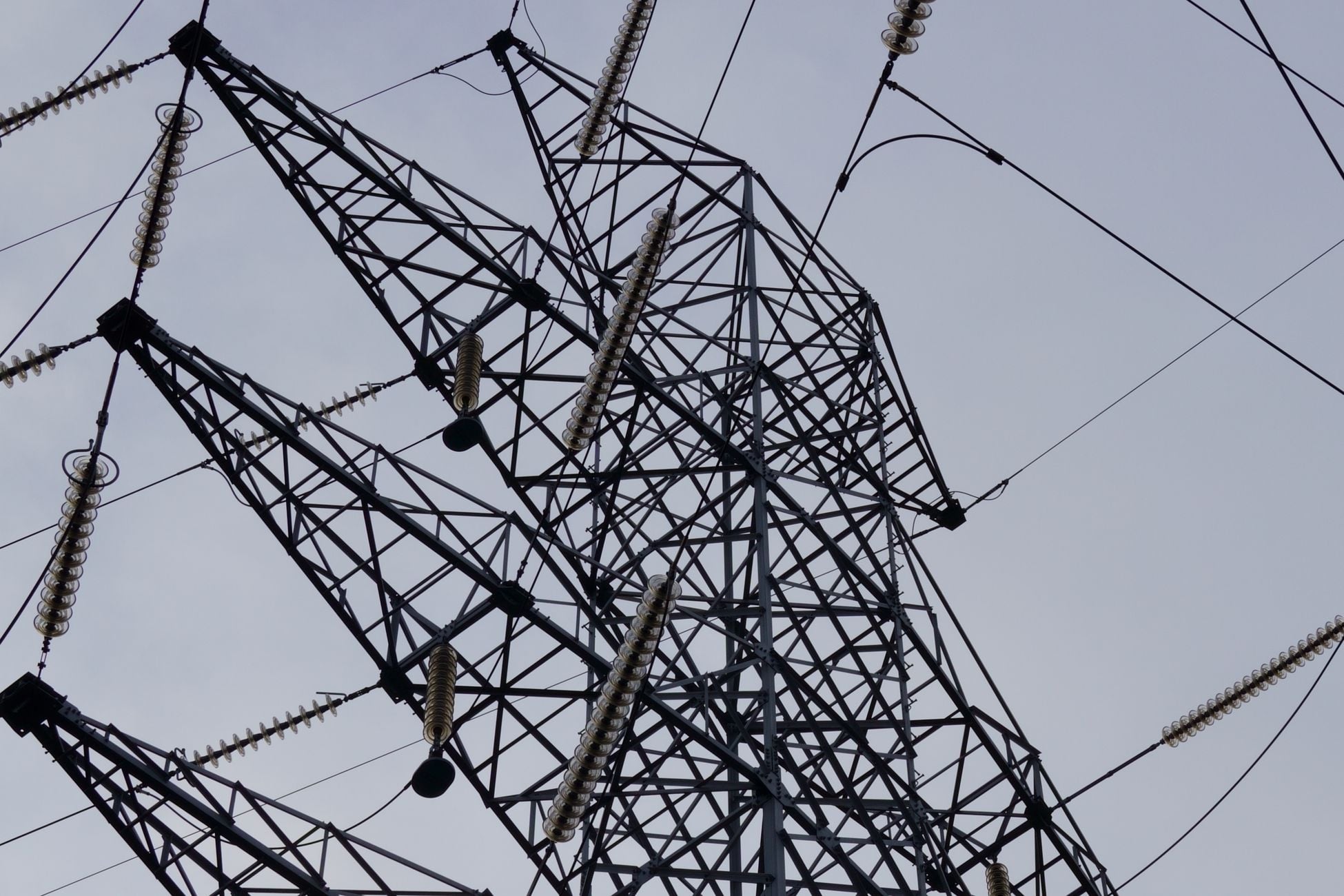
On the night of March 13, 1989, a coronal mass ejection that had left the Sun two days earlier slammed into Earth’s magnetic field, and the entire Hydro-Québec grid collapsed, leaving six million people in the dark on a winter morning when outside temperatures were well below freezing. The blackout lasted nine hours. No one in Quebec was electrocuted by the storm itself. The storm electrocuted the grid.
That distinction is the whole story of how solar weather hurts us. A geomagnetic storm passing overhead is, for a human body standing in a field, essentially nothing. For a 735-kilovolt transmission line strung across a thousand kilometres of Canadian Shield, it is a slow-motion lightning strike that arrives through the dirt.
What actually happens when the Sun yells
The Sun fires charged particles at Earth all the time. A coronal mass ejection is a bigger heave — billions of tonnes of plasma flung outward at a few million kilometres per hour, dragging the Sun’s magnetic field with it. When that cloud hits Earth’s magnetosphere, it shakes it. The shaking is the problem.
A magnetic field that changes quickly induces an electric field in any conductor sitting inside it. This is the principle Michael Faraday formalized in the 19th century, and it is the principle that runs every electric generator on the planet. During a strong geomagnetic storm, the conductor in question is the crust of the Earth itself, plus whatever long metal humans have laid on top of it.
The resulting flow is called a geomagnetically induced current, or GIC. It is direct current, slow and ponderous compared to the 60-hertz alternating current that grids are built around, and it enters the network through the grounding rods at substations — the very wires engineers installed to keep the system safe.
Why long metal is the target
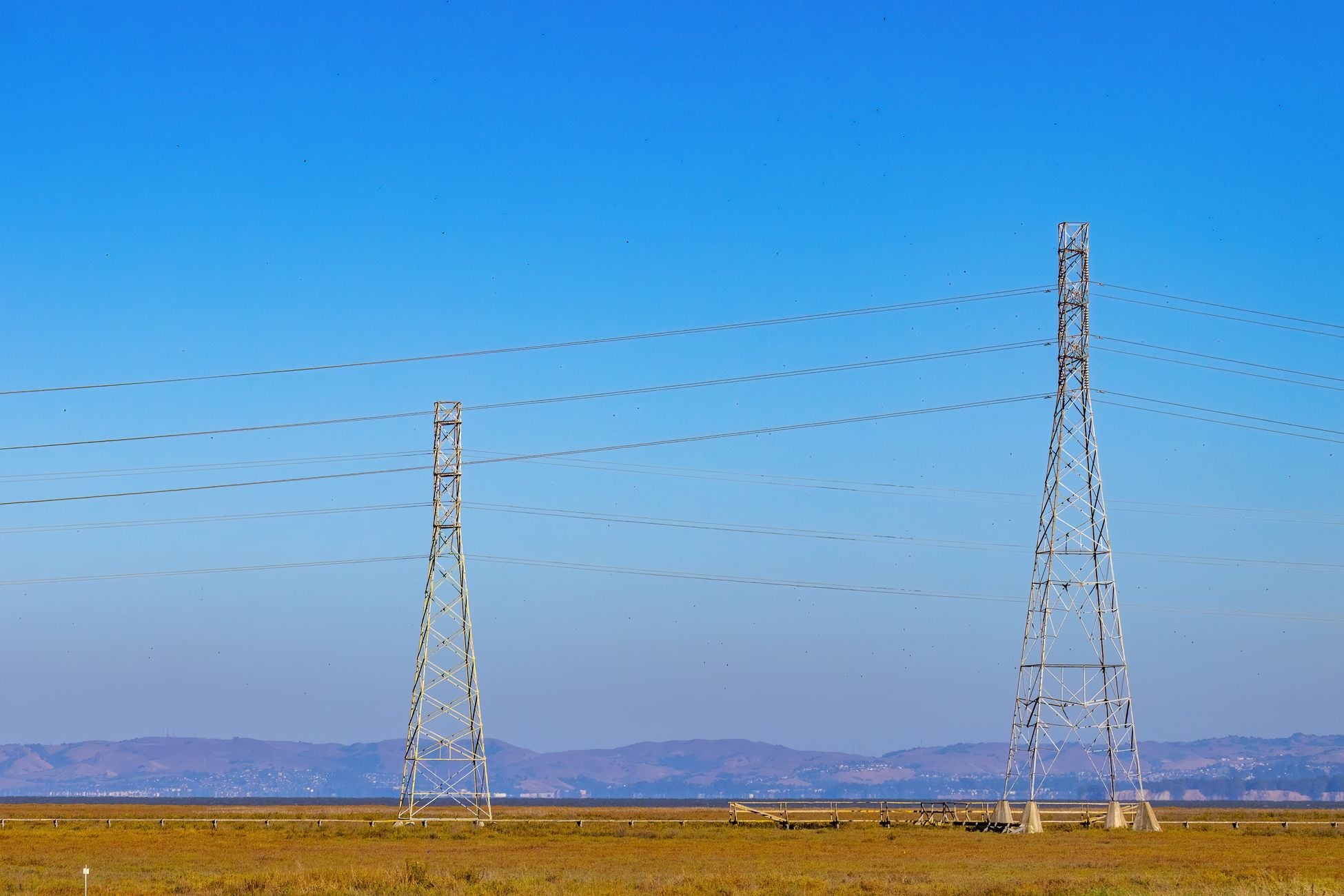
The induced voltage is small per kilometre — fractions of a volt. Across a transformer’s grounding point fed by a 500-kilometre transmission line, those fractions add up into something a transformer was never designed to swallow.
A power transformer expects symmetrical AC. Feed it a steady DC bias and its magnetic core saturates on one half of each cycle. It starts drawing huge reactive currents, heating up, vibrating audibly, and bleeding harmonics into the rest of the network. In Quebec in 1989, seven static-VAR compensators tripped offline in succession. The grid lost its voltage support and fell over.
The same physics applies to anything long and metallic and grounded at both ends. Pipelines. Railway signalling. Telegraph wires, back when there were telegraph wires. The list of vulnerable infrastructure is essentially a catalogue of long conductors we have draped across continents.
The Carrington benchmark
The reference event is the storm of September 1859, observed by astronomer Richard Carrington as a brilliant white flare on the solar disk. Within hours, auroras were visible over Cuba and Hawaii. Telegraph offices reported sparks leaping from their equipment. Operators disconnected their batteries and discovered they could still send messages using the current the storm itself was pushing through the wires.
In 1859 the long metal was telegraph cable. In 2026 it encompasses high-voltage transmission lines, the steel skins of intercontinental gas pipelines, and the copper power-feed conductors that run alongside the fibre in every undersea internet cable on Earth.
The cable under the ocean
The fibre-optic strands themselves are glass and indifferent to magnetism. Submarine cables also carry a copper or aluminium conductor that delivers thousands of volts of DC to the repeaters spaced every 50 to 100 kilometres along the cable, the amplifiers that keep the light pulses readable across an ocean.
That power line is exactly the kind of long, grounded conductor a geomagnetic storm loves. Sangeetha Abdu Jyothi, a computer scientist at UC Irvine, modelled the scenario in a 2021 paper called Solar Superstorms: Planning for an Internet Apocalypse, and her conclusion was bleak: a Carrington-class event could knock out long-haul cables for months while the repeaters are inspected and replaced one at a time from a ship.
Local fibre inside cities would probably survive. The links between continents would not.
Why pipelines corrode faster during storms
Long pipelines carry cathodic protection — a small applied voltage that keeps the steel from rusting electrochemically. A GIC overwhelms that voltage, briefly reversing the protection and accelerating corrosion at specific points along the line. Pipeline operators have documented measurable pipe-wall thinning correlated with major solar storms.
The damage is not dramatic. It is cumulative. A pipeline that should last 50 years ages a little faster every time the aurora reaches the latitudes where the pipe is buried.
Geography decides who gets hit
The induced electric field is strongest where the magnetic disturbance is largest — auroral latitudes — and where the ground underneath is most resistive. Ancient cratonic rock, like the Canadian Shield, the Scandinavian Baltic Shield, and the bedrock under Scotland and New Zealand’s South Island, is a poor conductor. The induced current cannot sink easily into the dirt. It rides the power lines instead.
This is why Quebec went dark in 1989 while New York, on younger and wetter geology to the south, mostly held. It is also why Transpower, New Zealand’s grid operator, has been instrumenting its network with magnetometers and running storm-response drills while most countries at similar latitudes do not bother.
South Africa learned the lesson the hard way during the Halloween storms of October 2003. Eskom lost large transformers to slow GIC-induced damage. The transformers did not explode. They cooked from the inside over months, their insulation degrading, and had to be retired early. Replacement transformers of that size are custom-built and take 12 to 18 months to manufacture.
The satellite problem is different
Spacecraft in orbit also suffer during solar storms, but through a different mechanism: direct particle bombardment, surface charging, and atmospheric drag as the upper atmosphere swells with absorbed energy. SpaceX lost 38 Starlink satellites in February 2022 when a modest storm puffed up the thermosphere just as the new birds were trying to climb to their working orbits.
For satellites, the storm itself is the weapon. For ground infrastructure, the storm is just the trigger. The weapon is the wire.
What an early warning actually buys
The Sun is one astronomical unit away. Light from a flare arrives in eight minutes. The plasma cloud that does the damage takes between 15 hours and three days to follow, depending on its speed.
NOAA’s Space Weather Prediction Center and ESA’s equivalent rely on a small fleet of spacecraft — DSCOVR and ACE among them — parked at the L1 Lagrange point about 1.5 million kilometres upstream of Earth, where they get roughly 15 to 60 minutes of warning as the cloud sweeps past their sensors before it hits the magnetosphere.
Fifteen minutes is enough to do useful things. Grid operators can reduce loading on vulnerable transformers, bring extra generation online to provide reactive support, and disconnect the longest transmission lines if needed. Pipeline operators can adjust cathodic protection. Airlines reroute polar flights, where high-frequency radio fails and crew radiation exposure spikes.
Fifteen minutes is not enough to harden anything that is not already hardened. Proposals like the six-satellite StormWall constellation aim to push observation closer to the Sun and stretch warning times to hours.
The thing engineers actually worry about
The 1989 Quebec collapse was a major storm, and modelling suggests a storm of Carrington intensity hitting the modern North American grid could damage hundreds of large transformers simultaneously, with replacement timelines measured in years, not weeks.
The probability of a Carrington-scale storm in any given decade is something like 10 percent, based on the historical record reconstructed from ice cores. A near-miss happened on July 23, 2012, when a coronal mass ejection of comparable magnitude crossed Earth’s orbit. Earth had moved on in its orbit nine days earlier. The cloud sailed through empty space.
Other related coverage on gaps in solar flare forecasting and the work of Earth’s magnetosphere in shielding the surface fills in the upstream half of this story.
The strange intimacy of the threat
A person standing outside during the worst geomagnetic storm in recorded history would feel nothing. The compass needle would swing. The aurora would burn green and red overhead, perhaps as far south as the Caribbean as it did in 1859. Birds might fly oddly. A horse in a field would be fine.
Indoors, the lights would flicker once and then go out, and a few hours later the phone would lose signal as the cell tower’s backup batteries drained, and the gas station’s pumps would stop working because the pumps need electricity, and within a day the water pressure would drop because the municipal pumps need electricity too.
The storm never touches the person. It only touches the wires the person has come to depend on. In a quieter century, when the longest conductors humans had built were a few hundred kilometres of telegraph line, a Carrington event meant some sparks at a relay desk. The same storm today would find ten million times as much metal to flow through, and it would find it everywhere we live.
