
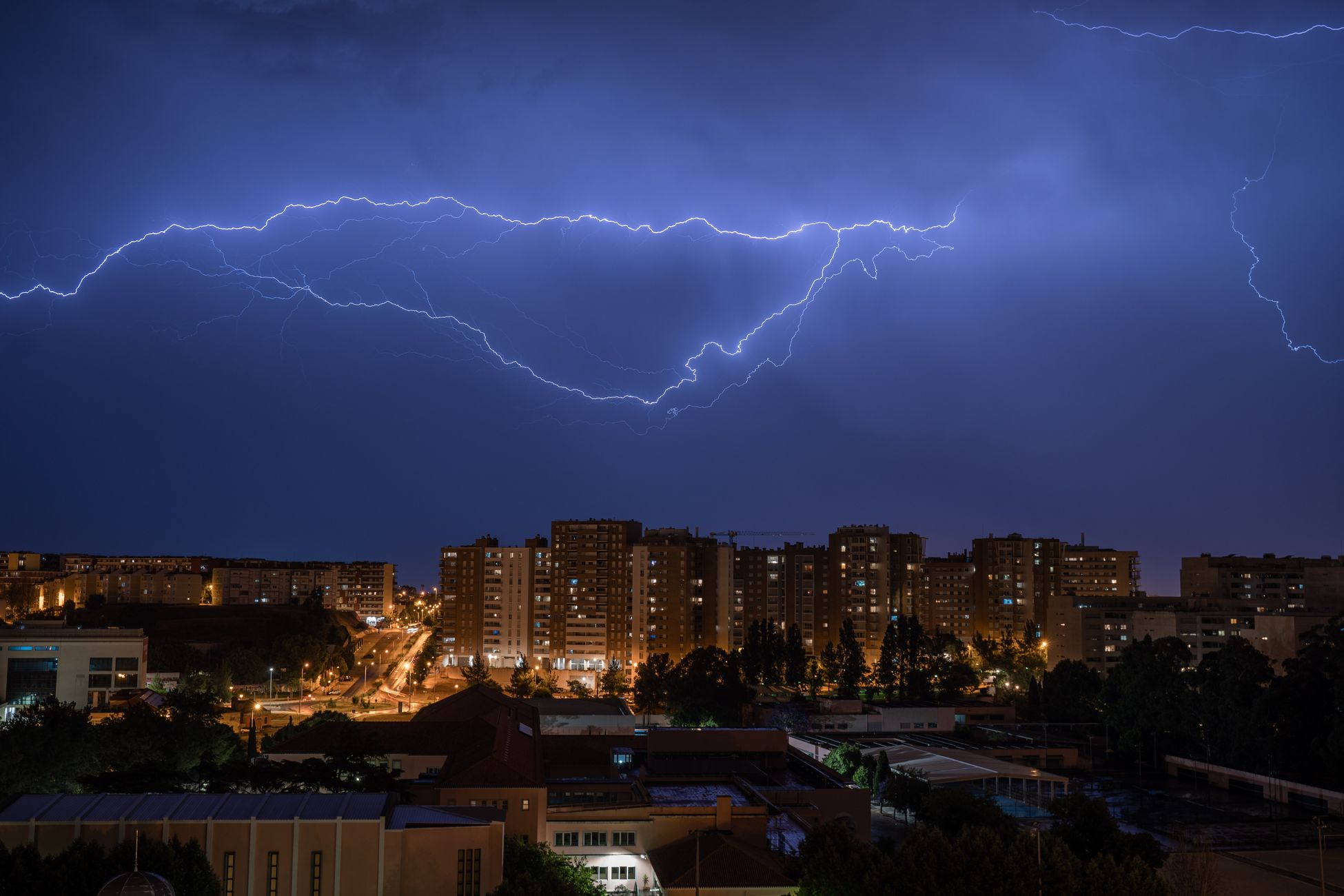
At 2:44 a.m. Eastern time on March 13, 1989, a surge of electric current racing through the bedrock under Quebec tripped a single capacitor at the James Bay hydroelectric complex, and within 90 seconds the entire Hydro-Québec grid had collapsed. Six million people lost power before most of them had stirred from sleep. Outside, the temperature was hovering near minus 15 Celsius. The culprit was not a downed tree or a software bug but the Sun, which had hurled a coronal mass ejection at Earth four days earlier, and whose magnetic shockwave was now rippling through the rocks of the Canadian Shield like a tide.
The blackout lasted nine hours for most customers. Some industrial sites waited days. It remains the textbook example of what a geomagnetic storm can do to a modern electrical system, and the reason space-weather forecasters now watch the Sun with the same anxious attention that meteorologists give to hurricanes.
The storm that started 93 million miles away
On March 9, 1989, a large active region on the Sun produced an X-class flare and launched a cloud of magnetized plasma — a coronal mass ejection — directly at Earth. It travelled the 93 million miles in about 55 hours, faster than the average CME, and slammed into Earth’s magnetosphere late on March 12. The interplanetary magnetic field embedded in the cloud was pointed sharply southward, which is the worst possible orientation: it lets solar plasma couple efficiently with Earth’s own magnetic field and pour energy into the upper atmosphere.
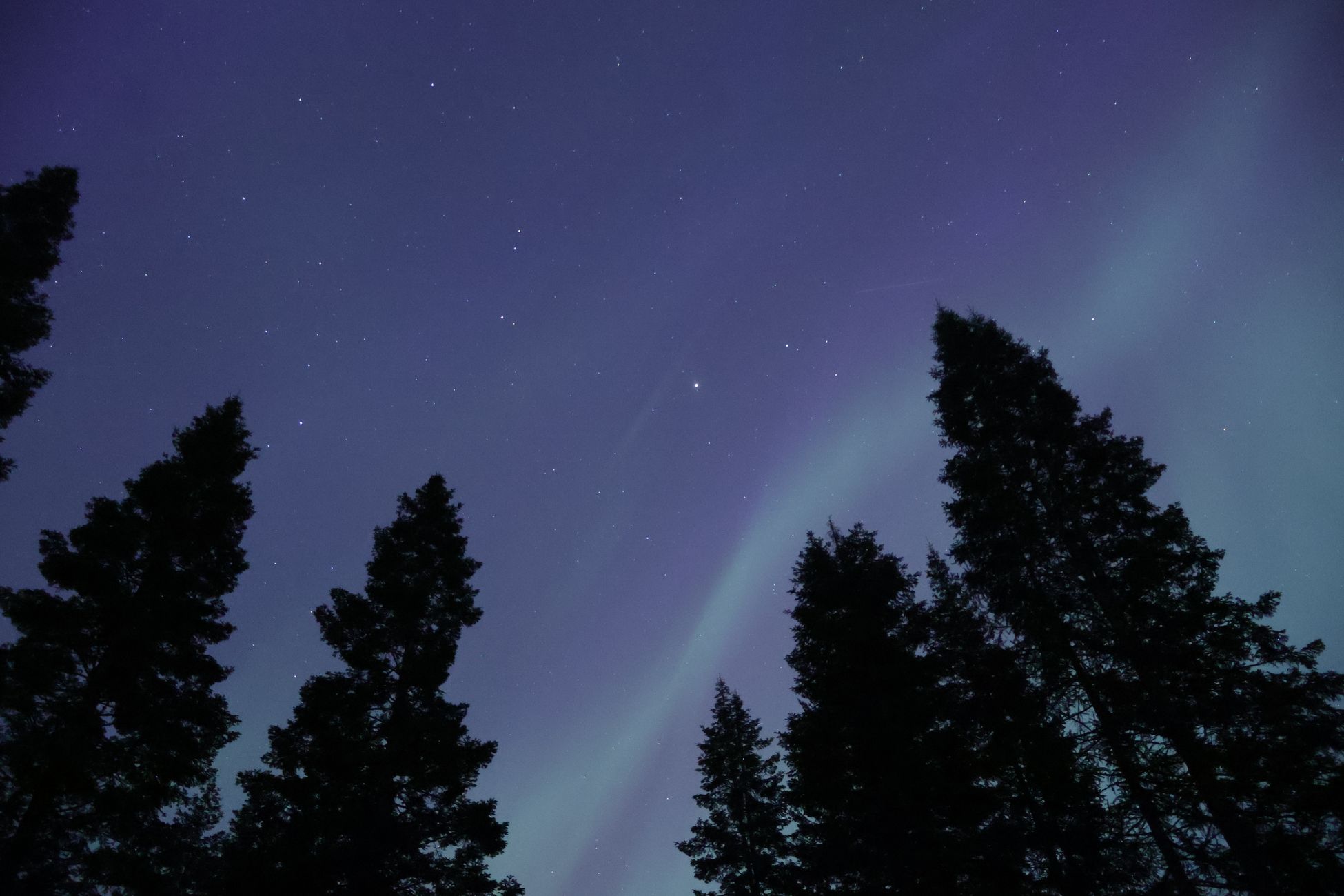
The result was a geomagnetic storm that pushed the auroral oval far south of its usual perch around the Arctic Circle. People in Florida, Texas, and Cuba reported red and green curtains overhead. Pilots over the Caribbean radioed in to ask what they were seeing. In parts of the American South, some residents called fire departments, convinced the glow on the horizon was a distant blaze.
Why a beautiful sky took down a grid
Auroras are the visible signature of something invisible: enormous electric currents flowing through the ionosphere about 100 kilometres up. Those currents have magnetic fields of their own, and when those fields shift quickly they induce voltages in any long conductor on the ground below. Power lines, pipelines, railway signals, and undersea cables all act as unintentional antennas. Engineers call the resulting flow a geomagnetically induced current, or GIC.
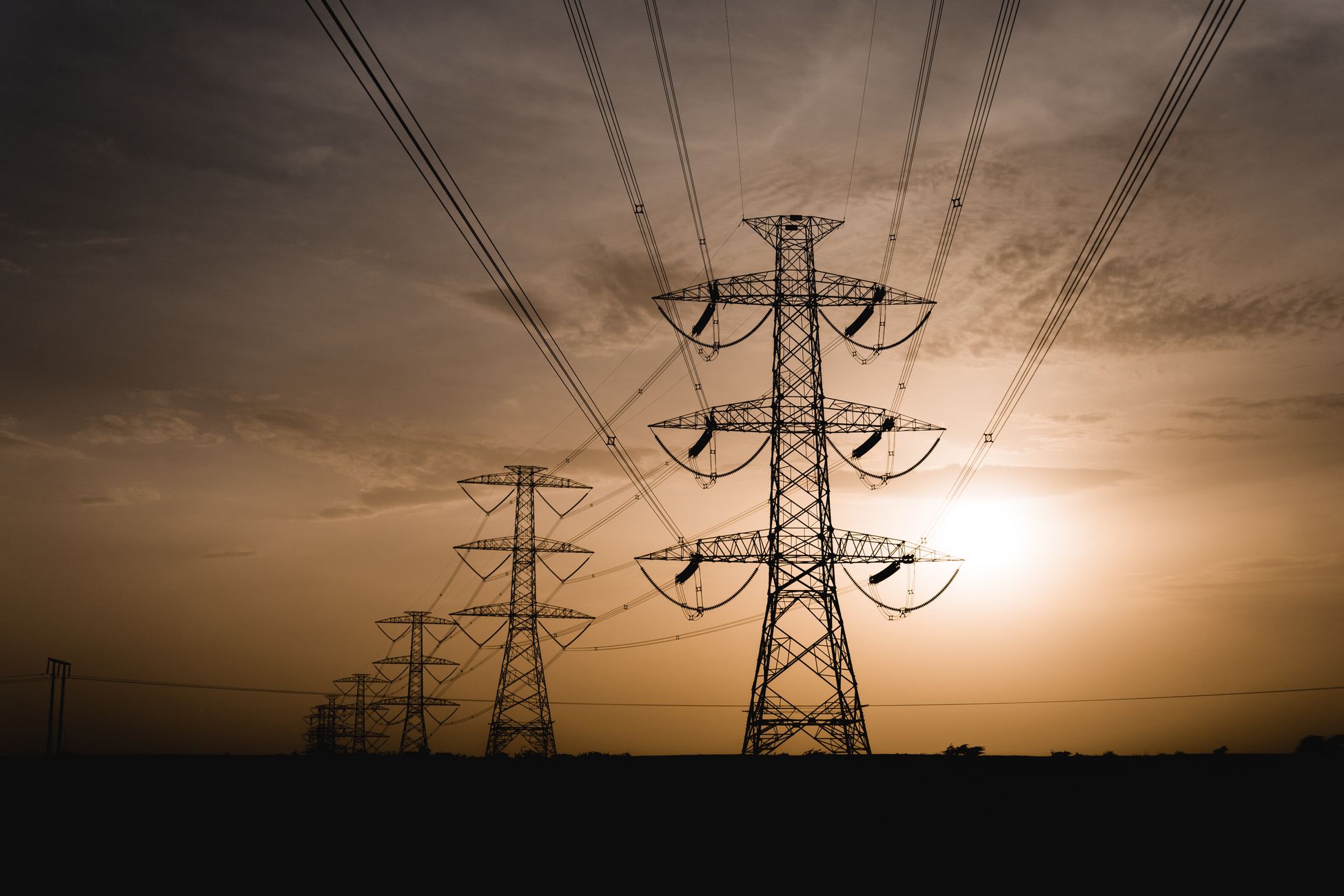
Quebec was uniquely vulnerable. The province sits on the Canadian Shield, a vast slab of ancient igneous rock that conducts electricity poorly. When the ground refuses to carry current, the current finds the next best path — the long high-voltage transmission lines running south from the James Bay dams to Montreal. Hydro-Québec’s network stretches more than 1,000 kilometres from generators to load centres, which is almost ideal geometry for picking up induced currents from a storm overhead.
At 2:44:17 a.m., a static VAR compensator at the Chibougamau substation tripped offline. Within seconds, four more tripped in a cascading sequence. The 735-kilovolt lines from James Bay lost their voltage support. Frequency on the grid plunged. Automatic protection relays did exactly what they were designed to do: they isolated equipment to save it. Generators disconnected. The whole province went dark in less time than it takes to brush your teeth.
Nine hours in a frozen city
March in Quebec is still winter. Homes that lost heat began cooling within minutes. Hospitals switched to backup generators. The Montreal Metro, which carried hundreds of thousands of commuters each day, ground to a halt before the morning rush; transit authorities ran emergency buses where they could. Traffic lights died at intersections across Montreal and Quebec City. The Montreal Stock Exchange opened late. Schools were closed by mid-morning because boilers had no power for circulation pumps.
Hydro-Québec’s operators worked through the night to restore the grid piece by piece, bringing dams back online in careful sequence to avoid retripping the protection systems. About 83 percent of load was restored within nine hours. Some industrial customers — aluminum smelters, pulp mills — waited longer because their loads were too large to reconnect to a recovering grid. The total cost to the Quebec economy was estimated at several hundred million Canadian dollars, with Hydro-Québec itself absorbing equipment damage and lost revenue.
The same storm reached deep into the United States
The March 1989 storm did not stop at the border. A large step-up transformer at the Salem Nuclear Power Plant in New Jersey suffered permanent damage from induced currents — its windings overheated, and the unit had to be replaced. Utilities from Virginia to Minnesota reported voltage swings, tripped capacitors, and damaged equipment. The system operators of the New York Power Pool and PJM Interconnection later told regulators that they had come close to cascading failures of their own.
Communications were hit too. Several geostationary satellites tumbled briefly as their attitude-control systems struggled with the charged environment. GOES weather satellites lost data. Shortwave radio went silent across much of the world for hours. The U.S. military’s space-tracking radars temporarily lost track of more than 1,000 objects in low Earth orbit because the upper atmosphere had puffed outward from the energy dump and dragged satellites into slightly different orbits than the catalog said they should be in.
A storm we have seen before, and will see again
The 1989 event was severe, but it was not the worst the Sun has ever delivered. In September 1859, a series of solar flares and CMEs produced what is now called the Carrington Event, after the English astronomer Richard Carrington, who happened to be sketching sunspots when one of the flares erupted. Telegraph lines across North America and Europe sparked and caught fire. Operators received electric shocks. Some telegraphs continued to send messages after being disconnected from their batteries, powered entirely by the currents induced in the wires.
If a Carrington-class storm hit a fully electrified, internet-dependent civilization, the consequences would be far worse than 1989. Researchers have warned that a sufficiently strong geomagnetic storm could knock out power and internet worldwide, with undersea cable repeaters and continent-scale transformers especially exposed. Replacement times for the largest high-voltage transformers can run to a year or more, because only a handful of factories in the world build them and they ship by specialized rail car.
What 90 seconds in the dark taught the grid
The Quebec blackout became a turning point for space-weather policy. In its aftermath, Hydro-Québec invested heavily in series capacitors, neutral blocking devices, and other equipment designed to keep induced currents from cascading through the network. The North American Electric Reliability Corporation eventually adopted mandatory standards requiring large utilities to assess their vulnerability to geomagnetic disturbances and to monitor the Sun in real time.
The U.S. National Oceanic and Atmospheric Administration now runs a Space Weather Prediction Center in Boulder that issues forecasts on the same five-level scale used for hurricanes. The European Space Agency operates its own Space Weather Service Network. NASA’s DSCOVR and ACE spacecraft sit a million miles upstream of Earth at the L1 Lagrange point, sniffing the solar wind and giving grid operators between 15 and 60 minutes of warning before a CME’s shock front arrives. Work on predicting and mitigating auroral impacts on infrastructure has become a small industry of its own.
Other kinds of infrastructure are catching up more slowly. Pipelines now use corrosion-monitoring systems that account for GICs. Railway signalling in high-latitude countries has been hardened in places. But the explosion of low-latitude solar farms, long-distance HVDC lines, and undersea fibre repeaters means the modern grid presents more antennas to the sky than the 1989 grid did, not fewer.
Why the cold mattered as much as the dark
A blackout in March in Quebec is not the same as a blackout in June in California. Heating systems, even gas furnaces, rely on electric blowers and thermostats. Pipes in unheated buildings begin to freeze within hours. Public-health observations have documented how sudden disruption to daily light cycles and sleep can affect cardiovascular health, with circadian rhythms linked to sudden cardiac death in ways that compound the stress of any large-scale emergency. More recent work has continued to refine that picture, with nighttime light exposure correlated with cardiovascular risk and reinforcing daily rhythms shown to aid stroke recovery. The 1989 event was short enough that those long-term effects did not cluster visibly, but a multi-day blackout in winter would be a different story.
The vulnerability of basic services to compounding shocks has become a recurring theme in disaster planning. After the Oahu floods of 2026, analysts noted that the island’s flood emergency was also an infrastructure warning: the systems that carry water, power, and data were never designed for the kinds of stress they now routinely receive. A solar storm is the same kind of warning written in a different alphabet.
The Sun on a quiet morning
The Sun is now climbing through Solar Cycle 25, which peaked in 2024 and 2025 and is still producing frequent X-class flares. Forecasters do not expect a Carrington-class event in any given year — the statistics suggest a roughly 1 to 2 percent annual probability — but over a human lifetime the odds grow uncomfortable.
On a clear March night, an aurora over Montreal is a beautiful thing: pale green curtains shifting against the black, the same colors that were visible from Cuba and Texas in 1989. They are also a reminder that the grid beneath the city is humming inside a magnetic environment shaped by a star 93 million miles away. For 90 seconds in the small hours of March 13, 1989, that star reached down and switched the lights off. The lamps came back on by lunchtime. The lesson has been a longer time settling in.
