

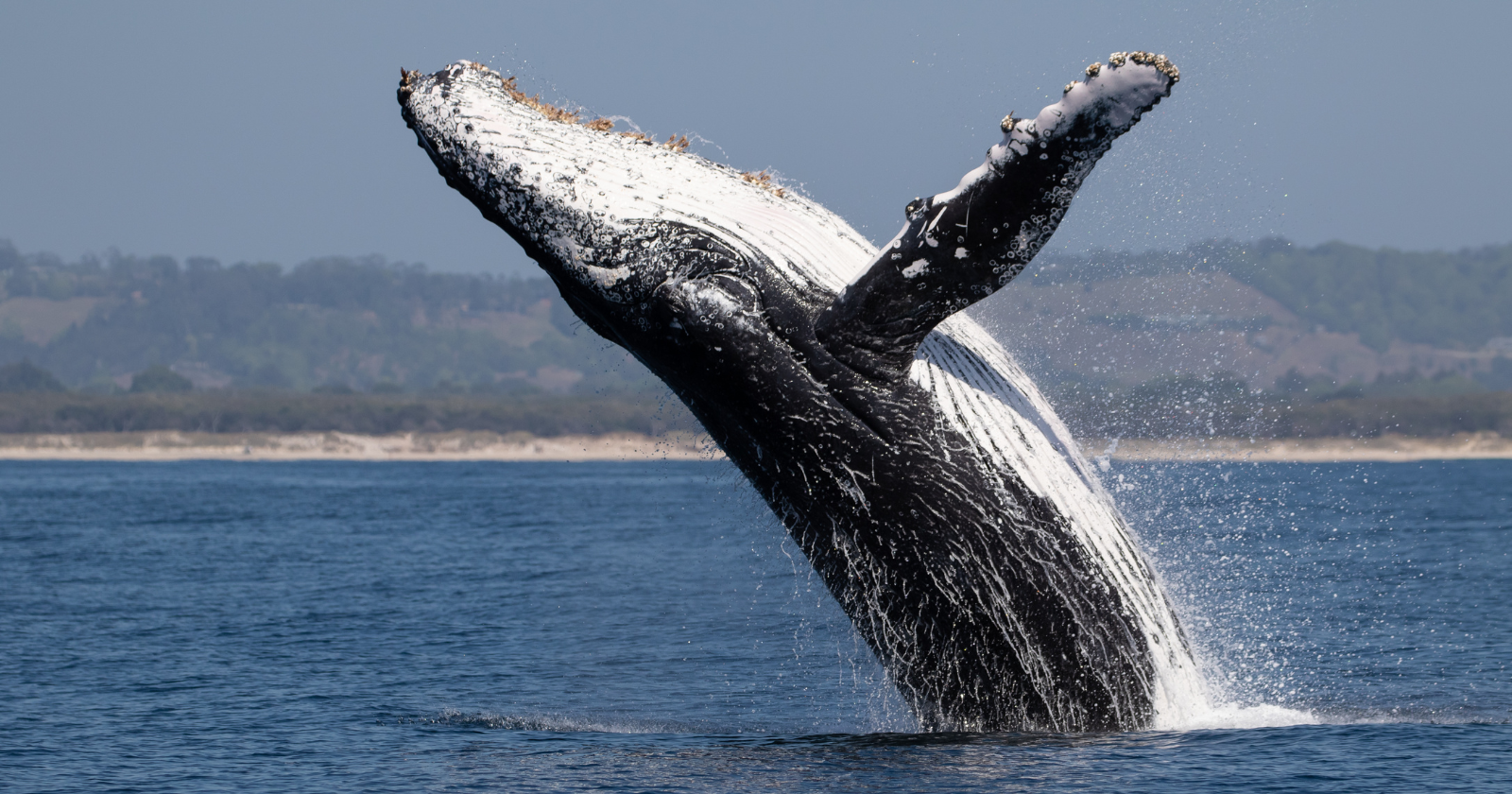
One whale skeleton on the deep seafloor can host an entire neighbourhood of animals. On whale skeletons studied, researchers have found as many as 190 species of macroscopic bottom-dwelling animals on a single skeleton. Biologists call the phenomenon a whale fall, and the name is almost literal: a body falls, and an oasis assembles around it.
The setting matters. The abyssal plain is one of the hungriest places on Earth, a soft floor that lives on whatever scraps drift down from sunlit water far above. A great whale arriving intact is a sudden windfall, tens of tonnes of food dropped onto a surface that normally goes without.
What follows is a sequence of feasts, each handing off to the next over years.
What actually happens to the body
Researchers describe the process in overlapping stages. First come the mobile scavengers. Hagfish, sleeper sharks, crabs and their kind strip the soft tissue, a stage that can run up to two years for a large animal. Once the flesh is gone, a wave of smaller opportunists settles onto the bared bones and the enriched sediment around them.
In what is called the sulfophilic stage, bacteria break down the fats locked inside the skeleton and release hydrogen sulphide, one of the same chemical currencies that helps fuel life at hydrothermal vents and cold seeps. The Smithsonian describes this final stage as the point when bacteria break down lipids trapped inside the bones, generating sulfur and supporting a larger community of rare species.
That chemistry can sustain a community of chemosynthetic animals for a long time. The Natural History Museum puts this stage at roughly 10 to 50 years, and one large whale-fall community has been tracked for more than 50 years.
The worms that eat bone
The bones themselves turned out to shelter one of the stranger residents in the deep. In 2002, on a whale fall about three kilometres down in Monterey Canyon, scientists found a new genus of worm they named Osedax.
Adrian Glover, a deep-sea biodiversity researcher at the Natural History Museum in London, calls them “the most important animals responsible for the process of breaking down the bones,” though the large scavengers do plenty of reducing earlier on.
An individual Osedax can spend as long as about a decade feeding on a single whale’s bones. That figure is worth holding against the popular claim that the worms gnaw for the better part of a century: the documented number for an individual worm is closer to ten years, not eighty.
What made the worms possible is the strange economy of the deep. As Robert Vrijenhoek, the MBARI evolutionary biologist who led the discovery, put it: “When carcasses fall to the bottom of the ocean, there are no hyenas down there to eat the bones.” Osedax is the exception that filled the gap.
How many are down there right now
For all that researchers know about how whale falls work, almost no one has watched a natural whale fall unfold from death and sinking through the whole ecological succession. Fujiwara et al. note that, since the first observations in 1987, several natural whale falls have been opportunistically encountered during remotely operated vehicle, submersible and trawl deployments.
For years, one of the deepest confirmed natural examples was an Antarctic minke whale resting at 4,204 metres in the South-West Atlantic. Just this month, researchers reported active whale-fall ecosystems in the Diamantina Zone of the southeastern Indian Ocean, including one at 6,789 metres, pushing the known depth range far beyond that earlier record.
When Vrijenhoek’s team found unexpected genetic diversity in their bone-eating worms, the result led him to a simple inference: “there must be a lot of dead whales out there.” That was a deduction from genetics rather than a count, and even with new discoveries, the watched record remains tiny compared with the deep ocean itself.
The honest answer to how many active whale falls are feeding deep-sea communities at this moment is that no one really knows, only that the number seen by human eyes is a sliver of the number that must be there.