

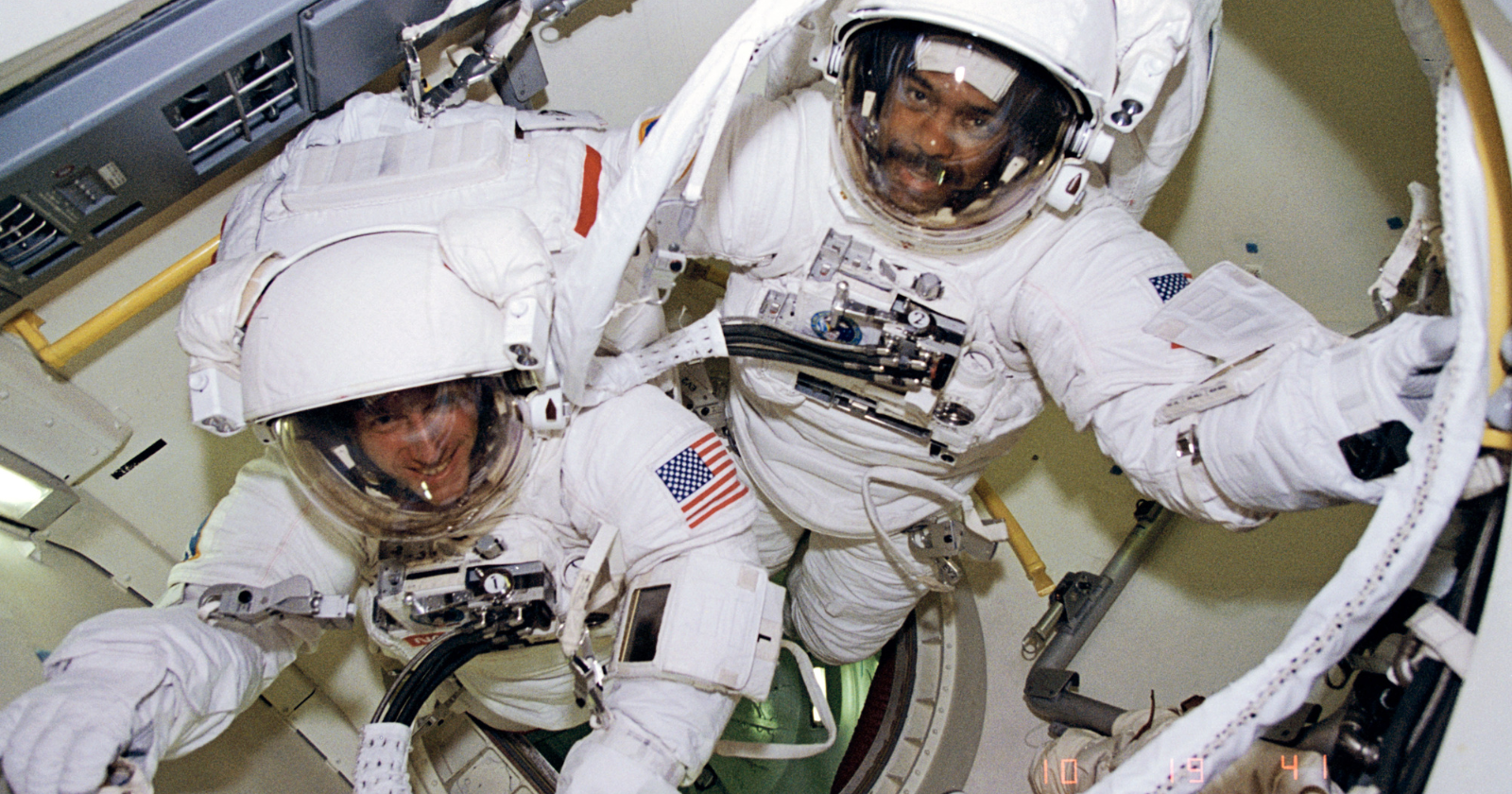
For the first forty years of human spaceflight, getting into space required being a professional astronaut or cosmonaut. The selection processes were intensely competitive, the training programmes took years, the candidates were chosen from elite military pilot or scientific backgrounds, and the small number of people who eventually made it through the filtering and onto a launch vehicle were essentially all employees of the few national space agencies that operated launch programmes. From 1961 through 2001, approximately 400 individuals went to space, every one of them a professional. The first paying civilian, the American businessman Dennis Tito, finally reached the International Space Station in April 2001 by purchasing a seat on a Russian Soyuz for approximately $20 million. Six more spaceflight participants followed over the next eight years, all via the same Russian-operated route. Then the door closed. From 2009 to 2021, no private citizen reached space at all. The institutional pipeline that had briefly opened during the Russian post-Soviet financial squeeze closed again as the ISS partnership stabilised.
According to a detailed industry flight log of every commercial space tourism mission to date, the reopening of that door in 2021 was not gradual but discontinuous. Within a single ten-week period — Richard Branson on Virgin Galactic’s VSS Unity on 11 July 2021, Jeff Bezos on Blue Origin’s New Shepard on 20 July 2021, and Jared Isaacman’s all-civilian Inspiration4 mission on SpaceX’s Crew Dragon in September 2021 — three different commercial providers began operating crewed flights for paying customers. The civilian-to-space pipeline that had been closed for twelve years suddenly had three independent operational paths. The cumulative number of private civilians flown to space, which had been seven for over a decade, began to climb rapidly. By the end of 2022 it had passed twenty. By the end of 2024 it had passed eighty. By early 2026 the figure had reached approximately 120, and despite Blue Origin’s January 2026 decision to pause New Shepard flights to focus on lunar missions, the underlying trajectory has continued.
The arithmetic of the shift
The total number of human beings who have left Earth’s atmosphere across the entire history of spaceflight is, by current estimates, approximately 700. NASA has contributed roughly 360 of these. The Soviet and subsequent Russian programmes have contributed approximately 135. The European Space Agency, JAXA in Japan, the Canadian Space Agency, the Chinese taikonaut programme, and several smaller national programmes account for most of the rest. The 120 commercial civilians who have flown since 2021 represent approximately 17 percent of this cumulative total — roughly one in six of every person who has ever crossed into space, all of them in the past five years, almost none of them with the professional training that defined every previous generation of spacefarer.
The rate dynamics are the more striking part. Per CBS News’s coverage of the broader commercial spaceflight phenomenon, the major national astronaut corps have been operating at roughly stable launch cadences for the past decade — NASA sends approximately 8 to 12 astronauts to the ISS per year, Roscosmos sends roughly 4 to 6 cosmonauts, the Chinese taikonaut programme launches a similar number to its Tiangong space station, and ESA contributes a handful through its partnership arrangements. The total professional astronaut launch rate sits at roughly 25 to 30 humans per year, and has been at this level for most of the post-Shuttle era. The commercial civilian launch rate, by contrast, was effectively zero from 2009 to 2021 and has been climbing rapidly since. Blue Origin’s New Shepard alone flew approximately 30 civilians across multiple missions in 2024-2025. Virgin Galactic flew another seven commercial missions before pausing operations in 2024 for an upgraded vehicle. SpaceX flew the Polaris Dawn mission (four civilians) in September 2024 and continues operating crewed Crew Dragon flights for paying customers. Multiple Axiom Space missions have carried paying civilians to the ISS. The total commercial civilian launch rate for 2024-2025 substantially exceeded the professional astronaut rate.
What civilian flights actually involve
The two halves of the commercial spaceflight industry — suborbital and orbital — are different enough that they are essentially separate products. Suborbital flights, operated by Blue Origin (New Shepard) and Virgin Galactic, briefly cross the boundary of space (the internationally recognised Kármán line at 100 kilometres altitude, or the US-recognised 80 kilometres) and return immediately. The full flight, from launch to landing, typically lasts about 10 to 12 minutes. Passengers experience approximately 3 to 6 minutes of weightlessness at apogee, see the curvature of Earth and the blackness of space through windows, and then re-enter and land. Ticket prices range from approximately $200,000 to $600,000 depending on operator. As reported by Mexico Business News’s industry overview, suborbital flights account for the substantial majority of commercial civilian spaceflights to date by passenger count.
Orbital flights are an entirely different proposition. SpaceX’s Crew Dragon and Axiom Space’s missions to the International Space Station place passengers into sustained low Earth orbit, with mission durations typically ranging from several days to several weeks. Ticket prices for orbital missions start at approximately $55 million and can exceed $200 million for chartered Crew Dragon flights. The 2024 Polaris Dawn mission, funded by Jared Isaacman and operated by SpaceX, reached an altitude of 1,400 kilometres — the highest crewed Earth orbit since the Apollo programme — and included the first commercial spacewalk in history. The orbital civilian flights are substantially rarer than suborbital ones (fewer than 20 total individuals to date) but represent the more technologically ambitious frontier of the commercial spaceflight industry.
What the trend means
As covered by a March 2026 Yahoo News analysis of Blue Origin’s decision to pause New Shepard operations, the commercial spaceflight industry is now mature enough that operational decisions by individual providers (Virgin Galactic pausing for vehicle upgrades, Blue Origin pausing to redirect engineering resources to lunar missions) substantially affect industry-wide launch cadence but do not threaten the basic existence of the category. Multiple additional providers are at various stages of operational development: Vast’s Haven-1, a single-module commercial space station, is targeted for launch on a SpaceX Falcon 9 in May 2026, with the company aiming to become the world’s first standalone commercial space station operator; Sierra Space’s Dream Chaser spaceplane is in late-stage development; and Axiom Space’s commercial space station is intended to begin operations and eventually replace the ISS by 2030. Virgin Galactic’s Delta-class vehicle, designed for monthly commercial flights, is targeted to enter operations in late 2026.
The structural shift that the cumulative 120 commercial civilians represent is not yet visible at the level of cultural recognition. Most people, asked how many private citizens have been to space, would probably guess a number an order of magnitude lower. The transition from spaceflight as an exclusively professional activity to spaceflight as a commercial product purchasable by paying customers has, by every available indication, now happened — quietly, gradually, and faster than most observers anticipated. The next question is whether the trajectory continues. If the rate-acceleration of the past five years extends through the rest of the decade, the cumulative number of private civilians in space will, by 2030, substantially exceed the cumulative number of professional astronauts who flew across the entire 60-year history of spaceflight before commercial operations began. Whether that crossing point gets noticed at the time, or whether it gets registered only in retrospect like most of the structural shifts of the past several years, is a separate question. The numbers themselves are no longer particularly contestable.