

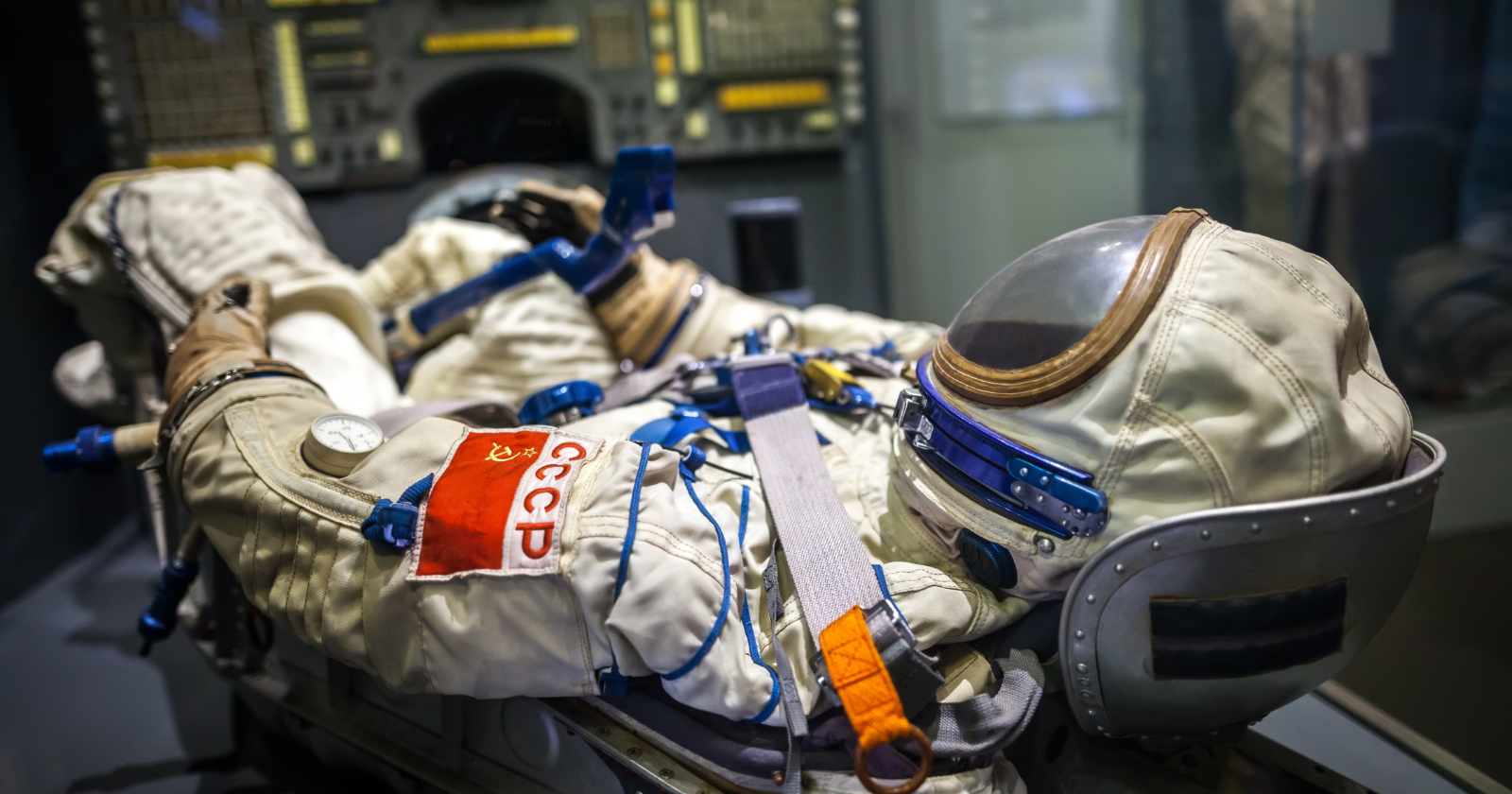
The record sits at the top of every list of human spaceflight endurance achievements, has been there since 1995, and is currently held by a man who has been dead for three years. Valeri Polyakov, born in Tula, Russia in 1942, trained as a medical doctor specialising in space medicine before joining the Soviet cosmonaut corps in 1972, and spent the better part of his subsequent career attempting to answer a single question with his own body: whether a human being could survive, biologically and psychologically, the round-trip duration of a flight to Mars. His first flight, in 1988-1989, lasted 240 days — at the time among the longest space missions ever attempted. His second flight, launched on 8 January 1994 aboard Soyuz TM-18, was specifically planned to extend beyond the projected duration of a Mars mission. He stayed in space for 437 days. He returned on 22 March 1995. No human being has stayed in space continuously for longer since.
According to Astronomy.com’s 2022 obituary of Polyakov following his death at age 80, the specific scientific purpose of the 437-day mission was Mars-mission validation. The transit time to Mars on a standard low-energy trajectory is approximately 7 to 9 months in each direction; combined with a surface stay of approximately 1 year (the typical “long-stay” mission profile), the total mission duration for a crewed Mars expedition would be approximately 14 to 18 months. Polyakov’s 437 days — slightly over 14 and a half months — covers the round-trip duration of the shortest plausible Mars mission profile. The Soviet (later Russian) space medicine community had been planning a Mars mission, in some form, since the 1960s; Polyakov’s flight was the medical proof-of-concept that the human body could endure the required time in microgravity.
What the mission actually required
Polyakov’s working environment for those 437 days was the Mir space station — a Soviet-era orbital outpost launched in 1986, roughly the size of a school bus, with a total internal working volume of approximately 350 cubic metres distributed across multiple modules connected by narrow passageways. By 1994, Mir was already eight years old and showing signs of wear. The cooling system was unreliable. The toilet had recurring problems. The communications systems were limited by the standards even of the time. Polyakov’s living conditions were substantially harsher than the conditions available to modern astronauts on the International Space Station, which has approximately three times the pressurised volume of Mir and substantially more comfortable accommodations across essentially every dimension. Polyakov adapted by establishing a strict daily routine: approximately two hours of mandatory exercise (a mix of treadmill running and resistance training), scientific work, medical self-experimentation, communications with ground controllers, and disciplined sleep schedules.
As reported by RocketSTEM’s coverage of the mission, Polyakov’s medical training proved decisive. He was, in essential respects, both the experimental subject and the experimenter. He documented in detail the physiological changes his body underwent over the 14-and-a-half months: bone density loss in weight-bearing skeletal regions at approximately 1 to 2 percent per month, muscle atrophy despite his exercise protocol, cardiovascular changes including some loss of cardiac muscle mass, and the cluster of vision-related changes that have since been named Spaceflight-Associated Neuro-ocular Syndrome. He tested countermeasures against these changes, refined the exercise protocols in real time, and produced the medical baseline against which all subsequent long-duration spaceflight has been measured.
The landing
The moment that became the iconic image of the mission was not the launch, not any specific event during the 14 months in orbit, but the landing itself. As described in Britannica’s biographical entry on Polyakov, when the Soyuz TM-20 capsule containing Polyakov touched down on the steppes of Kazakhstan on 22 March 1995, ground crews approached with stretchers, fully expecting that a man who had spent 14.5 months in microgravity would be unable to support his own weight. Polyakov refused the stretcher. He climbed out of the capsule on his own, walked the short distance to a nearby lawn chair, and sat down. The gesture was deliberate. He had spent the entire mission, and arguably his entire career, attempting to demonstrate that long-duration spaceflight did not necessarily produce a human being too physiologically broken to function on arrival. Walking himself from the capsule to the chair was the visible answer.
His first words to the assembled press, in Russian, translated to the equivalent of: “We can fly to Mars.” The statement was not a metaphor or an aspirational quote. It was a clinical assessment from a doctor who had just personally completed the experiment.
Why the record still stands
Per Space.com’s history of ultra-long-duration spaceflight, no human being has stayed in space continuously for as long as Polyakov did in any of the 31 years since his return. NASA’s Scott Kelly came within approximately three months, completing 340 days aboard the ISS in 2015-2016 as part of the agency’s “Year in Space” study. NASA’s Christina Koch reached 328 days in 2019-2020. NASA astronaut Frank Rubio set the American single-mission record at 371 days during an unplanned mission extension in 2022-2023. The current cumulative space-time record is held by the Russian cosmonaut Oleg Kononenko, who has accumulated approximately 1,110 days across five separate missions — but no individual mission of his, or any other cosmonaut’s, has exceeded Polyakov’s 437 consecutive days.
The reason the record has not been broken is not that humans cannot endure longer missions — Polyakov demonstrated that they can. It is that the modern crewed-spaceflight programmes have, for various operational, political, and risk-management reasons, settled on six-month rotations as the standard ISS expedition duration, with occasional yearlong missions conducted as specific scientific experiments. The radiation exposure accumulated during longer missions, in low Earth orbit, is substantial; over the full lifetime of a cosmonaut or astronaut, multiple yearlong missions are generally not considered medically advisable. Polyakov accepted this risk in 1994 because the mission was designed to deliver a specific scientific result that no shorter flight could provide. The result was delivered. The result has not been substantially improved upon since.
The peculiar feature of the current moment is that Polyakov’s mission was conducted to validate human Mars exploration, and 31 years later, no human being has yet flown to Mars. The medical baseline is in place. The proof of biological feasibility is on the books. The next step — actually sending a crew to Mars — has been planned, replanned, postponed, and refigured by multiple space agencies across three decades, with the leading current candidate (SpaceX’s Starship-based architecture) targeting the early 2030s. Whether the eventual crew on the first Mars mission will benefit directly from the data Polyakov collected, or whether the record-holder will quietly remain the holder of a piece of human endurance that was waiting for a use case that never materialised, is one of the open questions of the next decade. The 437 days are sitting on a shelf. The doctor who walked himself off the Soyuz in March 1995 is no longer alive to see whether they get used.