
The quote has a clean, precise quality that most observations about fear do not. Reid Wiseman posted it to Twitter in October 2014, a few days after completing the first spacewalk of Expedition 41 aboard the International Space Station: “While #spacewalking I realized something: I used to think I was scared of heights but now I know I was just scared of gravity.”
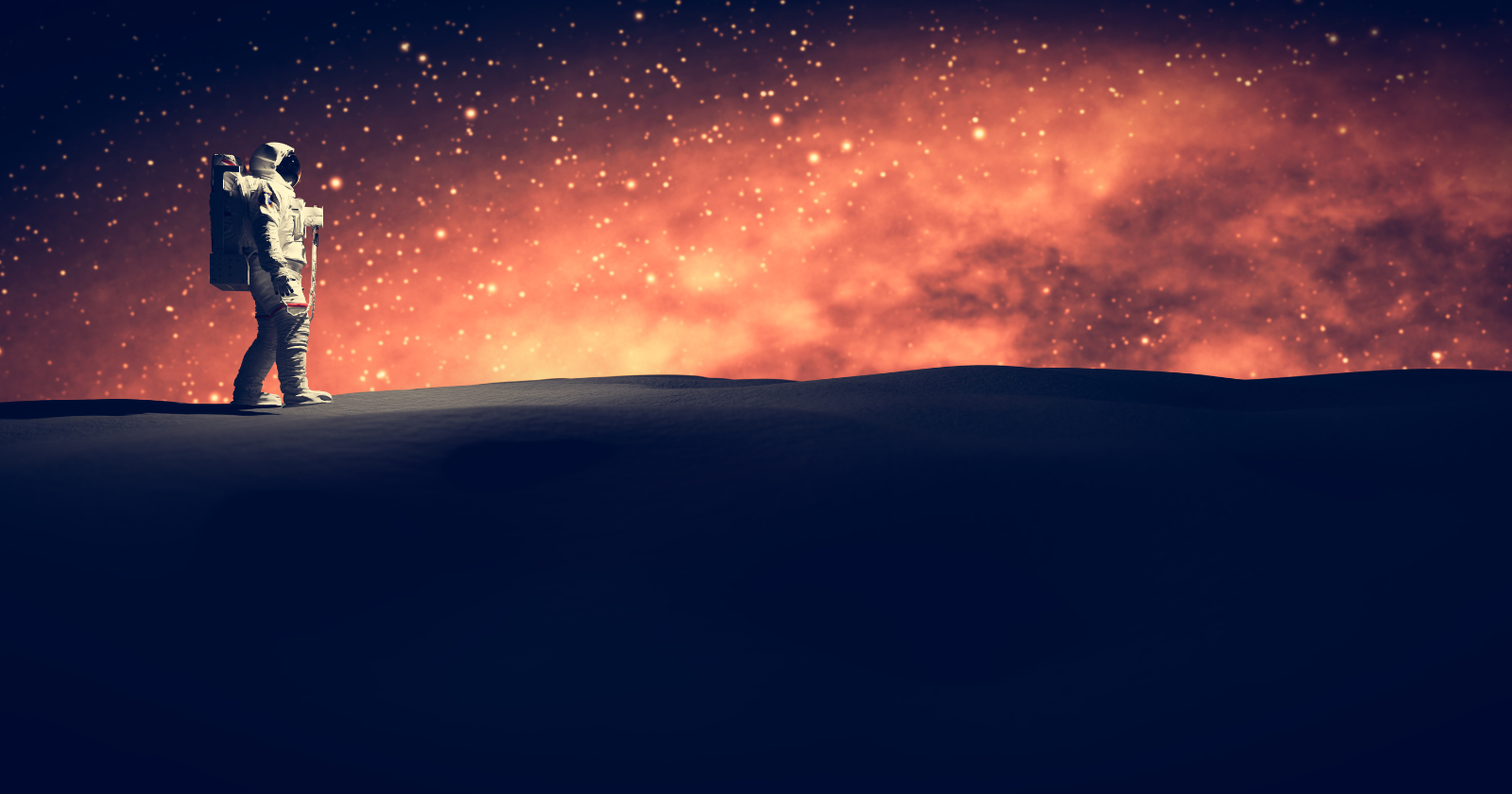
He was floating outside the station at roughly 400 kilometres above Earth, working with European Space Agency astronaut Alexander Gerst for six hours and thirteen minutes on cooling pump relocation and external robotics work. The spacewalk was conducted on 7 October 2014. At that altitude, with nothing below and the planet curving away at the edge of peripheral vision, Wiseman noticed the absence of something he had expected to find: the fear he thought he had.
The quote has resurfaced in the months around the Artemis II mission, for which Wiseman serves as commander. On 1 April 2026, he launched as part of the first crewed mission to the Moon since Gene Cernan commanded Apollo 17 in December 1972. The insight is more than a decade old. It reads differently now, from a trajectory that takes Wiseman and his crew past the Moon and back.
The distinction itself
The difference between fearing heights and fearing gravity sounds like wordplay until you hold it carefully. Both terms are commonly used to describe the same cluster of behaviour: the discomfort on balconies, the reluctance to stand near the edge of a cliff, the particular unease of a glass floor above a long drop. The behaviours are consistent. What Wiseman is questioning is the diagnosis.
A fear of heights, understood as a response to elevation and exposure, locates the problem in the altitude. But what most people are responding to in those situations is not the height in any abstract sense. It is the fall. It is gravity’s action on the body in the event of a slip. It is the trajectory the body would follow if the ledge gave way, and the irreversibility of what that trajectory leads to. The height is the setup. Gravity is the mechanism.
In microgravity, the mechanism has been removed. There is no directional pull toward a surface that recedes infinitely. There is no trajectory the body would follow if it lost contact with the station. An astronaut outside the ISS is not high in the sense that a person on a balcony is high, because the relationship between position and consequence that produces the fear of heights has been cancelled. Wiseman was in the most extreme version of elevation a human can occupy, and the thing he expected to feel was not there.
He worked backward from that absence to what it meant. The fear he had carried was not of heights. It was of gravity.
What reclassification does
This kind of revision is harder than it sounds. Most people who believe they fear heights have arranged something around that belief: the avoidance patterns, the decisions about which windows to stand near, the self-description offered when explaining a refusal. The label has become load-bearing. It organises behaviour.
What Wiseman found was that the label was describing a proxy rather than the cause. The altitude was consistently present when the fear appeared, so the altitude got named. But the consistent presence of altitude was itself a consistent presence of gravity’s consequences. The two variables had never been separated. Spacewalking separated them.
The implication is not that people who fear heights are wrong about their fear. The fear is real and the behaviour it produces is real. What shifts is the precision of the account. Someone who understands their discomfort as being about gravity’s consequences, rather than about altitude per se, has a different description of where the sensitivity lives. That description may or may not change anything practical about what they avoid. But it is more accurate, and accuracy in these matters has a certain value even when it is not immediately actionable.
Wiseman did not overcome a fear. He reclassified one. The distinction matters because overcoming implies confronting the same situation repeatedly until the response diminishes. Reclassification involves recognising that the situation you have been avoiding is not quite the thing you thought it was.
Twelve years and a lunar trajectory
Wiseman is 50 years old, a retired United States Navy captain and test pilot. As of April 2026, he is the commander of a mission carrying him further from Earth than any human since the Apollo programme. His crew includes NASA astronauts Christina Koch and Victor Glover and Canadian Space Agency astronaut Jeremy Hansen.
Artemis II is a circumlunar flyby, not a landing. The crew will loop around the Moon and return. The distances involved, the communication delays, the duration, make any analogy between this and an ISS spacewalk look quite small. The environment Wiseman occupied in 2014 was far more controlled than the one he entered in April 2026.
The 2014 insight does not become more or less true in this context. It is not predictive of how Wiseman or anyone else experiences the Artemis II mission specifically. But the Artemis II frame does something to the quote: it makes the scale of what he has learned to not be afraid of more visible. The man who discovered in 2014 that his fear was of gravity, not altitude, is now travelling to a distance at which Earth’s gravity is a much smaller presence.
There is a version of this story that treats it as an arc of overcoming, each mission more extreme than the last, the fear perpetually shrinking. That is not what Wiseman is describing. He is describing a single clarification, arrived at empirically, during six hours of work outside a space station. The rest followed from that, or did not.
The question the observation leaves open
Wiseman’s observation raises a question that has no clean answer: when we say we fear something, how often are we naming the right thing?
The fear of heights is a durable shorthand, but it collapses a set of variables that could in principle be separated. The height. The exposure. The lack of handholds. The awareness of what would happen if the body fell. The mental simulation of the fall itself. These are not identical. They would, if separated, suggest different things about where the sensitivity lives. Most people never encounter the conditions that would separate them. Wiseman did.
There is no general lesson here that applies predictably from person to person. What seems clear is that the precision of Wiseman’s account is a function of the specificity of the test. An environment that removed gravity as a variable allowed him to see that gravity was the variable that mattered. Ordinary environments, which almost always include gravity as a background constant, do not offer the same diagnostic clarity.
He has not said whether the reclassification changed anything else. He has said that he now knows which word to use.