
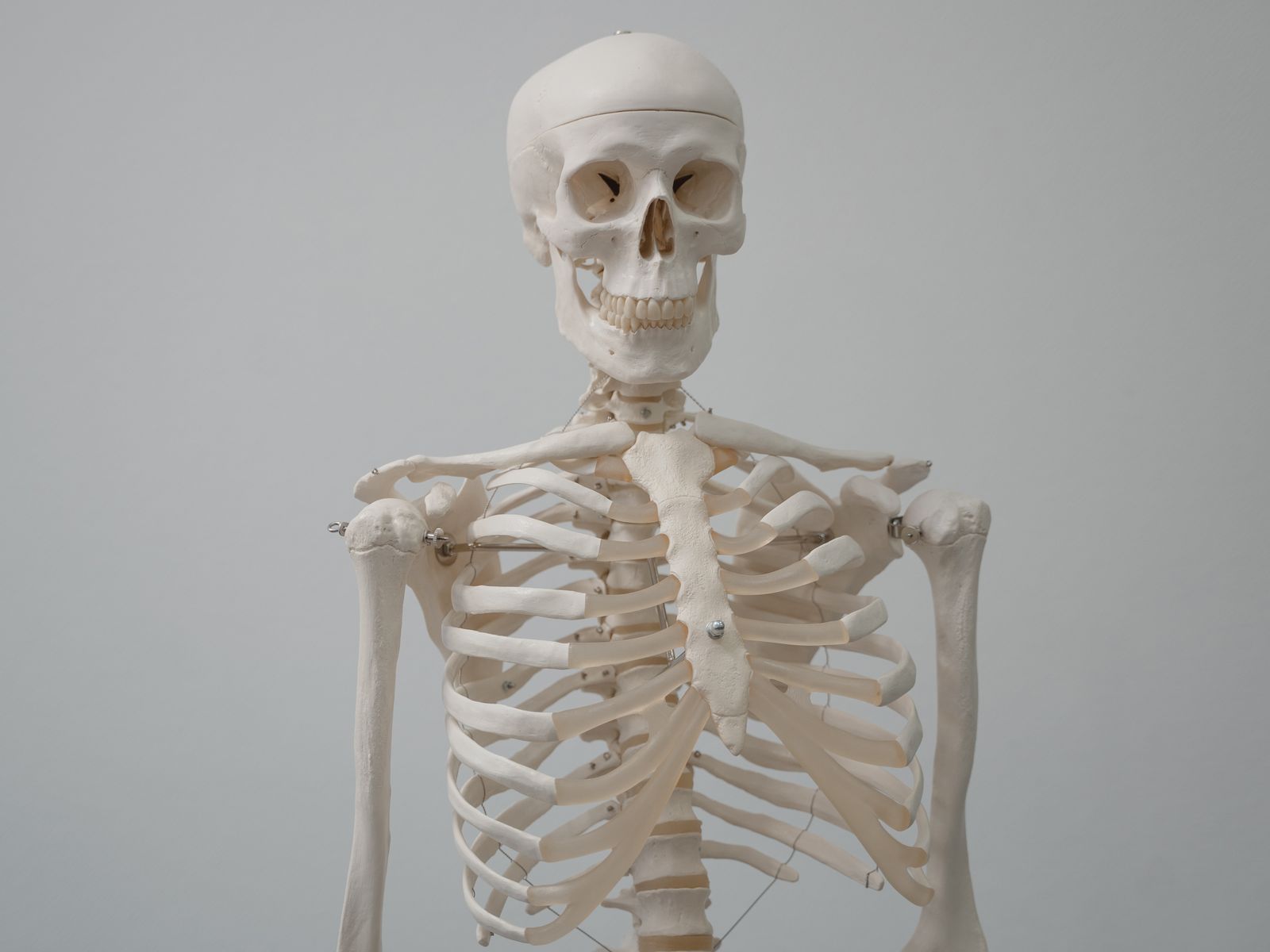
In 2016, a Reuters reporter wired payment to a body broker in Tennessee and received, by freight, a preserved human cervical spine. Two human heads followed in subsequent shipments. The total cost was $900, plus shipping. The transaction was traceable, taxable, and entirely legal. No federal statute was broken. No state statute was broken. The seller issued an invoice. The shipper handled the boxes like any other refrigerated cargo. The reporters had set out to prove a single point about the American body-parts industry: that a journalist with a credit card and a business address could buy human remains as easily as office furniture. They could.
The purchases became one of the most cited moments in the Reuters series The Body Trade, published in October 2017 — an investigation that mapped a barely-regulated supply chain running from hospice beds to medical training labs, military blast ranges, and overseas customers.
The $900 receipt
The broker was Restore Life USA, based in Elizabethton, Tennessee. Reuters reporter Brian Grow used his real name and his Thomson Reuters email account when he sent the initial inquiry on August 29, 2016. He asked about pricing for a cervical spine for a “research project involving non-transplant tissue.” The broker’s owner, James Byrd, replied within an hour. A delivery address in Minneapolis, a few miles from the University of Minnesota’s anatomy lab, was sufficient. Each head, and the spine, sold for $300. The heads arrived frozen. The spine arrived in a separate box. The invoice itemized each piece, plus shipping.
What made the transaction legal is a gap in American law that almost no donor family knows exists. Federal law prohibits the sale of human tissue for transplant — kidneys, livers, hearts destined for living recipients. It says nothing about bodies donated for research and education. For that category, the law permits charging a “reasonable amount” for the “processing” of a body part. Processing is not defined. Reasonable is not defined. The market sets the price.
That single ambiguity is the foundation of the entire American body-broker industry, as the BBC reported in its 2025 investigation of the trade. In the United Kingdom, the Human Tissue Act of 2004 makes it a criminal offense in almost all cases to profit from a body part. No comparable federal statute exists in the United States.
How a free donation becomes a product
The chain typically starts with a phone call to a grieving family. A loved one is in hospice. The funeral will cost thousands of dollars. A representative from a non-transplant tissue bank — the industry’s preferred term for body broker — offers an alternative: donate the body to medical science, and the company will handle transport, cremation of unused parts, and return of ashes, all at no cost.
The pitch is true on its face. The donation is free to the family. What the consent forms rarely make clear, in plain language, is what happens next. A torso may be sold to a device company testing a new spinal implant. A head may go to a dental school running an implant workshop. A pair of legs may end up at a Department of Defense contractor studying the effects of roadside bombs on lower limbs.
Reuters found that between 2011 and 2015, private brokers in the United States received at least 50,000 bodies and shipped more than 180,000 individual body parts across the country. A single donated body, dismembered and itemized, could generate thousands of dollars in revenue. A whole spine alone sold for hundreds of dollars — comparable to the $300 the Reuters team paid for the cervical section.
What the reporters did with the parts
After the shipments arrived, the reporters did not handle the remains themselves. The boxes were transferred to a courier specializing in human remains, who delivered them to Angela McArthur, director of the anatomy bequest program at the University of Minnesota. Using the date of death printed on the broker’s paperwork, Reuters tracked one donor down through obituaries: Cody Saunders, a 24-year-old from Tennessee whose family had donated his body because they could not afford a funeral. A DNA test confirmed the cervical spine had come from Cody. Reuters told his parents what had happened.
The point was not the gore. The point was the paperwork. Every step of the transaction generated a legitimate document. A bill of sale. A FedEx tracking number. A signed donor consent form on file at the broker. Nothing in any of those documents was a crime.
The pattern keeps repeating
The Reuters purchase was a controlled test. The real-world cases are darker.
In Arizona, the Biological Resource Center sold donated bodies for use in U.S. Army blast experiments without telling families. Jim Stauffer donated his mother Doris’s body in 2014, hoping her brain might contribute to Alzheimer’s research. He later learned from a Reuters reporter that her body had been strapped to a chair and detonated underneath in an IED simulation. A civil jury awarded $58 million to ten plaintiffs in 2019.
In Detroit, body broker Arthur Rathburn was convicted in January 2018 of shipping diseased body parts — including remains infected with HIV and hepatitis B and C — to medical and dental training programs without disclosing the contamination. Federal prosecutors charged him with wire fraud, because no federal law specifically banned what he had actually done. He was sentenced to nine years.
In Colorado, Megan Hess operated the Sunset Mesa Funeral Home and a body-broker business, Donor Services, out of the same building between 2010 and 2018. Families who had paid for cremation services received ashes that were not their loved ones’. Hess was sentenced to 20 years in federal prison in January 2023 — on mail fraud charges, because the sale of the bodies themselves was not a federal crime. Her mother, Shirley Koch, received 15 years.
Why the loophole has survived
The trade persists because two things are simultaneously true. American medical education has a chronic shortage of cadavers, and American funeral costs are among the highest in the developed world. Brokers sit exactly at the intersection of those two pressures, offering a free service to families that solves a real problem for researchers.
University-based anatomical donation programs receive thousands of whole-body donations each year and maintain registries of tens of thousands of living people who have already signed up. Universities run nonprofit programs with strict handling protocols. They cannot meet demand on their own. The private brokers fill the gap, and the gap is enormous.
That structural shortage is why proposals to ban for-profit broking outright have stalled. If the United States outlawed the trade tomorrow, there simply wouldn’t be enough cadavers to go around. Hip replacements, robotic surgery techniques, and pacemakers were all developed using donated human tissue. Trainee surgeons cut their first incisions on real flesh.
The Harvard case and the slow turn toward reform
Public pressure has been building after federal prosecutors charged Cedric Lodge, the longtime morgue manager at Harvard Medical School’s Anatomical Gifts Program, with stealing body parts — heads, brains, skin, bones — from cadavers donated to the school between 2018 and 2022. The buyers were collectors in the underground oddities market, which trades human remains on Facebook, Etsy, and Instagram. Lodge was sentenced to eight years in federal prison.
One of those buyers was Jeremy Pauley, a Pennsylvania man active in the oddities trade. In December 2025, Pauley was sentenced to six years in federal prison after admitting to buying fetuses, skin, hearts, and brains from a mortuary worker in Arkansas and acquiring stolen remains linked to the Harvard scheme. The case has pulled the gray market into the open and prompted renewed calls from experts pushing for federal body-donation regulations.
State legislators are moving faster than Congress. In Pennsylvania, a state representative introduced a bill earlier this year that would make trafficking in stolen human remains a third-degree felony. Collectors of the oddities trade have begun calling publicly for regulation of their own marketplace, partly to distinguish legitimate antique anatomical specimens from recently stolen tissue.
What the receipt actually proves
The $900 invoice from Tennessee is now nearly a decade old. The federal law that allowed the sale has not changed. A reporter today, with the same business card and the same wire transfer, could likely run the same experiment with the same result.
The Reuters purchase mattered because it stripped the industry of its euphemisms. Non-transplant tissue bank. Anatomical gift processor. Accredited specimen provider. None of those terms appear on a freight invoice. What appears is a price, a part, and a shipping address. Two heads. One cervical spine. Nine hundred dollars. Plus shipping.
The families on the other end of that supply chain — the parents who imagined their son donating to medical science, the son who learned his mother’s body had been blown up by a military contractor, the relatives who scattered the ashes of strangers thinking they were their loved one — were never told what the receipt would look like. The receipt was always going to exist. The question the reporters answered, in 2016, was whether anyone in the United States had the legal authority to stop it from being written.
No one did. No one yet does.
