
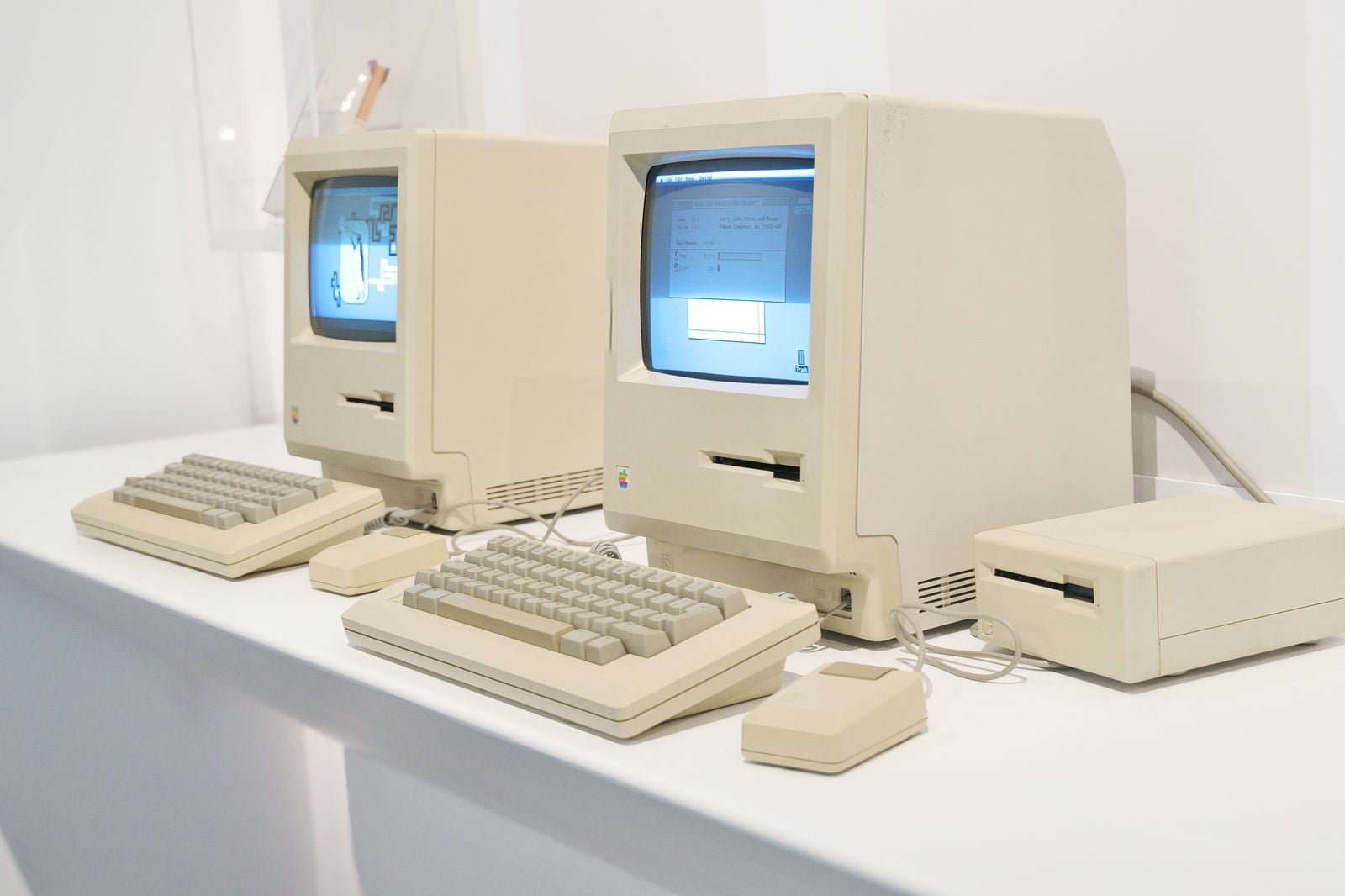
In September 1999, Post Office Counters began putting Horizon terminals into branches across the United Kingdom, replacing paper ledgers with a Fujitsu-built accounting system that could turn a quiet counter into the scene of an accusation.
The machine looked administrative. It handled sales, pensions, postal orders, stock, cash, and daily balancing. But when Horizon said money was missing, the figure could become a debt, a suspension, a prosecution, or a prison sentence.
By the time the public inquiry began writing the official record, the outline was no longer in dispute. Horizon had been rolled out from about September 1999 and was effectively embedded across the network by the end of 2001 or early 2002, according to the Post Office Horizon IT Inquiry. The government later said the system was introduced across the network in 2000, and that the Post Office had identified 700 convictions in cases it prosecuted between 1999 and 2015 where Horizon evidence may have featured.
Those numbers are almost too clean for what happened inside them. A branch could be thousands of pounds short according to the screen, even when the person behind the counter insisted the cash was not missing. The Post Office treated the screen as the witness. The subpostmaster became the suspect.
The machine on the counter
Horizon replaced the daily arithmetic of a Post Office branch. Before it, subpostmasters reconciled stamps, pensions, postal orders, foreign currency, cash, and stock through paper records and manual checks. After it, a touchscreen terminal and a central accounting system produced the figure that mattered at the end of the trading period.
That figure looked objective because it came from a computer.
If the drawer matched the account, the branch could close. If Horizon showed a shortfall, the shortfall had to be explained or made good. Under the standard subpostmaster contract, the person running the branch could be required to repay losses personally. A software discrepancy could therefore become a household debt before it became a legal case.
Fujitsu supplied Horizon after its takeover of ICL, the British computer company behind the original system. The platform became one of the central pieces of Post Office infrastructure, moving branch accounting from local paper processes into a networked system that the person at the counter could use but could not truly inspect.
The strange numbers appeared early. Subpostmasters reported unexplained discrepancies, called helplines, and were often told the system was robust. The implication was simple. If Horizon said the money was missing, then the problem was in the branch.
The shortfall became the evidence
The Post Office was not just an employer or contracting party. It had the power to bring private prosecutions in England and Wales, and during the Horizon years it used that power against people running its own branches.
The pattern became grimly familiar. An audit produced a shortfall. The subpostmaster was suspended. Investigators presented the Horizon figure as fact. Some people were offered a route out through a guilty plea to false accounting. Others faced theft charges.
Many paid money they said they did not owe. Some borrowed from family. Some remortgaged homes. Some pleaded guilty to offences they maintained they had not committed, because the alternative was the risk of prison.
Seema Misra, who ran a branch in West Byfleet, was convicted in 2010 and jailed while pregnant. Tracy Felstead was sent to prison at 19 after a conviction connected to her first job at a Post Office branch; the BBC later reported that the conviction devastated her life. Their names became part of the public record only after years in which the system’s output had carried more authority than their testimony.
The scale hardened slowly. The government’s Horizon factsheet refers to 700 Post Office-prosecuted convictions where Horizon evidence may have featured. Wider accounts of the scandal often refer to more than 900 people prosecuted or convicted across the broader horizon of cases, including those not prosecuted directly by the Post Office.

The software was not what the courts were told it was
The defence of Horizon rested on a claim of reliability. The system was treated as robust, and the burden fell on subpostmasters to show why the computer might be wrong.
That position collapsed in the civil litigation brought by Alan Bates and other former subpostmasters. In December 2019, Mr Justice Fraser’s Horizon Issues judgment in Bates and others v Post Office Ltd found that bugs, errors, and defects in Horizon had the potential to cause discrepancies and shortfalls in branch accounts. The judgment also found that those problems could undermine the reliability of Horizon data.
The technical appendices to the judgment identified specific problems, including the Receipts and Payments Mismatch bug, the Callendar Square or Falkirk bug, and the Suspense Account bug. These were not vague complaints from frightened branch operators. They were named defects in a system that had already helped send people to court.
Remote access became one of the most damaging issues. For years, the Post Office’s public position had suggested that branch accounts could not be altered remotely in a way that mattered to subpostmasters. The inquiry and litigation record showed a different reality: Fujitsu staff could access systems remotely, and the existence, visibility, and consequences of that access were not properly disclosed to the people being accused.
Gareth Jenkins, a former Fujitsu engineer and expert witness, later gave evidence to the public inquiry. His evidence did not create the first proof that Horizon could generate false shortfalls. The High Court had already made that finding in 2019. But his testimony became central to how the inquiry examined what Fujitsu and the Post Office knew, what was disclosed, and what was withheld from criminal courts.
That distinction matters. The scandal was not exposed by one dramatic confession. It was exposed by years of litigation, technical analysis, journalism, campaign work, and testimony that finally stripped away the presumption that the machine must be right.
The man who kept the list
Alan Bates, a former subpostmaster in North Wales, refused to accept shortfalls he believed were not his fault. His contract was terminated. He kept records, wrote letters, and began finding other subpostmasters with similar stories.
By 2009, the Justice for Subpostmasters Alliance had enough weight for Computer Weekly to publish the first major investigation into Horizon. The story did not immediately become a national reckoning. For years, it remained the kind of scandal that people inside a specialist world understood better than the public did.
The civil group action changed that. In 2019, the High Court rulings in Bates v Post Office blew open the legal and technical foundations of the Post Office’s position. The Court of Appeal then began quashing convictions. In 2024, after the ITV drama Mr Bates vs The Post Office forced the scandal into the centre of British public life, Parliament passed the Post Office (Horizon System) Offences Act 2024, which quashed eligible convictions in bulk in England, Wales, and Northern Ireland.
It was an extraordinary law because the failure had become extraordinary. Ordinarily, a wrongfully convicted person fights through the courts one case at a time. Horizon produced so many unsafe convictions from the same institutional machinery that Parliament intervened directly.
Space Daily has covered other systems where human judgment sits beside software under pressure, from Apollo 11’s guidance computer alarms to Voyager 1’s long-distance engineering culture. The Horizon story belongs in that same family, but with the ending inverted. In Apollo and Voyager, anomalous data invited investigation. In Horizon, anomalous data too often became an accusation.
There is a thorough breakdown of the technical and human dimensions of this scandal in a video by Silicon Canals that is worth your time if the Horizon case still leaves you with questions about how software failures become miscarriages of justice.
The human ledger
The first volume of Sir Wyn Williams’s public inquiry report, published in July 2025, turned the scandal back from systems language into human consequence. The inquiry said the Post Office, Fujitsu, and ICL knew or should have known about defects and problems with Horizon, and it documented damage that cannot be reduced to compensation tables.
The report linked the scandal to suicides, severe mental distress, bankruptcies, broken families, ruined reputations, and years of isolation. It also made urgent recommendations on redress, including full and fair compensation for those harmed and support for close family members.
Compensation has moved, but slowly. Government and Post Office schemes have paid hundreds of millions of pounds, and later public reporting put the total above £1 billion by 2026. Even so, many victims have described the redress process as another administrative ordeal layered on top of the original one.
The legal consequences remain unfinished. As of mid-2026, no individual had been criminally charged over the Horizon scandal. The Metropolitan Police investigation, known as Operation Olympos, was still examining possible offences including perjury and perverting the course of justice. The Guardian reported in May 2026 that the investigation involved millions of documents and could face years of delay without further resources.
Horizon itself has not vanished. A public procurement notice published in November 2025 said the Post Office required a 12-month extension of Fujitsu’s Horizon services contract from 1 April 2026 to 31 March 2027. PublicTechnology reported that a further extension could take the arrangement into 2028.
That is the final unease in the story. The system that helped create one of the largest miscarriages of justice in British legal history did not leave the counter when the convictions began to fall. It remained part of the branch network, altered, scrutinised, and politically toxic, but still descended from the software lineage that once turned unexplained numbers into criminal suspicion.
Somewhere, a subpostmaster still has to close the day by looking at a figure on a screen. The number may be ordinary. The till may match. The branch may shut quietly. But after Horizon, the glow of that terminal carries a memory that no software patch can remove.
